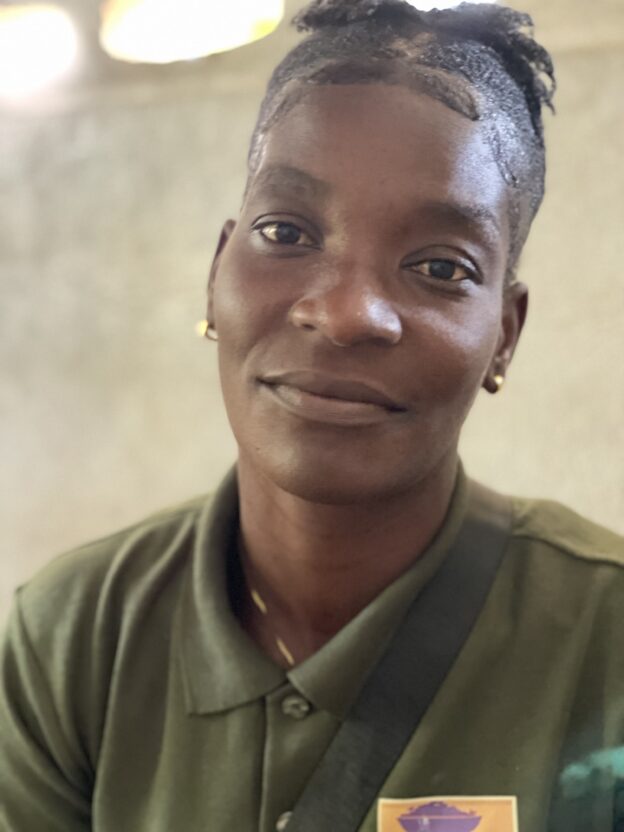
Christmène was one of the speakers at the ceremony when she and 173 CLM members graduated from the program in Gwo Moulen. Like most of the women who spoke, her story was striking, but what she said about repairing her home was especially important. “It never entered my head that I could do it without a man.”
Her children’s father left her in an old, dilapidated house with their two young kids to go off and work in the Dominican Republic. She was pregnant with their third child at the time. She lost that child, and she never heard from her husband again. She took care of her two remaining children as a day laborer in her neighbors’ fields.
She says that her case manager, Rony, really encouraged her. She used savings from her weekly stipend to start a small business selling bread and sugar, two staples that rural Haitians need to drink their traditional morning coffee. The income from that business, together with her stipend, helped her manage the household and make weekly contributions to her savings group. But it also helped her move forward with her home.
She had to have someone cut a flat spot into the hill she lives on first. “They asked me for 7,500 gourds, but I talked with them, and they accepted 5,000.”
Some of the support posts from her old house could be used for the new one, but she needed to buy twelve new ones, too. She had a tree in her yard that could be harvested for the lumber that her new roof would require, but her biggest challenge would be acquiring the palmwood she’d need.
She’d have to buy multiple trees and have them cut into planks for the walls. “I just talked to some people. I started asking people just to hold onto 500 gourds at a time for me.” By making regular payments she got the planks. “I still owe a couple of people money, but I am continuing to pay them.”
The last big challenge was the roof. CLM gave her enough money to help purchase sheets of metal roofing. The house she wanted would need 34. She could add her own money to buy what Fonkoze would not pay for, but they could not be purchased in Gwo Moulen. She’d have to get them down the mountain, in Laskawobas. “I carried them up seven at a time.” With a smile she adds, ” The skin of the shoulder I carried them on still hasn’t healed.”
The last thing she needed was a few additional planks of hardwood to finish the window frames and a door. She would be able to take one of her doors from the old house.
“Now my children and I live in a new, three-room house, and I know that there is nothing man can do that a woman can’t do too.”
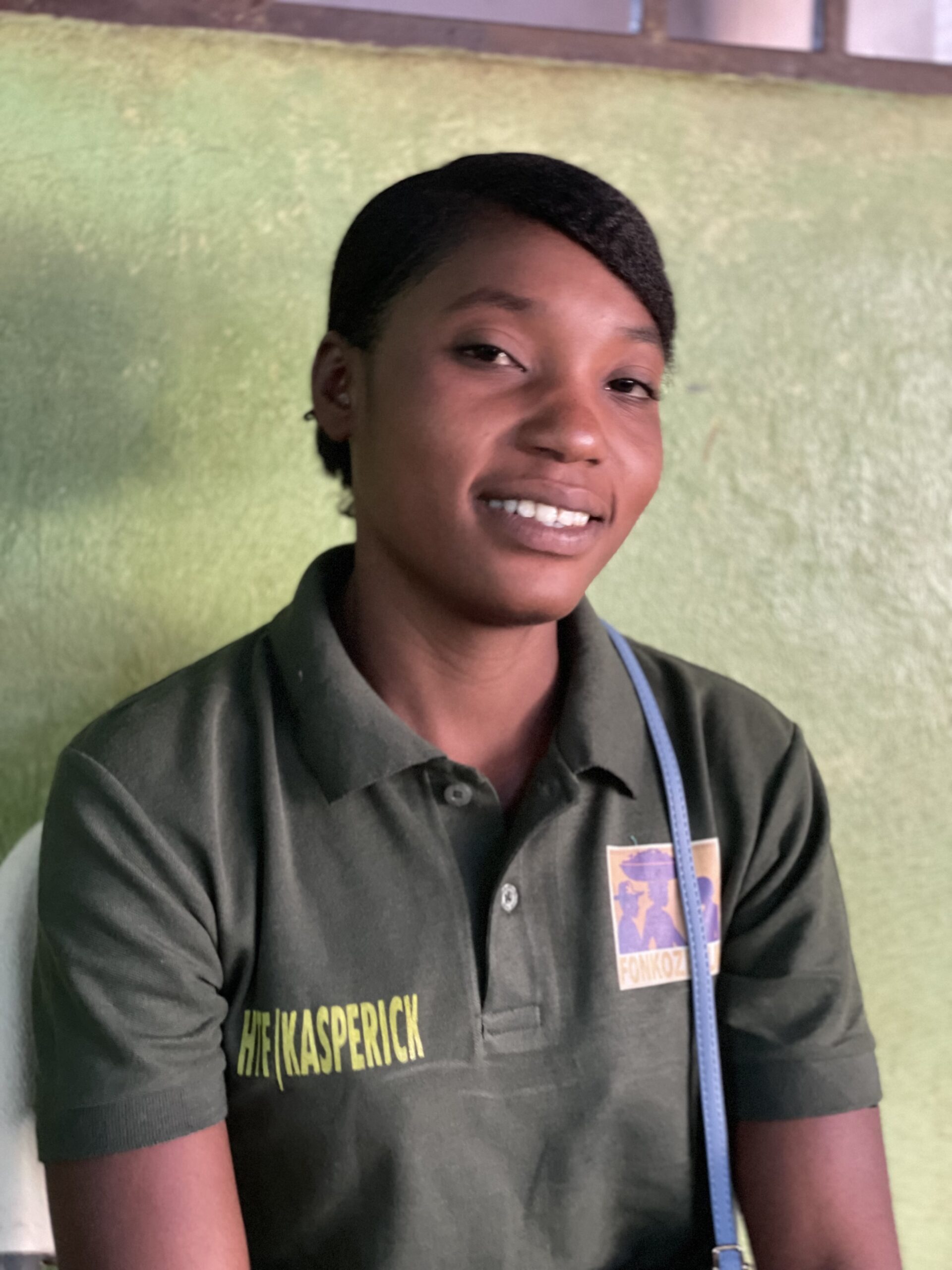
Esterlanda lives in Lagon, a neighborhood on the eastern end of Gwo Moulen, along the path that leads to the market in Do Bwa Wouj. She lived in a house that her husband, Makenson, had purchased from his brother. That brother had inherited the house when the brothers’ parents died.
Makenson was the couple’s main earner. “He always worked hard,” Esterlanda says. He would leave the area for four to five months at a time to work odd jobs in the Dominican Republic and return with his earnings. When he was in Gwo Moulen with Esterlanda and their girls, he would work their neighbors’ fields as a day laborer.
They joined the CLM program, and one important change in their lives is that Makenson no longer thinks of going away. Esterlanda bought two goats and a small pig with the money Fonkoze set aside for her to invest, but Makenson has taken over care of the livestock. The two goats are now nine, and the sow has three healthy young. Because their home did not need repair, they were able to use the funds available for home repair to buy a horse. “I can’t leave. I have to take care of our animals,” Makenson says, and though he says he “can’t” leave and that he “has to accept” not going away, he is happy about the new situation, able now to live year-round with his wife and his young daughters.
And now Esterlanda is adding to their income. It started with a question from her case manager, Rony. “Wouldn’t you like to start earning money, too?
She started small, selling prepared seasoning. Haitian cooking is labor-intensive, and one big part of the work involves grinding seasonings like leeks and garlic into a smooth paste with salt, oil and other herbs. The job is generally done with a mortar and pestle, standard equipment in a Haitian kitchen, and it takes a lot of time to get the mixture as smooth as Haitian chefs want it. Esterlanda invested four weeks of her stipend, or 2,400 gourds, which is less than $20. She prepared and sold the seasoning ready-to-use, and her business started to grow.
But it grew more slowly than she hoped. “Other people were selling it too, and some of it wasn’t good, so people stopped buying it at all.”
By then, however, her business capital had grown from 2,400 gourds to about 5,000. She started buying small loads of used clothing in the market in Laskawobas. She would walk around Gwo Moulen, selling the clothing item-by-item. Before long, she had grown her capital again, from 5,000 gourds to 10,000. She paused her business in the build-up to graduation. She’s been busy. But she is excited to get back to it. December is the best season in Haiti for those who sell clothes because many Haitians want to celebrate the New Year with new outfits.
She did not stop doing business entirely, however. While part of the CLM program, she participated in a special training called “transformation.” It involves producing higher mark-up items out of basic ingredients. She learned to make bonbon chodye, a cake that can be baked in a regular Haitian pot over a cooking fire, karapinya, which are peanuts roasted in sugar with ginger and cinnamon, and other goods as well. She sells to a lot of children who want snacks at school.
She does not have a clear sense of how much money she has in this business right now. Her purchases are somewhat scattered, so it is harder to keep track of the total. But when asked how she can be sure it is profitable, she explains what she is able to do with the revenue it generates. It is her main source of income. She uses it to save 1,000 gourds every week in her savings club. She now holds two accounts so she can save 1,000 instead of just 500. And she also uses it for household expenses.
The savings group has already been useful. The couple had always done some farming, but not much, working mainly for other local farmers. Their case manager, however, encouraged them to invest in their own crops, so Esterlanda borrowed enough money from the savings group to plant a crop of beans, one of the area’s important cash crops. With the 85,000 that they assembled from the sale of that harvest and the payout she received from the group when its cycle ended, the couple bought a cow with a young calf already trailing behind it.
Though she has doubled the amount she saves each week, Esterlanda isn’t sure what she and Makenson will do with all the savings when the new savings cycle ends. She thinks of buying another cow, but she isn’t sure. “We will make a plan when the time comes.”
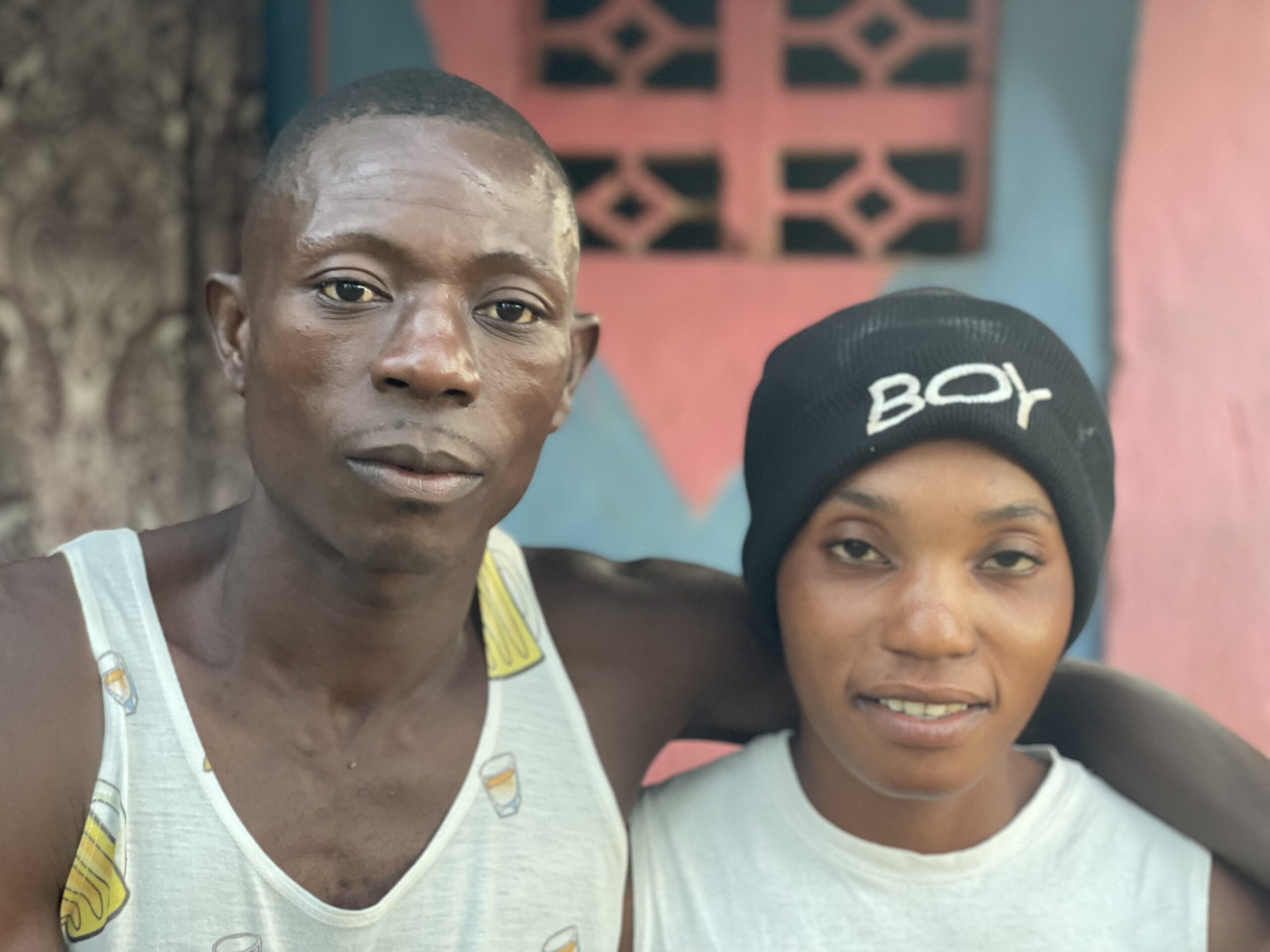

Ivronie’s life has changed in two important ways in recent years.
The first came before she joined the CLM program. She was a widow, living with her three young children. She met her second husband, Djo. “He took me with my three children and accepted them as his own.”
She had been struggling to keep her children fed by farming. When she could put her hands on some money, she would manage what she calls “komès sou tèt,” or business on her head. She would buy a small load of produce at the market in Do Bwa Wouj, hike two-three hours down the mountain to downtown Laskawobas with the produce on her head, and sell it there.
Djo changed much of that as soon as they met. “When he saw the way that I was struggling, he bought me a horse.” That meant she had a pack animal to carry the load for her. She could buy more and suffer less. He also told her to stop farming. He would do her farming for her so she could focus on other things.
She joined the program, and she began to have the resources to make her business grow. She bought two goats and a pig with funds she received as a member of the program. She now has five goats, and her sow has four piglets. The couple was eventually able to put money from their harvest together with what Ivronie saved during her saving group’s first twelve-month cycle to buy a cow, which is now pregnant.
Thanks to her horse and to the cash she had available because of CLM, her business, buying in Do Bwa Wouj and selling in Laskawobas was growing, but she ran into a problem. When she became pregnant, the trip up and down the mountain was too much. So she changed her business, starting to sell basic groceries out of her home. It is a difficult business, because friends and neighbors are always asking to buy on credit. If too much of the capital stays in clients’ hands, it can be hard to restock.
But Ivronie is making it work. “It just takes patience. They pay eventually.” And her patience is paying off. Thanks to her business, she’s is able to keep her children fed and send the older ones to school. The small business has grown steadily, and she was able to take advantage of an important new development in her community to take it to another level.
The CLM program helps local leaders organize community development committees, or CDCs, where it works. It coaches these committees through the process of developing and executing a development project. The seven neighborhood committees in Gwo Moulen decided to organize themselves into a single group to execute one project: improving the path between Gwo Moulen and Central Laskawobas so that motorcycles can use it.
The project was successful, and motorcycle taxis now work the hill. Ivronie began hiring one to bring large loads of merchandise up to her home. She’s become a wholesaler, selling groceries to the other merchants at the top of the mountain, for whom the chance to stock their businesses without having to hike downhill is a considerable blessing.
Ivronie continues to save in her group. She says that, at the end of the cycle, she and Djo want to buy another cow. She hopes eventually to use her cows for an even larger kind of purchase. “I have young children. I want to buy more land so that I’ll have something to leave them someday.”
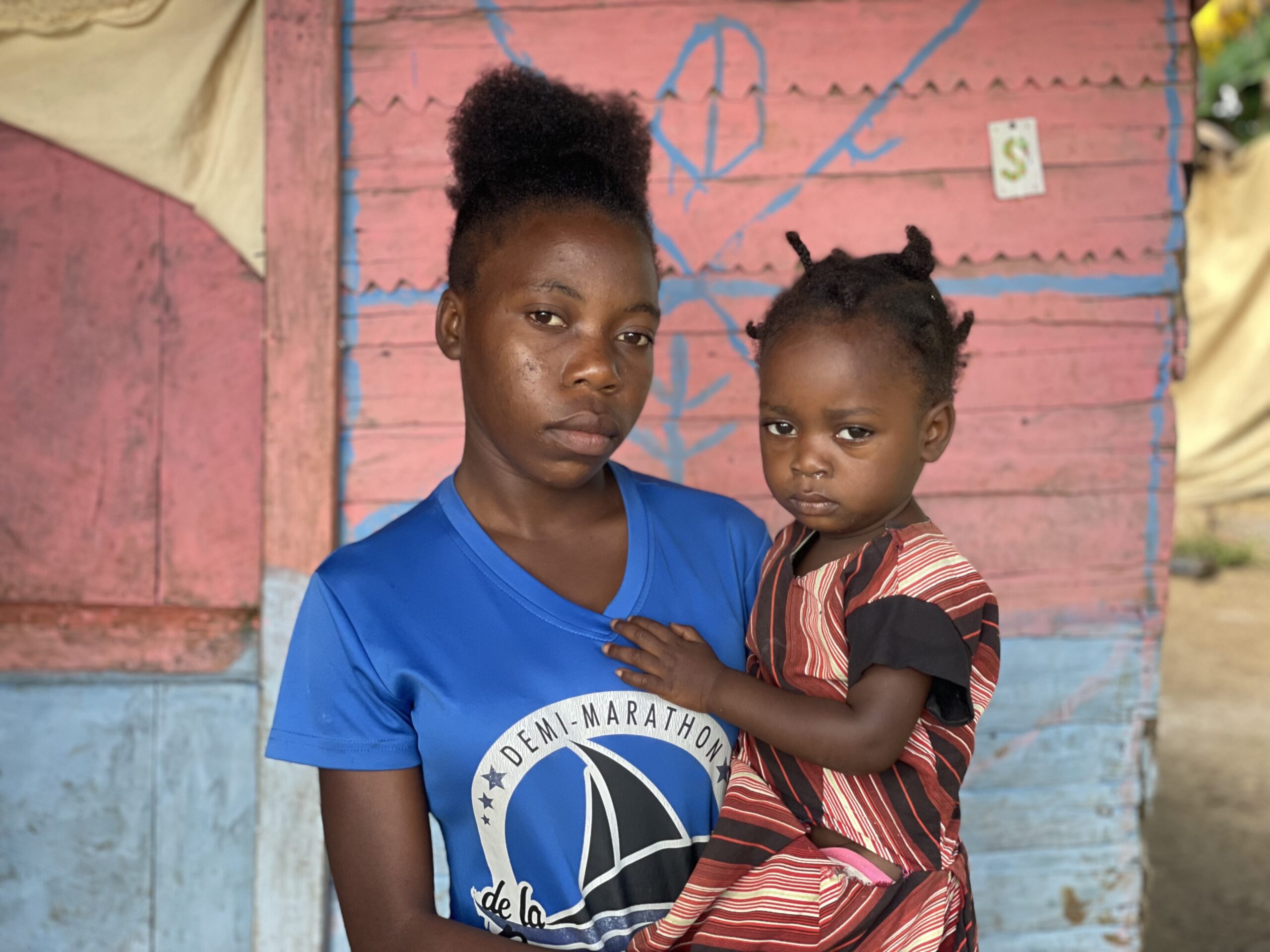
Rose-Mirtha is a young mother of a small girl. She was a student at school in Laskawobas, when she was raped by another student. When she was pregnant, she moved back in with her mother and her stepfather. People told her that she should get rid of the baby, but she couldn’t bring herself to do it.
When she joined the program, she was living with her daughter, her mother, her mother’s two younger children, and her stepfather on the stepfather’s family’s land. But she and her mother worked quickly to build a small new house on their own land. She likes her stepfather, but she explains, “He has other, older children, and we didn’t like the way they treated my mother.” The stepfather now lives with them in their home.
Even before she joined CLM, Rose-Mirtha had a dream. “I always hoped my life would change. I dreamed of having the means myself to be able to handle things if my girl or I should have a problem. I just didn’t know how to get started.”
She took a first step forward by finding a way to manage her money. “I would come upon a hundred gourds now and then, and I’d always make a plan to buy a chicken. But the money would end up going towards some other expense. The CLM training encouraged me to save, and the savings group they organized gave me a way to do it.”
She started a business. She buys green coffee beans at the market in Do Bwa Wouj, and she sells them down the mountain in Laskawobas. She used funds she received from Fonkoze for investment to buy livestock. And because her mother spent most of the money that they needed for the house they share, she had money for her own home repair available. When her savings group completed its cycle, she added the payout to her home repair money and bought a cow.
She plans on living in Gwo Moulen through the end of the school year. While she is there, she works as a schoolteacher there. “I like the way I can learn from the children and they can learn from me.” But she’d like to go back to school herself. The situation in Laskawobas has been uncertain, and she thinks it is smarter to wait, but if things look safer next year, she wants to go back. “There are lots of jobs you can do, and education makes it easier to succeed.”
