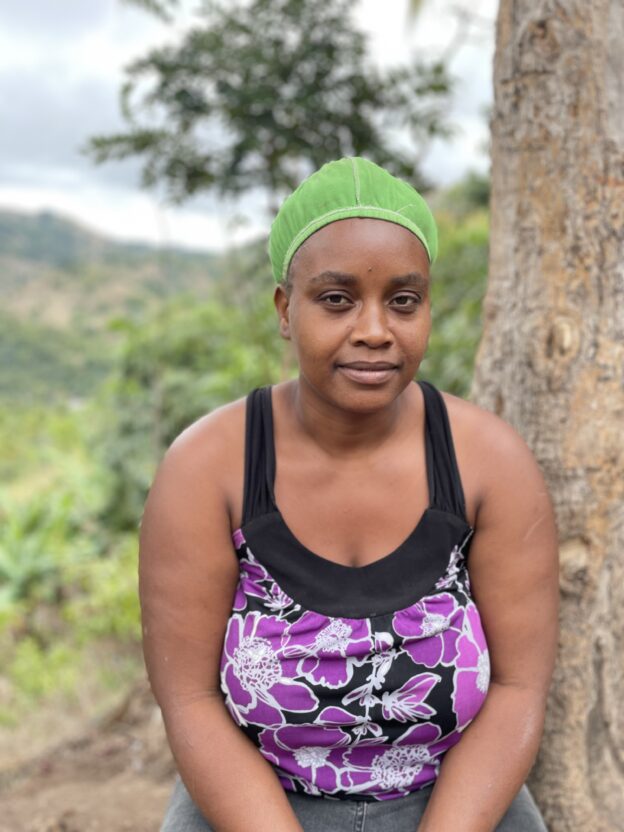
Nadege lives in two rented rooms on a house on a hill overlooking Kalabat. She and her partner have two children, and they were recently joined by her sister-in-law and the sister-in-law’s child. “I am not sure why they came to live with us. They just came. I never asked. They are family.” Nadege’s oldest child, from a previous relationship, lives with her mother.
Before she joined the CLM program, the family lived on what little her partner made. He finds occasional work as a mason. Or sometimes as a metalworker, responsible for arranging the rebar used to reinforce cinderblock construction. Nadege herself was earning no income.
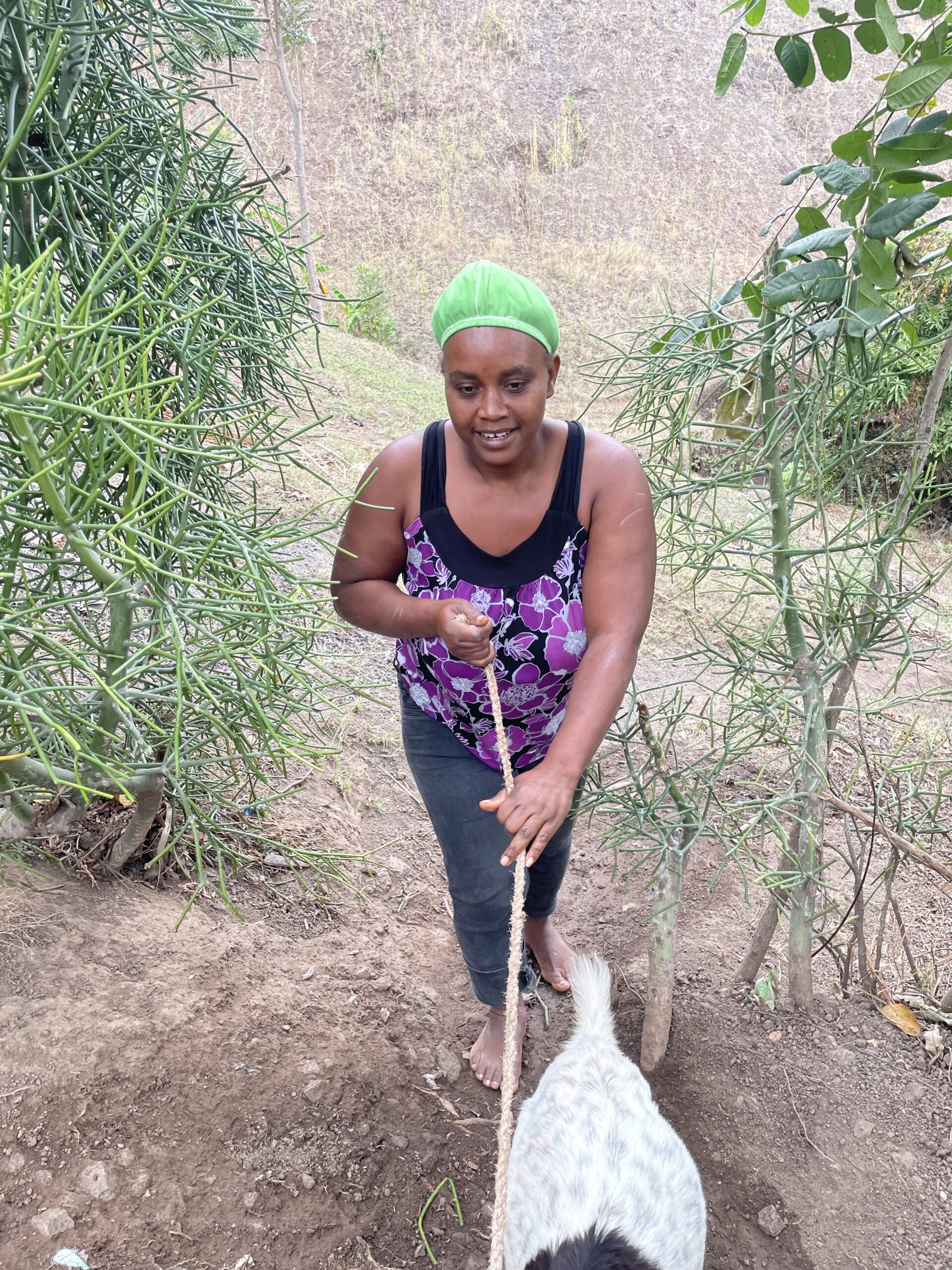
Things changed almost as soon as she joined the program. She bought two goats. She had no livestock previously. And those two goats are now four. One of them had two kids. She sees the goats both as a way to manage larger expenses — she could sell one to pay school fees, for example — but also as a kind of insurance. “If my business falls apart, I can always sell a goat.”
She immediately invested in commerce as well. She started buying local rum in five-gallon jugs down in Gwomòn and selling it retail out of her home. Customers come to her with their own small bottles, which she fills. Many retail rum merchants carry a gallon and shot glasses around to community events, like wakes and cock fights. But not Nadege. She only sells out of her home. “I don’t like being around the shouting and the fights. Sometimes they throw rocks.”
The income she earns selling rum helps her manage her household expenses, but it also enables her to save. She buys shares in her savings and loan association at each week’s meeting. When the association completes its cycle, she plans to use her savings to buy more goats.
She also makes weekly contributions to a sòl, a savings club common in Haiti. Members make regular contributions, and each time they contribute, one member gets the whole pot. Nadege is in no rush. “They can give me the last turn if they want to.”
She has a plan. When her turn comes, she wants to add to her business. She won’t just buy more rum, though. Buying more stock wouldn’t mean more sales. Instead, she plans to add a second business. She says, “M pral nan laye.”
A “laye” is a flat, woven platter that rural Haitians use in various ways. She means that she will start selling “epis,” or spices. She’ll sell garlic, leeks, bouillon cubes, hot peppers, cloves, etc. A range of products that provide the basic flavorings that Haitian cooks depend on. It will give her two, separate dependable sources of income.
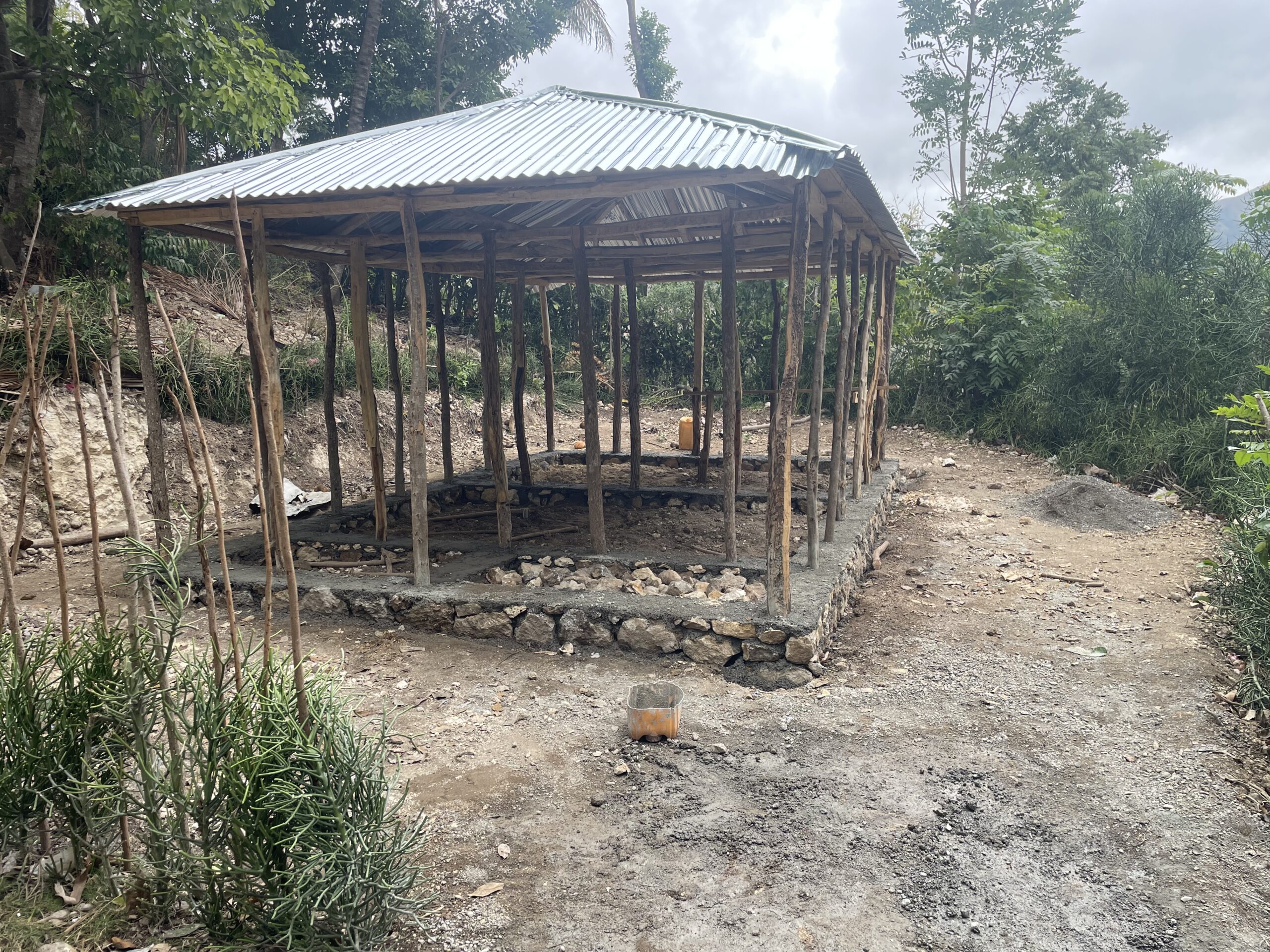
In the meantime, she has begun work on a home. She’s already installed a new latrine on the piece of land where she is building. She should be out of her rental before too long.
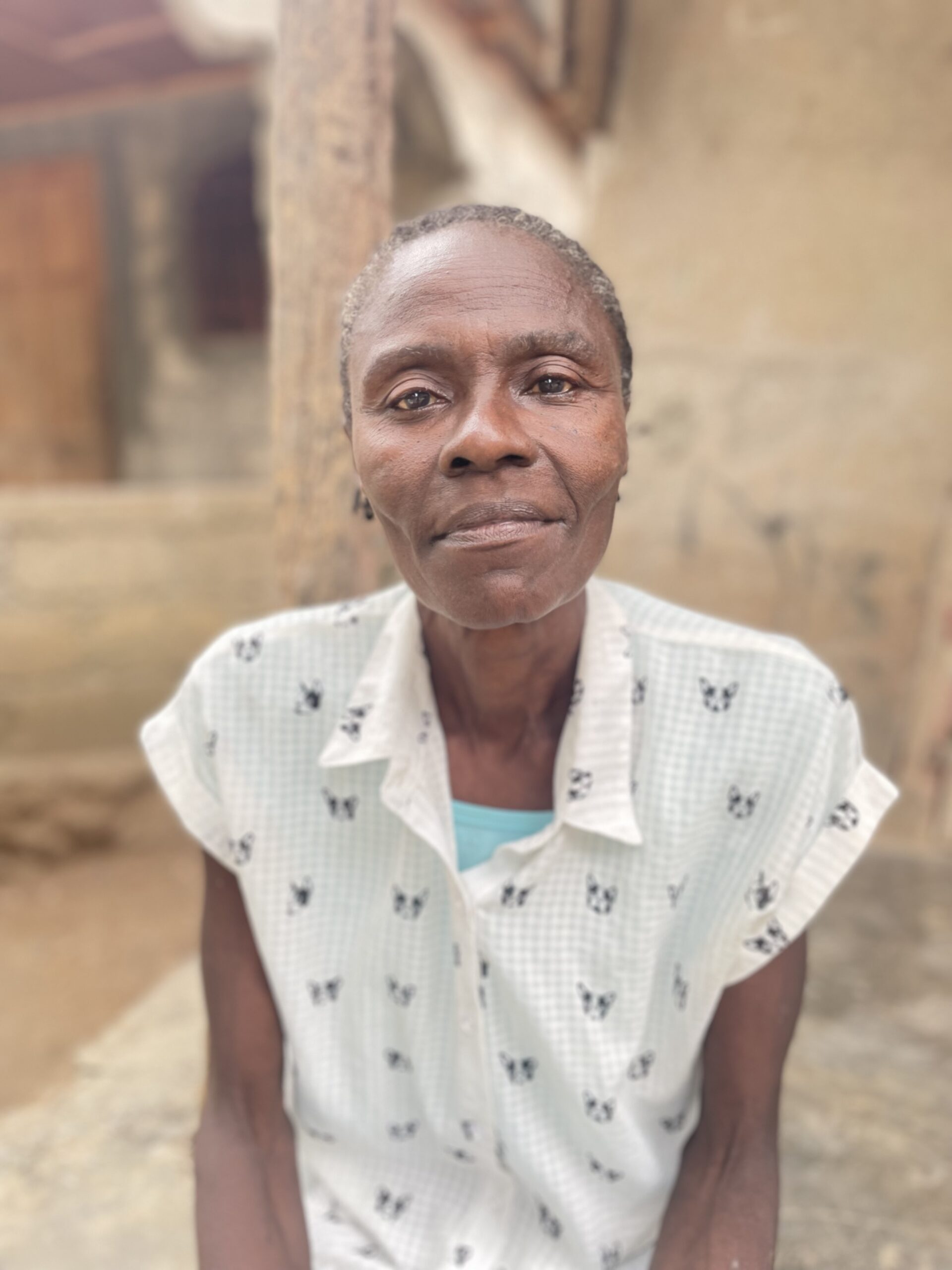
Juliane and her daughter live in a house that belongs to her sister. They themselves do not have their own home. Her daughter’s father has been dead for some time, but he was never an important source of support.
Juliane used to be a broom merchant. She would walk through her neighborhood’s hills, collecting the materials that brooms are made of in rural Haiti and bring them to a man she paid to make the brooms. Then she would lift a bundle onto her head and take them to the market for sale. She could not earn much that way, but she and her daughter ate, and she sent the girl to school.
But as Juliane has aged, her health has become a problem. It has been a long time since she felt up to hunting for what she needs to have brooms to sell, much less carry bundles of brooms to market. When she joined the CLM program, she was living on gifts from family members and the little bit her daughter earns as a teacher in a local preschool. She has no other children with her, and her daughter has no children herself.
When she joined the program, Juliane decided to to buy two goats with the funds the program provided, and one of them has since given birth to a kid. She had initially wanted to use the rest of the money to start a new business in the place of her broom business, but she eventually decided against it. She decided that she doesn’t feel up to all the back and forth that managing a commerce requires. So, she bought an additional goat instead. The money was enough that she got one that was already pregnant.
The daughter manages a small business selling laundry and hygiene products to supplement her earnings as a teacher, and Juliane took the 3,000 gourds that were left over after she purchased the pregnant goat, and she invested the money in her daughter’s business. She can now earn more because she sells a greater range of products.
Juliane is excited about the way her life has changed. “I never thought I would be standing in a market, buying a goat.” But that excitement doesn’t create any income, and she needs income both for herself and her daughter. They need cash to buy food every day and to make weekly deposits in her savings and loan association.
The savings are important both for the opportunities that accumulated savings can eventually provide and for the credit she can access. She borrowed 2,000 gourds a short while ago because she and her daughter were short of money to buy food. She paid her first reimbursement on time and is preparing her second one.
But she is most excited about the home that she and her daughter are building with the program’s help. The frame is up, and the roof is on. The cement foundation is in place. The carpenters are now preparing the lumber she’ll need for the walls and the doors.