Fonkoze has always included persons with disabilities in the CLM program, but the program first began to seek them out after a pilot it undertook together with Haiti’s Office of the Secretary of State for the Integration of Persons with Disabilities starting in 2015. Over the years, the staff has worked with individuals with limitations of various sorts: blindness, mobility issues, and intellectual issues that we cannot even really identify.
Some of the most challenging cases, however, are members who are deaf. The coaching that we provide is built on communication, and our case managers have a difficult time communicating with members who cannot hear.
It is not just that our case managers don’t know sign language. The deaf individuals we come across in the Haitian countryside do not know a standard sign language, either. Each one communicates with the people around her or him more or less effectively using whatever system of sounds and gestures emerges through years of interactions.
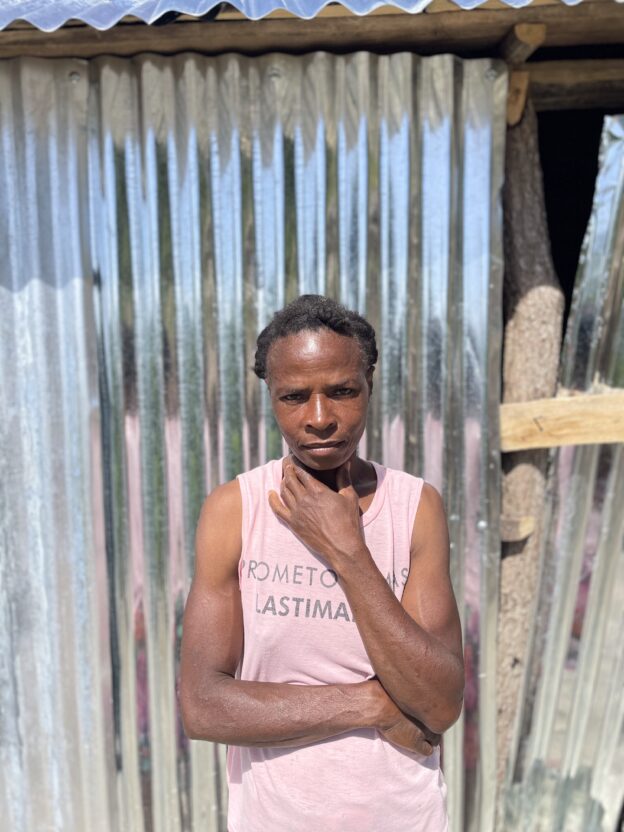
Erode is a mother of three. One child lives in an orphanage. The other two younger ones live with her in Trasel, in her aging mother’s yard. She wasn’t chosen for the program because she is deaf. We only work with families in extreme poverty, and Erode easily qualified on that basis. When she joined the program, she had no income. She and her children were principally supported by her mother’s partner.
But Erode has been working hard as a program member. She invested funds that the program provided to start raising goats, and now she has five. She plans to use them to help ensure she can keep her kids in school. She invested in farming as well. Land around Provo is good for planting beans, a valuable cash crop. She also bought beans and peanuts at harvest, storing them in a small storage room until planting season, when demand for seed is high and she can sell what she has in storage at a profit. She communicates well enough with people that she knows what things are selling for and is able to do the necessary transactions.
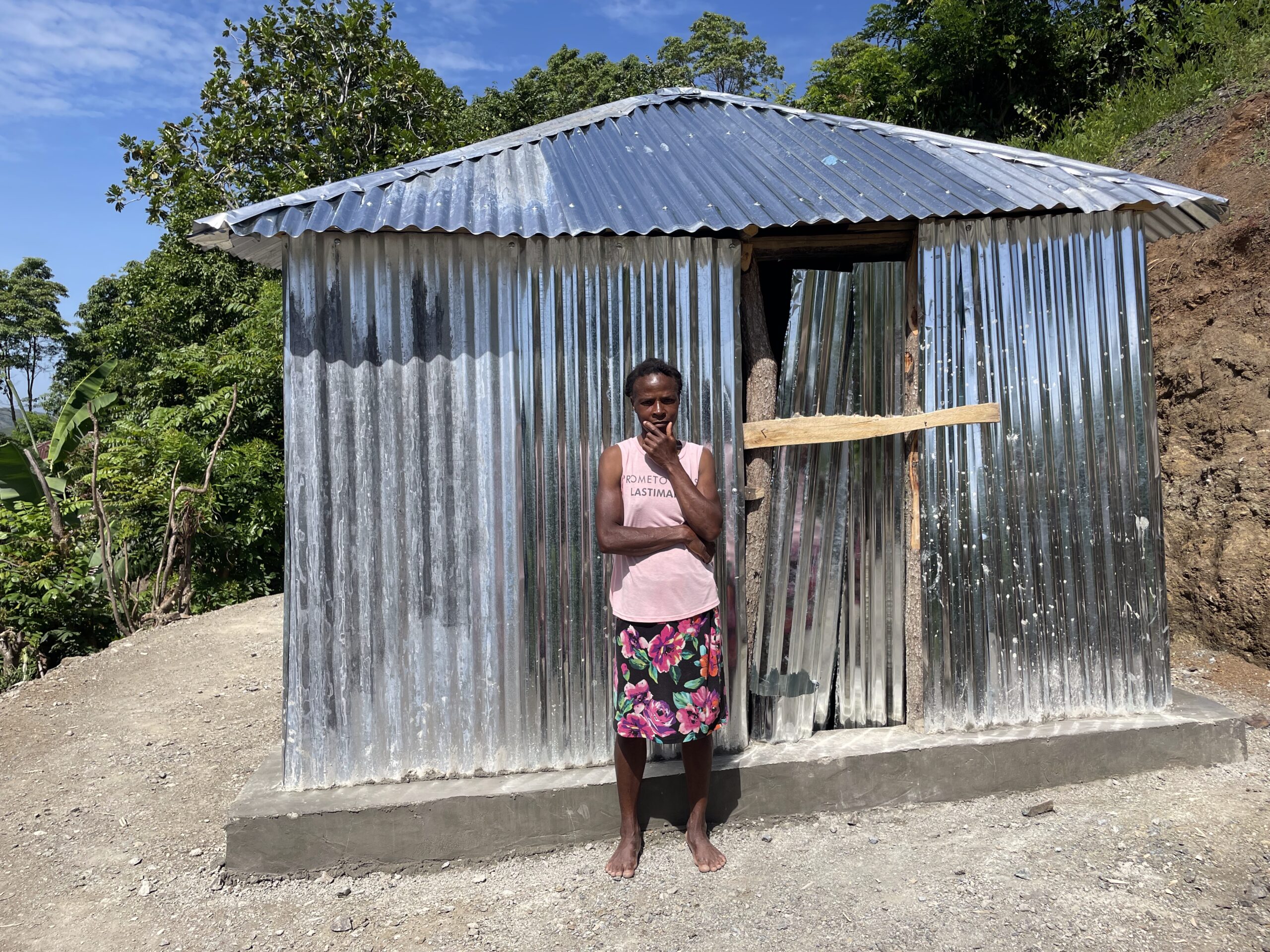
She used other funds that the program provided to build a new home right next to her mother’s. It isn’t finished yet. She has not yet installed a door. But it is the first time that she and her kids have had their own dry and secure space to live.
She seems fully engaged in the program’s group activities as well. She participates in training workshops enthusiastically. She has friends, family, and other program members who help her follow through with their guidance. She attends her savings group’s weekly meetings, too, and she has no trouble following the procedures: she knows when to make her contribution and how much it should be. She takes out loans, and she keeps track of her repayment dates and amounts. As her case manager Payoute says, “Erode is deaf, but she knows what’s she’s about.”
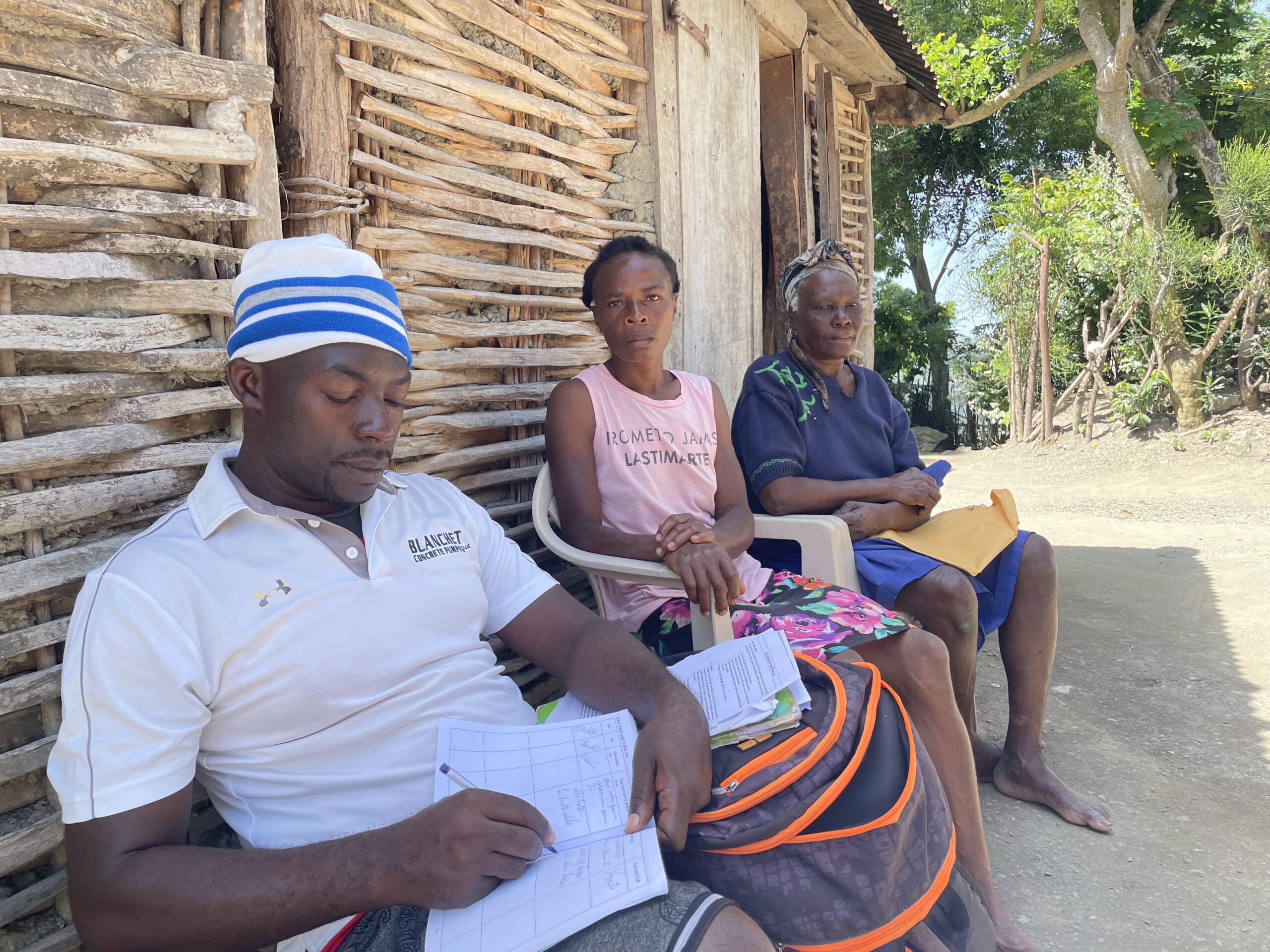
Working with Erode is challenging for Payoute. As they sit together, they gesture back and forth. It is hard to be sure how much she understands of what he is trying to teach except insofar as he can see her doing things that he suggests. Her house is going up according to plan, just as her latrine did. Each sign of progress suggests some communication that has succeeded. Her goats are healthy and available for him to check when he comes by to visit. She has plenty of treated drinking water in her home. She has learned to sign her name.
One key to this success is that Erode and Payoute include a third person in their conversations. Most CLM home visits are supposed to be private conversations between a member and her case manager, but Erode’s visits include her mother as well. She has been communicating with Erode all her life, so it is much easier for her than for Payoute. And she is around all the time, so she can make sure that Erode really does make decisions and follow them up. Fonkoze has found that including supportive family members can be a key part of working with individuals who face particular challenges — whether related to hearing, to sight, or to something else.
Payoute has been learning. He did not know what it would be like to work with a deaf woman, but he has seen what she is capable of. “Someone who is deaf and cannot speak can still accomplish a lot because she does not lack clarity of thought.”
Very exciting story. Sounds like a big success for both Erode and Payoute. Wish it were clearer how long she has been in the program and thoughts about her potential graduation. Thanks for bringing it to us!
So interesting to think about Erode’s compensating strategies. Wow. Amazing.
What a very hopeful story. Thanks for sharing this.