Monthly Archives: July 2025

At Four Months in Kalabat

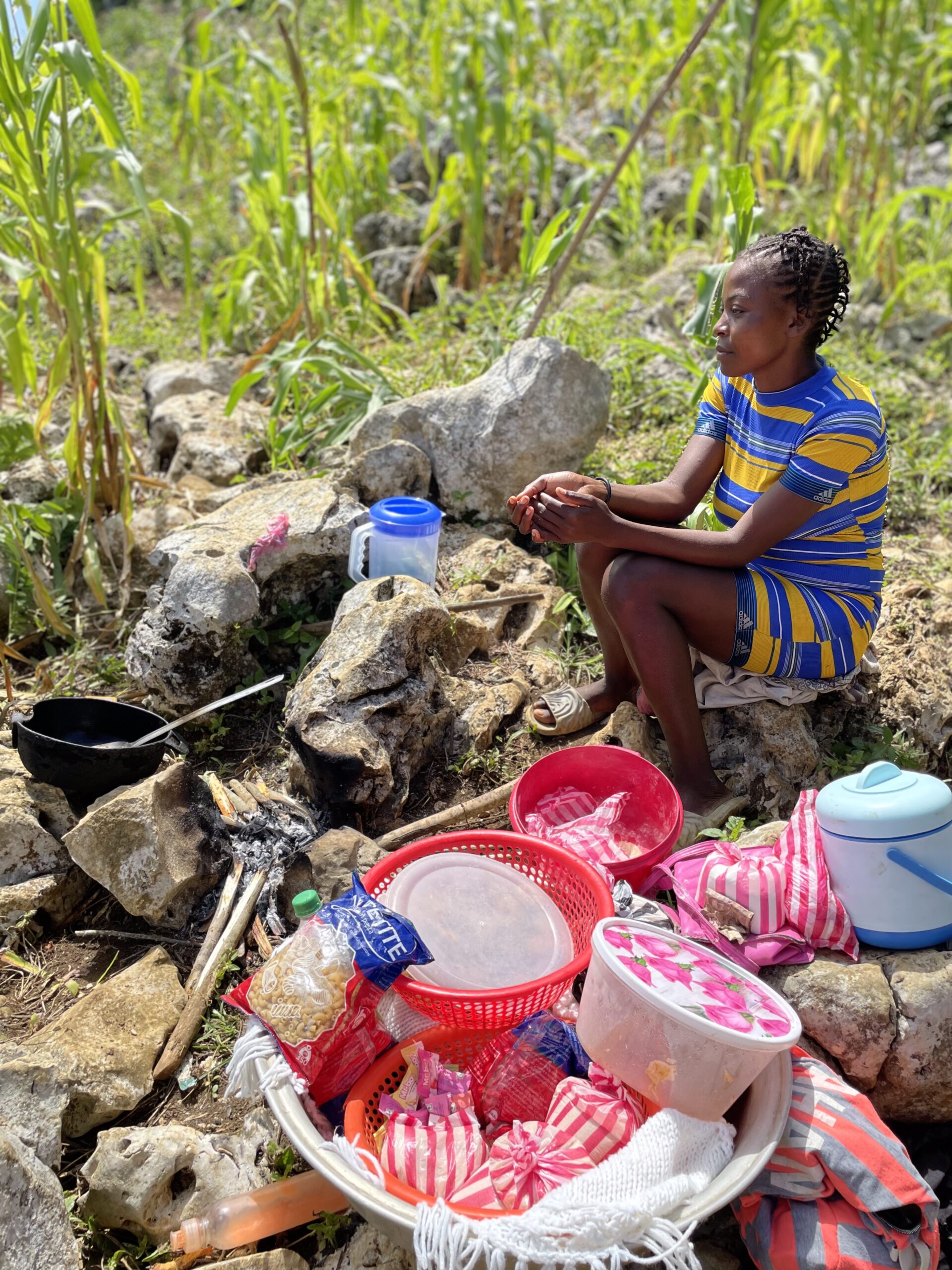
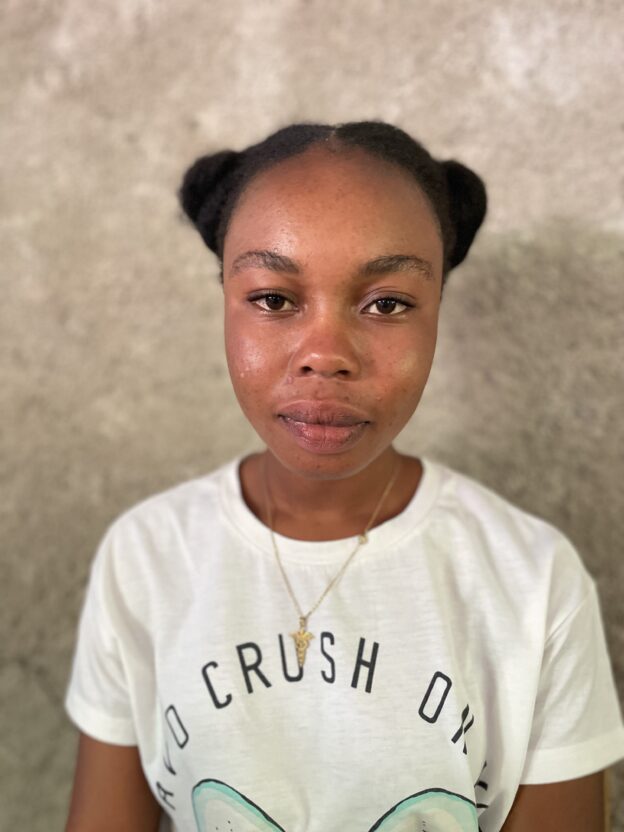
Rose-Manie lives in Bezwen, an area above Kalabat, a small market in eastern Gwomòn that is the location of a parish church. She has one child, a three-year-old boy, whom she is raising without help from his father. The two of them live with her parents and her younger siblings.

She was able to start a small commerce even before she joined CLM. After weaning her baby, she left him in her mother’s care and moved to Gonayiv, the large city south of Gwomòn, to work as a maid. “I cooked and cleaned and did laundry.” She made 7,500 gourds per month, and she refused to spend any of it. So when she returned home after three months, she had 22,500 gourds she could invest. That is about $175. She arrived home during mango season, so she quickly added to her capital by buying and selling mangoes. When she shifted to selling groceries, she had almost $200. She sold rice, cooking oil, and the range of basics that Haitian cooks depend upon.

But Rose-Manie got sick, and her business capital slowly disappeared. For one thing, she continued to have to spend to feed herself and her boy even when she was too sick to work. For another, the medical expenses themselves were considerable. By the time she joined the program, she and her boy were largely depending on her folks.

But things have started to change since she joined the program. She bought a goat with 9,000 gourds of the first 15,000 gourds of her investment fund. She is trying to buy a smaller goat with the remaining 6,000, but she hasn’t found one that she likes yet. She hopes that if she takes good care of the goats, she can accumulate them until she has enough to sell them to buy a cow.

She expects to receive the remaining funds for investment soon, and plans to invest it to start her old business once again. She is optimistic. “Jodi a w ka gen yon bak sirèt. Demen se tout yon boutik.” A bak is a small wooden table that merchants use when they are selling just sirèt, or candy, and maybe some packaged cookies and crackers. It is a standard example of an especially small business. Rose-Manie is saying that one day you have nothing but a small table of snacks, and the next you can have your own shop.
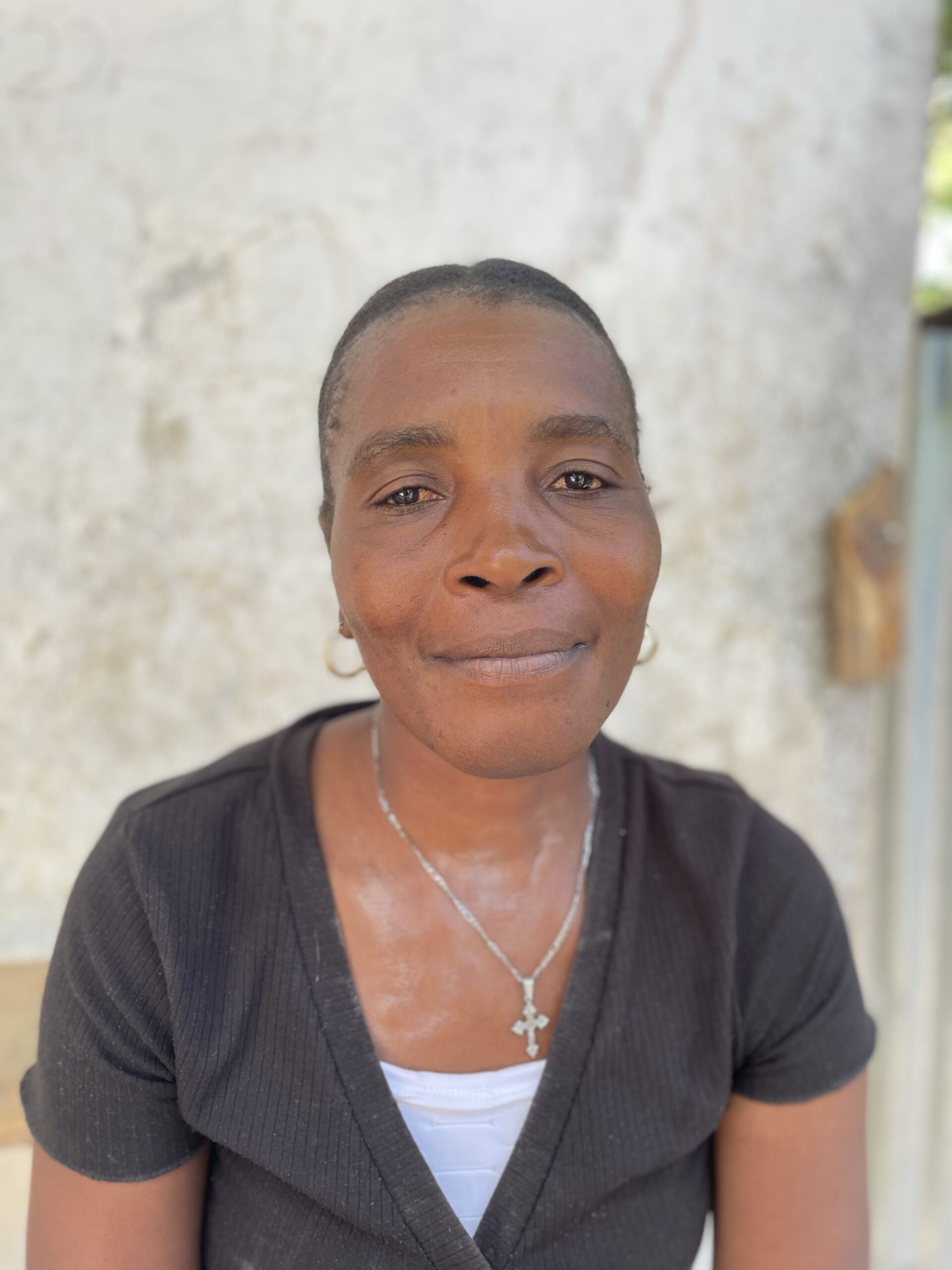
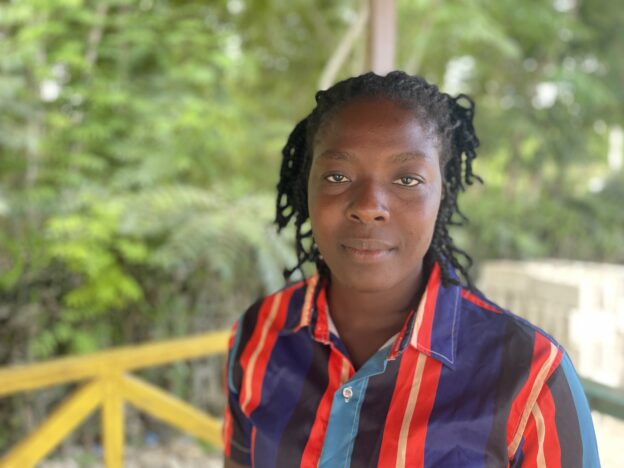
Enide lives above Kalabat as well. Her neighborhood is Filyon. She has five children. A few years ago, when she saw that she could no longer send them all to school, she gave two of the older ones some money, and she sent them to live with a friend in Pòdpè, the major coastal city north of Gwomòn.

She and the two young women thought that the two would run their own commerce in the city and send themselves to school. The plan worked, except that her daughters found that they could not stay with the family who initially hosted them, and Enide had to borrow money to help them rent a room.

She borrowed the money from a village savings and loan association that had been functioning in the area even before CLM got there. She managed to repay what she owed, but then the association fell apart. “People borrowed money, but then they didn’t pay it back.”

The father of her younger children is around the area, but he doesn’t really help Enide with their kids. He’s married to someone else. “I’m their mother and their father. I sleep with them and get up with them every day.”

But she finds it hard to get ahead. She says, “Yon sèl dwèt pa manje kalalou.” That means that you can’t eat okra with just one finger. Okra is famously slippery. The phrase is a common Haitian proverb used to explain the need for teamwork. Everything Enide does, she has to do alone, and that makes life difficult.

She is excited about the goats she was able to buy with the first payment of her CLM investment fund. She bought two. “If I take care of them, and they reproduce, I won’t have to worry how I will send my youngest to school.” Her youngest is a son named Woodkervens, and he is just six, so he has a lot of years of school ahead of him. If she gets the number of her goats up over the next year or so, it won’t be a problem for her to sell one now and again for school fees and related expenses.

She is waiting impatiently for the rest of her transfer. She wants to invest it in her commerce. Her business model is simple. There are two large markets higher up into the mountains, farther to the east, Twa Pòto and Dandi. She buys produce there, and brings it down to Gwomòn for sale. It is a straightforward model. Produce is cheaper in such markets than it is downtown.

Up to now, she has been managing with credit. She goes to neighbors, borrows 5,000 gourds or so, and repays it the next day, when she gets back from selling in Gwomòn. They don’t charge her interest. “If I borrow from a woman, I might give her some of whatever I bought with the money. If I borrow from a man, I just say ‘thanks.’ If they see you always pay, you can usually find a loan.” But without any of her own funds, her business cannot grow. She plans to keep borrowing after she gets the money from CLM, but she’ll be adding to her own funds rather than depending on borrowed money alone.
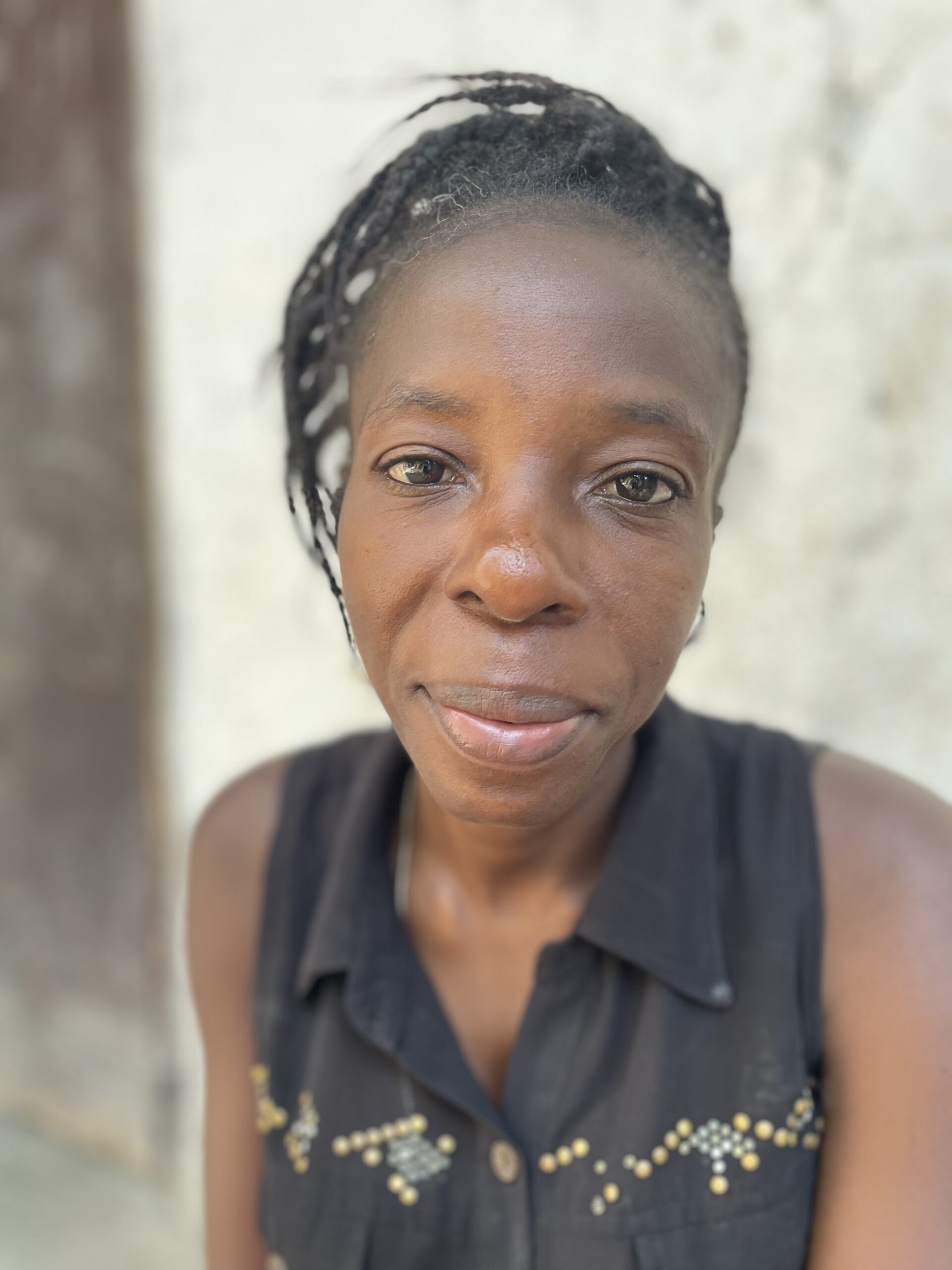
Jolette lives in another neighborhood of Kalabat. She has a twenty-year-old son finishing high school in downtown Gwomòn and a baby with her in Kalabat. Until recently, she lived with her mother, but her mother kicked her out when she became pregnant with her second child, and she moved in with the girl’s father, Ancelot. She had had her son with another man, but he was married.

She had struggled to build the room of her mother’s house that she lived in. She sold cosmetics or groceries. Her business changed from time to time. But the expense of sending her son to school eventually ate up her capital. The shack she moved into with her girl’s father was falling apart even before she got there.

When she first joined the program, she struggled to eat even once a day. “If I ate on Sunday, I wouldn’t have anything on Monday.” The weekly stipend helped a lot. And it helped her support her son in school, too. “If I ate 50 gourds of food, I would save 50 gourds to send to my son.”

She used the first payment of her investment fund to buy a sow and a goat. “The pig will have piglets, and I will be able to sell them. My boy will be ready for college this coming year, and it will cost a lot.”

All through the conversation, Jolette keeps returning to her son’s needs. She barely seems to think about other things. “Everything I do is for my children.”
After Four Months in Gran Platon

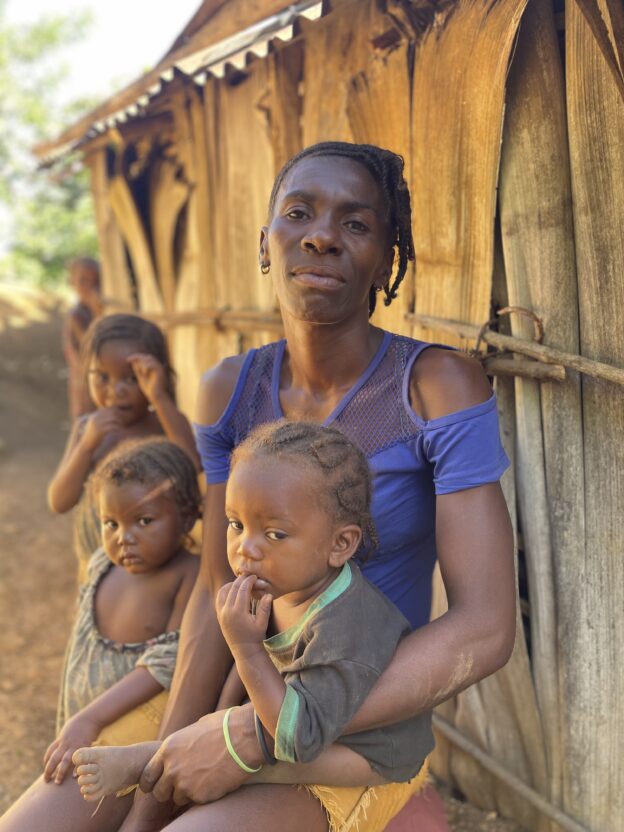
Imanie lives in Woudobay, on the ridge between Laskawobas and Savanèt, just outside the larger mountaintop community of Gran Platon. Like many of her neighbors, she uses the market in Kolonbyè, a town in Savanèt, just as she uses the larger regional market in downtown Laskawobas. 

She is originally from the Savanèt side of the ridge, and she was living around Fon Desanm with her first husband and their five children when the CLM team was working there about ten years ago. At the time, the family did not qualify for CLM. When that husband passed away, however, things took a turn for the worse for her. She eventually moved to Woudobay to live with her current partner, Osnel, with whom she has three additional children.

At first they lived well enough together, but she started to dislike the way that he treated those of her children who are not his. “I think his family put ideas into his head.” The three oldest decided to leave home, and they now live with their late father’s family. Three of the five who are still with her are school age, and she managed to send them this year, though she still owes the school money.

Before she joined the program, Imanie had a very small business. “I carried a washbasin [of products] on my head, selling whenever there was an event.” She sold tobacco, cigarettes, and local rum at events like wakes, cockfights, and parties. It is a business that requires a lot of hiking in a very rural area like the one where she lives. She would try to sell at home to save herself the effort, but that doesn’t work. “When you sell at home, people always want credit, so I would rather go to events.” The business does not take much capital. Imanie would borrow from friends to keep it going, and if she couldn’t do that, she’d turn to loan sharks. 

Since she joined the program, however, she has started to turn her life in another direction. She found a neighbor willing to rent her a small plot of land “sou pri dacha.” That means that the rent she pays will count towards an eventual purchase. She made a 5,000-gourd payment towards the first year’s 17,500-gourd rent. She knows that she’ll have to pay 35,000 gourds for the first two years, but she’s not sure what the final purchase price will be. She’s already installed her CLM-supported latrine on the new plot. She wants to leave Osnel and move into her own home. She even thinks that her older children will want to return to join her.

Imanie has begun taking care of the goats that she bought with CLM funds. She has two mature females and a healthy kid. She does not yet have a clear idea what she wants to do with livestock. She simply explains that she wants to keep them “for graduation.”

She has begun saving in her VSLA, though she still depends mainly on her CLM stipend to do so. She hopes that, by the end of the year’s cycle, she’ll have enough between her savings and her livestock to buy a donkey. Having a pack animal would make a big difference for her. She could buy loads of produce at the rural markets that farmers use and bring them for sale to downtown Laskaswobas, where produce is more expensive.

Anaphterline lives on the other side of a small mountaintop hill from Imanie with her husband Louiess and their two kids. She grew up nearby, just below Gwo Moulen, the next large-ish community to the east, and moved to Gran Platon when she moved in with Louiess. 

Louiess has been the family’s main earner up to now. He works as a day laborer in local fields. The couple also has a small garden of their own, where they plant beans, pigeon peas, corn, millet, and what Anaphterline calls “lòt detay,” or other minor items, by which she means mainly plantains and meliton, or chayote, a squash-like vegetable common in Haiti. But it was not enough to keep them fed. “We sometimes went a day without food.”

Not that they had been helpless. Even before they joined CLM, they had purchased a house to set up on their land. They paid 25,000 gourds, and it involved selling multiple bean crops. Anaphterline adds that “the seller was really patient with us.”

But even after buying the house, they could not use it. It had to be disassembled where it stood on the seller’s land and then moved to where they live. “We bought the house, but we didn’t have the money to make food for the people who would help us move it.” Thanks to their CLM stipend, they finally had enough cash. It took four Sundays of work from four to eight movers, but the parts now sit, waiting to be assembled, where they live. “Louiess torn down our old house and put it back up in the corner of the yard so that we’d be able to put up the new house in the best spot.”

Their new house, disassembled and now on their land.

Anaphterline bought two goats with the first transfer of cash that the program provided. She had some money left over and plans to use it to buy a turkey. She expects to get the second transfer of the balance of her investment fund soon, and she will use it to start a small grocery business. “Louiess said he would build me a shack on the path that people use to hike to market, and I will run my business from that shack.”

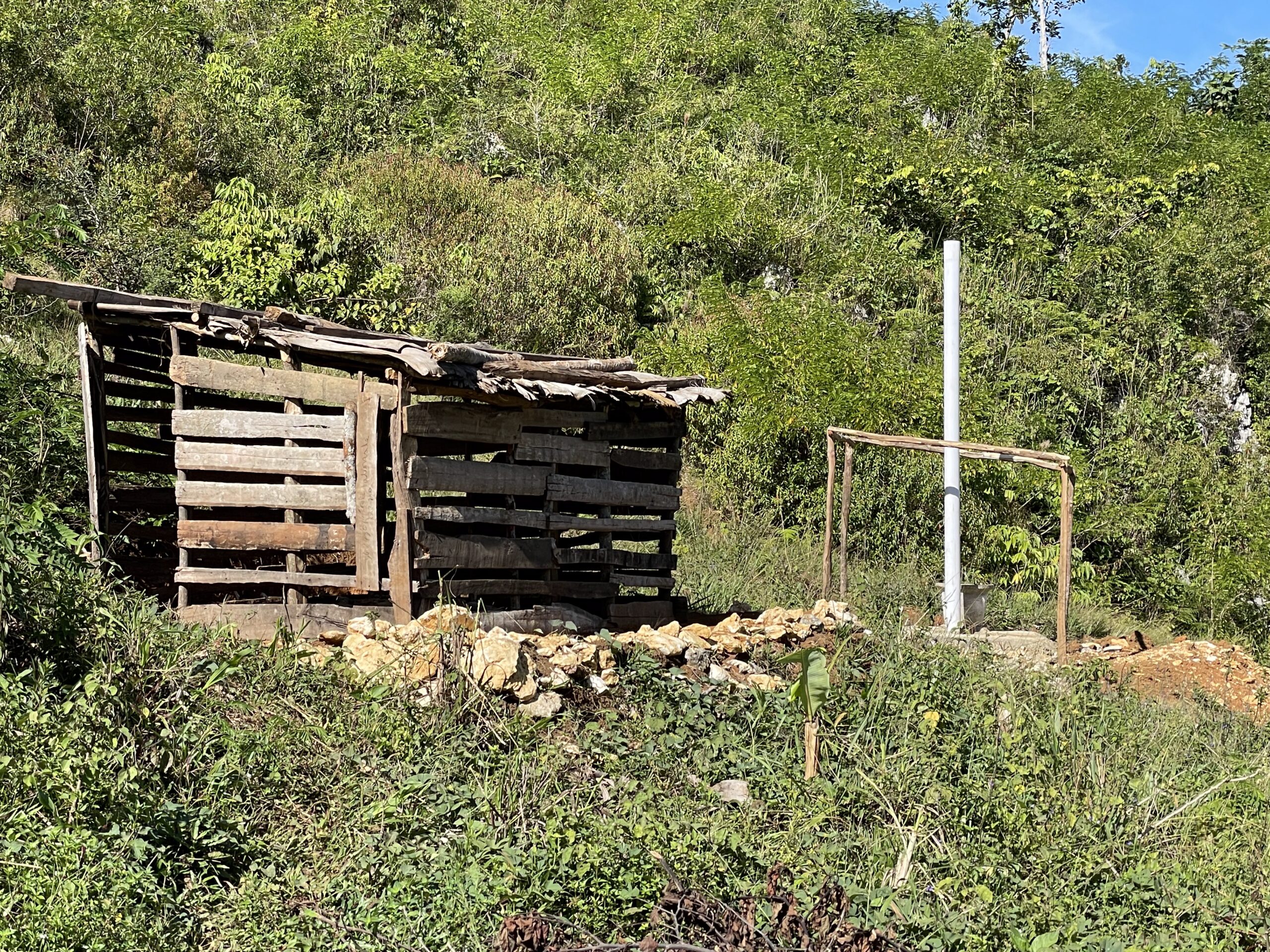
Their goat shed and their not-yet-enclosed latrine.

She hopes that, between her livestock and her commerce, she’ll be able to earn enough to buy a cow. “If you have a cow, you can buy land. When they see you have a cow, they know you can pay, so people who want to sell land will offer it to you.”

Dinah lives closer to the center of Gran Platon than the other two women. She lives with two small children in her mother’s house. The children’s father lives nearby, but he plays no role in their lives. She has an older brother working in the D.R. who sends their mother money as often as he can. Those transfers have been the household’s main source of income.

One priority for Dinah since she joined the program has been to get herself and her children into their own house, and she has gotten to work. She paid laborers to clean a flat spot on her family’s land for her to build a home on. She hopes to start building soon. She has already installed her new latrine there.

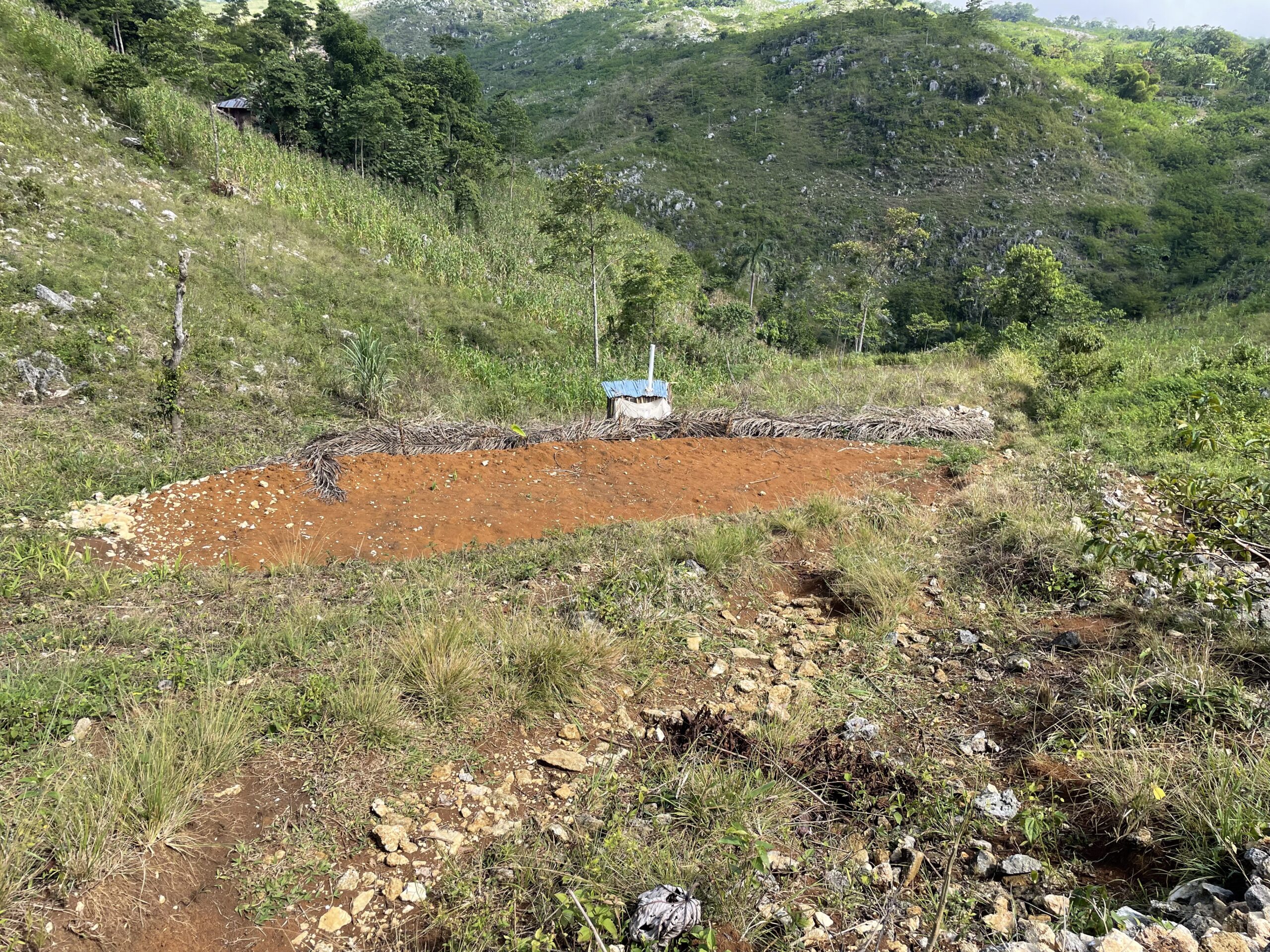
Dinah’s prepared land with her new latrine.

In the meantime, she has started her own grocery business on the main path using the stipend she received from the program. She sells a few basics and some fried snacks. She likes selling along the path because it means that she sees people as they come and go.

She also bought two goats with money from the program. Like Anaphterline, she hopes that the goats can someday enable her to buy a cow.

At 15 Months in Bonbadopolis

Wilnise lives in Klènot, a small community on one of the main roads that leads west out of downtown Bonbadopolis. She and her husband, Brenlove, live with three kids. They had just one when they joined CLM less than a year and a half ago, but her sister left the area, leaving her two children with Wilnise. She thinks that they are her children now, and she reports that Brenlove has really embraced them too.

They live in a house that belongs to her father-in-law, and he’s been supportive. But they have always wanted to build their own home. They started the work long ago, using whatever they could bring in, but they have never had the resources to finish the job.

Even before the couple joined the CLM program, they were part of a savings and loan association. They were able to make their weekly contribution because Wilnise carefully managed the money Brenlove was paid as a day laborer in their neighbors’ fields, struggling to save something of the earnings to make their deposit each week.

Eventually, they borrowed 5,000 gourds from the association. That’s a little less than $40. They used the money to buy a tree for charcoal. Brenlove chopped down the tree and cut it into pieces, burned the pieces underground to make the charcoal, and loaded the charcoal into sacks. Wilnise then sold the charcoal.

When she joined the program, Wilnise asked the team to buy her goats, and she received two. The team bought them for her with 15,000 of the 30,000 gourds that it designed for Wilnise to invest in a business. The goats have had kids. Just just one of the kids survived. But Wilnise bought two additional goats with money she earned through her new businesses, so now they have five.

She took another 15,000 gourds of investment funds, and used it to start a business. Her business involves a lot of back and forth, but it is working well. She buys charcoal from producers along the road between her home and the port down the road. She then loads her charcoal onto small freighters and sends it for sale in Gonayiv. She doesn’t want to travel by boat herself, so she meets it in Gonayiv, sells it there, and then uses money from the sale to buy produce in Gonayiv that she can sell at the market in Bonbadopolis.

Her business is succeeding, even growing, but she feels she needs to make a change. “The road is so risky. If the truck breaks down, your vegetables will spoil.” The next time she travels to Gonayiv, she plans to buy cosmetics, rather than produce. “Cosmetics don’t spoil.”

Wilnise has big plans as her means increase. Her first goal is to finish the home that she and Brenlove began to build already.

But that house is not on their own land. The land belongs to her father-in-law. “When you’re an adult, you want to live in a home of your own.” She hopes that as her goats reproduce, she be able to trade them in for more valuable livestock, but then eventually that she and Brenlove will be able to buy their own land.

When Jean Belson was a young boy, he was afraid to let anyone see him. “When people came to my step-father’s house, I would hide under the bed.”

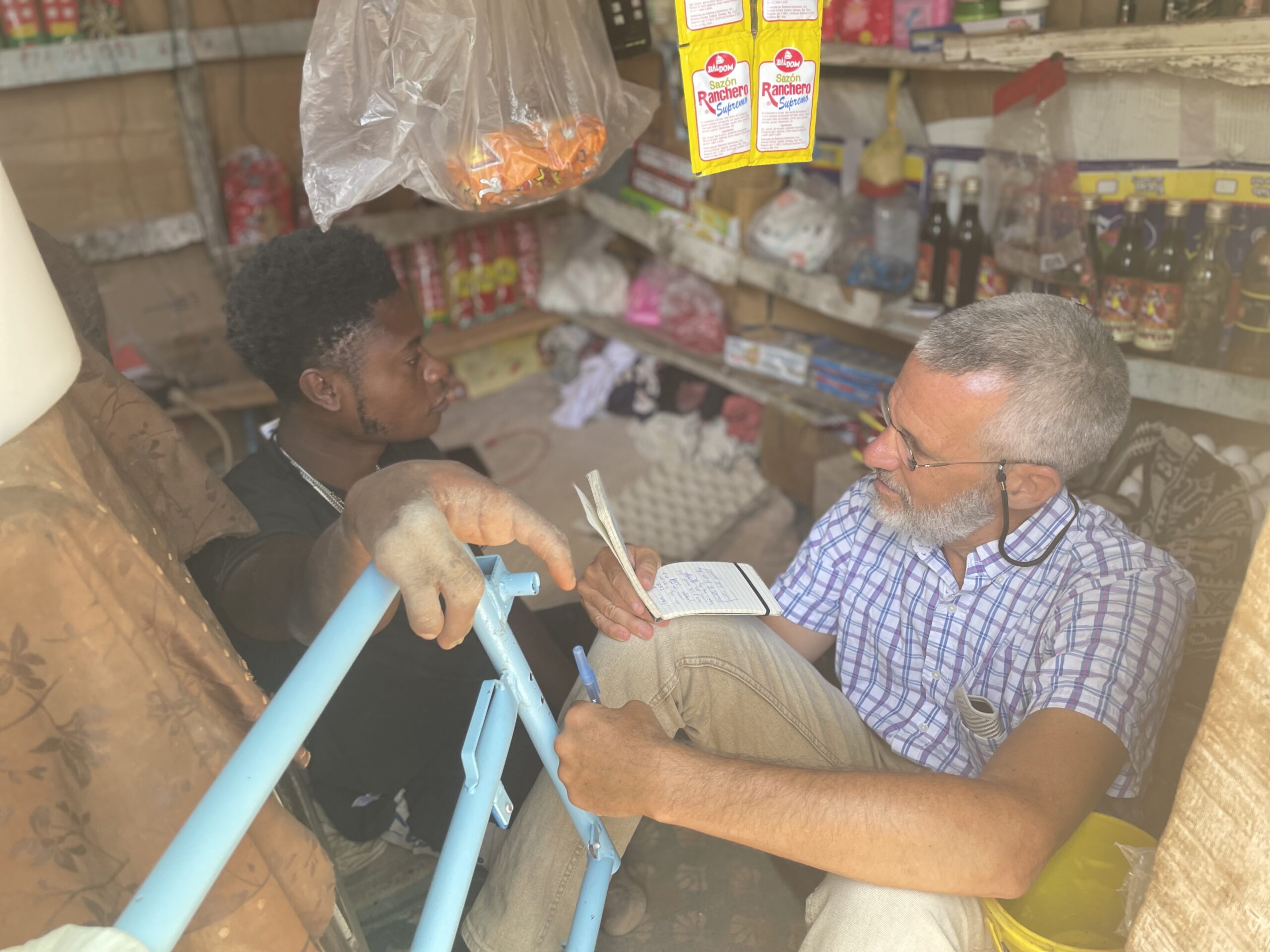
Jean Belson was born with significant disabilities. His undersized legs fold under him. He cannot stand up. He grew up walking on his two knees, steadying himself with his hands. His hands, too, are misshapen, but he can use them perfectly well. He lives in a house that belongs to his stepfather. His mother passed away, but her former partner has always been good to him.

Early friendship with Cius, the man who eventually became his CLM case manager, is what initially brought Jean Belson out of his shell. They were neighbors from Jean Belson’s youngest days, and Cius took to him. When Cius went to a community gathering, he would bring Jean Belson along. People who saw him would be moved to give him small gifts of money. “People would make a small gesture, and I was careful not to waste what they gave me.”

As he grew older, he became something of an entertainer at public events. Cius brought him to the first CLM graduation in their town. By then, Cius worked for the program. Jean Belson collected 1,750 gourds after his short performance, he managed the money carefully, and was able to buy a gallon of kleren, the local rum, and a couple of packs of cigarettes. That was the initial merchandise that he used to start a business.

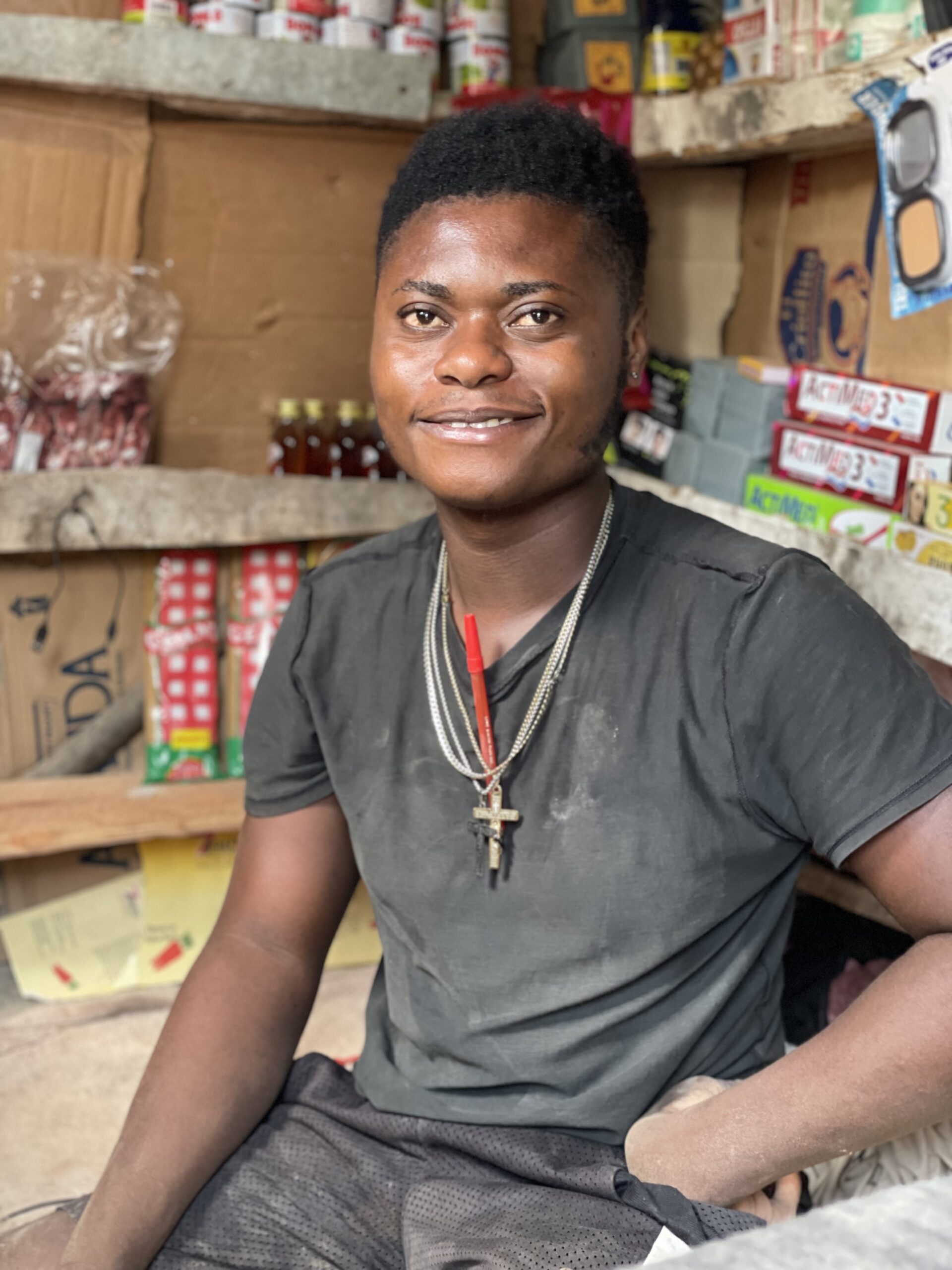
Having joined the CLM program, he’s been able to make that business grow. He’s continually adding new products. He had a booth built by the side of the road, and he’s turned it into a convenience store. It can be busy. He eventually had to take the side piece of an old wheelchair to serve as a barrier in the store’s doorway. He needed a way to keep customers from creeping in to help themselves.

But he is not willing to depend on the store entirely. He keeps a pile of rocks and a hammer next to the shop, and during down time he takes up the hammer to turn the rocks into gravel for construction. It is a reliable second source of income, if only small, occasional lump sums.

His ambition is simple. he has long been grateful for his stepfather’s love. His stepfather is happy to have him use the program’s help to put a decent roof on the shack his been living in on the older man’s land. But even so, he wants his own place to live. He’d like to buy his own land to put his home on.