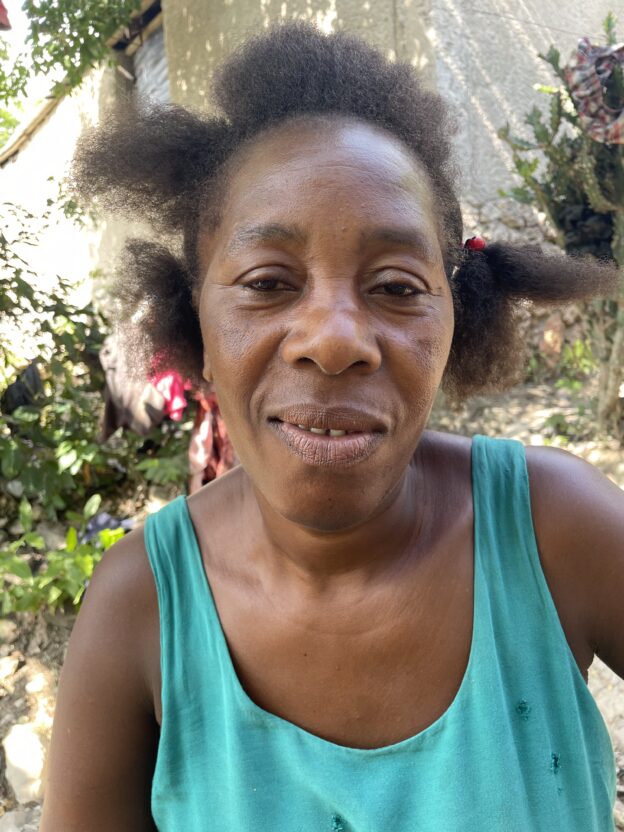
Enette and her partner, Kesner, live with their five children in Wo Vène, a neighborhood south of downtown Bonbadopolis in Haiti’s Northwest.
When she joined the CLM program in 2021, the family was really struggling. Kesner did odd jobs, sometimes selling a day of farm labor, sometimes cutting up wooden for charcoal makers. Enette had a small business. She would buy local rum by the gallon and sell it by the shot. A gallon cost 1,150 gourds, and she only had 650 gourds of working capital, so she always had a debt with her supplier. “We sometimes went two, three, four days without putting a pot on our stove.”
Even when they went hungry, the couple worked hard to send the children to school. The kids moved through classes, but it was challenging because they often had to miss time due to tuition bills their parents couldn’t pay. The couple lived their lives in a neighborhood where merchants would yell at them because they made purchases on credit and then took a long time to pay.
They joined the program, and Enette got to work. “Manno gave me 3,000 gourds. I bought food for my family with 1,000, and I put the other 2,000 gourds into business.”
Manno was her case manager’s supervisor. The 3,000 gourds were the first payment of her cash stipend. She received the stipend every month for six months. Normally Fonkoze pays the stipend to CLM families by week, and for her cohort, it would have been 750 gourds. But getting the necessary cash into the hands of the team in Bonbadopolis was challenging, so members received monthly payments instead.
With that money from her stipend, Enette added cold drinks to her rum business. She bought a very small thermos chest and filled it with half-cases of a couple of kinds of soft drinks. She would go to downtown Bonbadopolis every few days to buy ice. She managed the income carefully, adding additional kinds of beverages whenever she had enough capital to do so. Initially she just added other kinds of soft drinks, buying larger thermos chests as her business grew. But the business began to really take off the first time she bought a case of beer.
When the program was ready to provide business assets, Enette chose goats and small commerce. Her case manager bought her two goats, and gave her capital that she could use to add to her business.
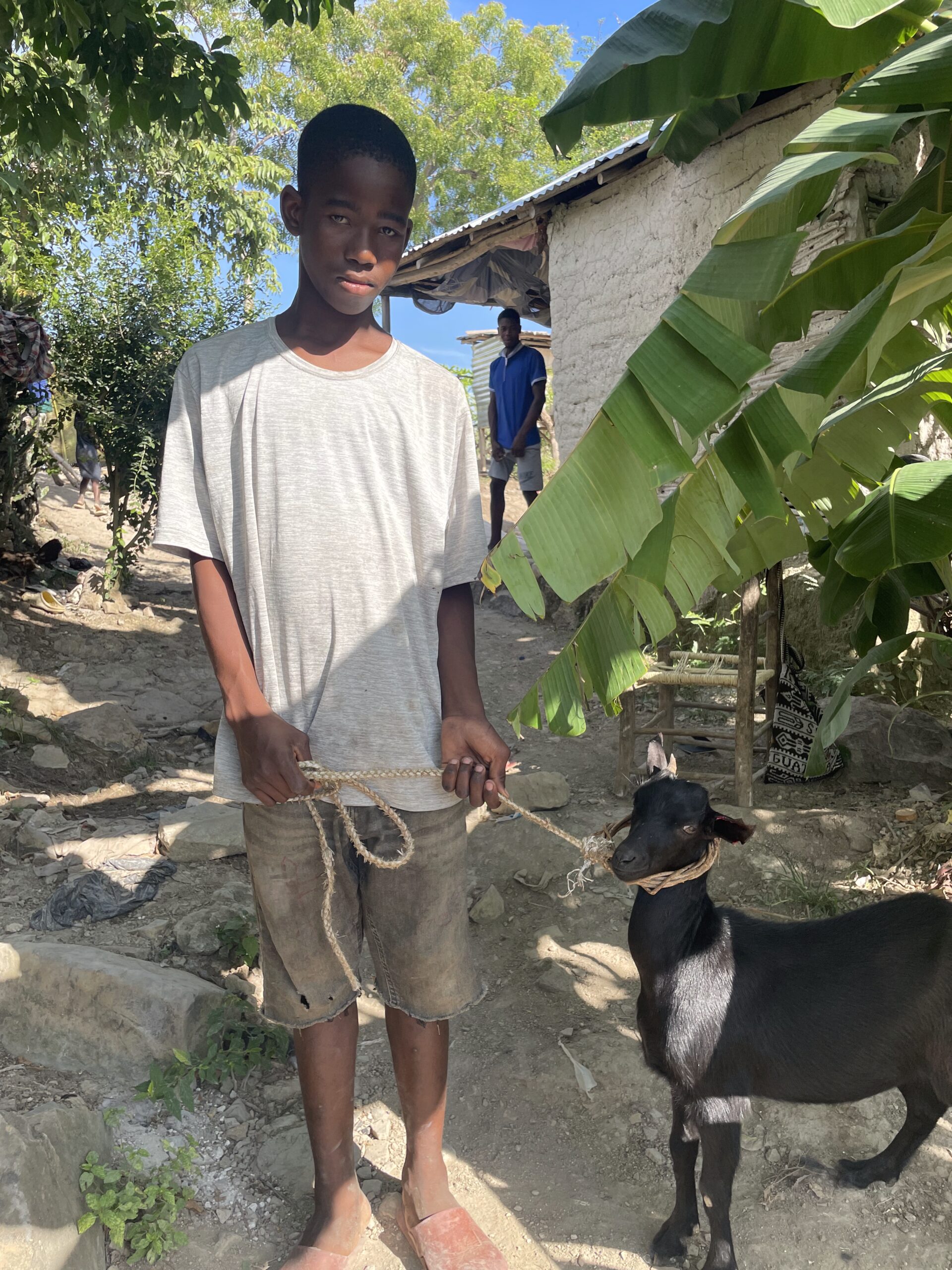
Her goats never really multiplied, but they played and still play a useful role. “I can sell a goat when I need to pay the children’s school fees.” The program gave her two, and even now she only has three, but she has been selling them as she needs to. She reports that she’s sold three so far.
Her real progress came through her commerce. Even before the program gave her investment capital, she was starting to make in grow by managing profit from her sales carefully, but getting additional capital was transformative. She went to Gonayiv, “lavil” or “the city” in the language of Bonbadopolis, and she bought various food and hygiene products. She put them in a kivèt, a plastic wash basin, which she carried around through her neighborhood on her head. She became something like a grocery store on two feet.
The commerce grew, and it continues to grow. She continues to make her purchases in Gonayiv, consistently adding to her capital, which is now more than 50,000 gourds. The business outgrew her kivèt, so she built a small display stand in front of her home. The home itself has become her shop. “Now everyone in the neighborhood buys from me.”
She also reinvested some of the grocery revenue back into her original business. Instead of buying rum by the gallon, she now buys it by the barrel. “They deliver the barrel in a truck that leaves it in front of my house.” She still sells it by the shot, but she also sells it by the gallon, to people organizing events but also to merchants who sell it shot-by-shot, as she once did. She’s proud to be the kind of supplier that she used to depend on.
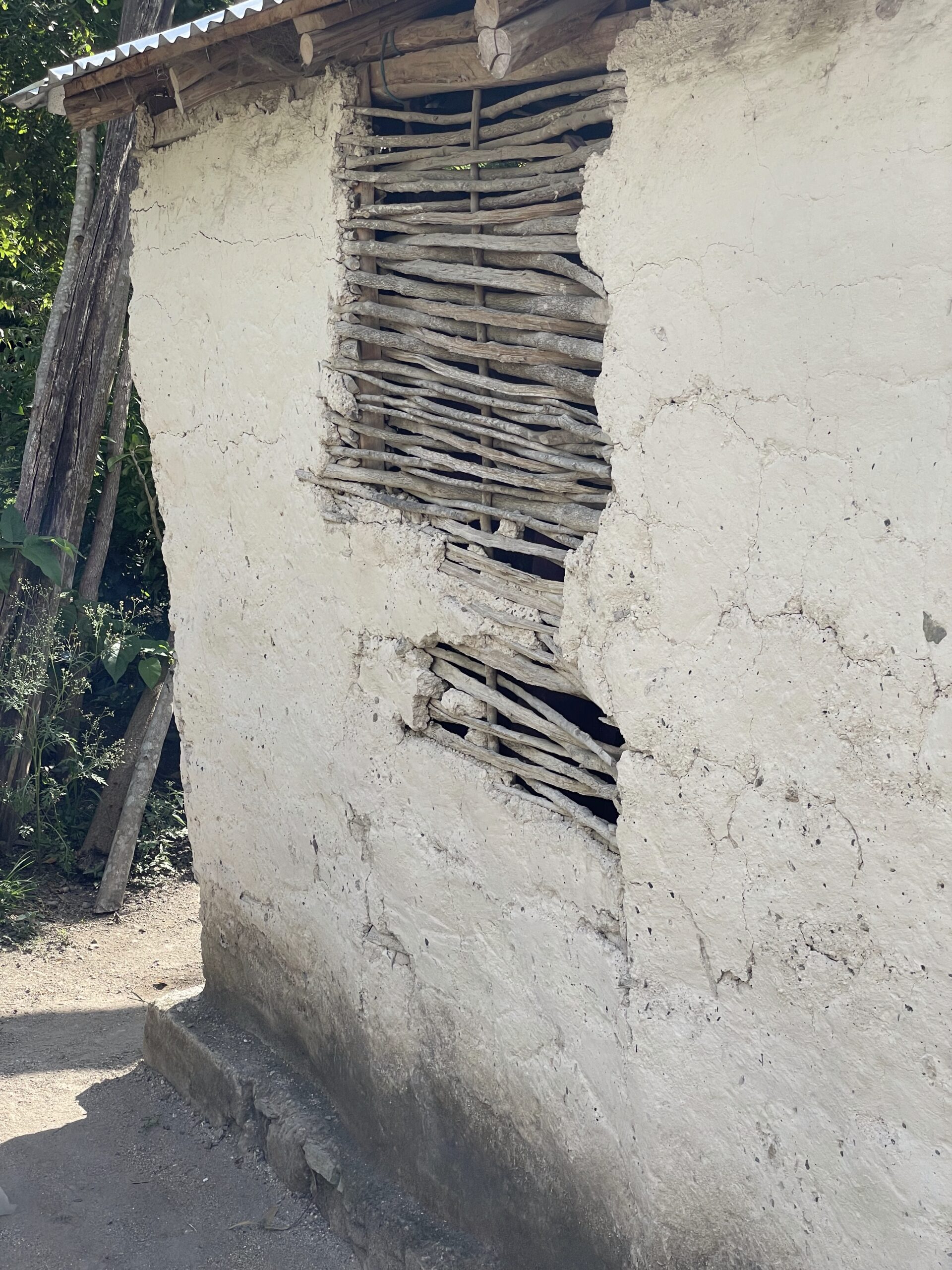
Her progress and her family’s progress is continuing. Her oldest child just spent his last year of high school studying in Gonayiv. The next two will go to Gonayiv for their last year in September. The home she built when she was part of the CLM program is a little bit worse for wear, but she and Kesner decided to hold off on minor repairs. She has been purchasing building materials because the couple decided to replace the woven-sticks-and-mud walls with new cinder-block ones, and they are ready to start the work.
She used profits from her business to buy a sow a few months ago. It’s pregnant, and should give birth soon. If the piglets survive, she plans to sell them to invest even more in her current businesses. “I really like commerce.”
And it is no wonder. With that business, she is managing her family comfortably. The kids are in school, and there is no longer any question of missing meals. She’s accumulating savings, too. When she was part of the CLM program, she was a member of one savings group. Since then, she’s joined two more, so she can now save 1,500 every week.