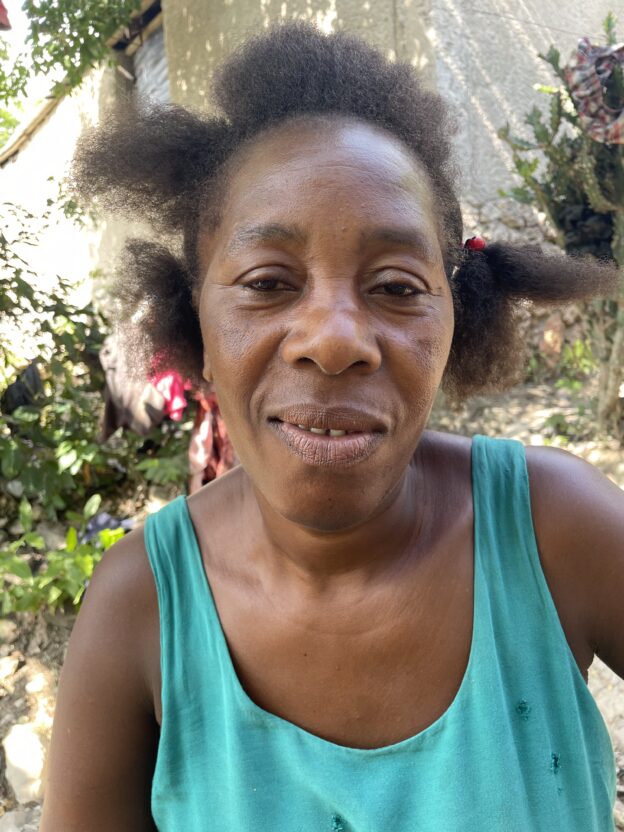
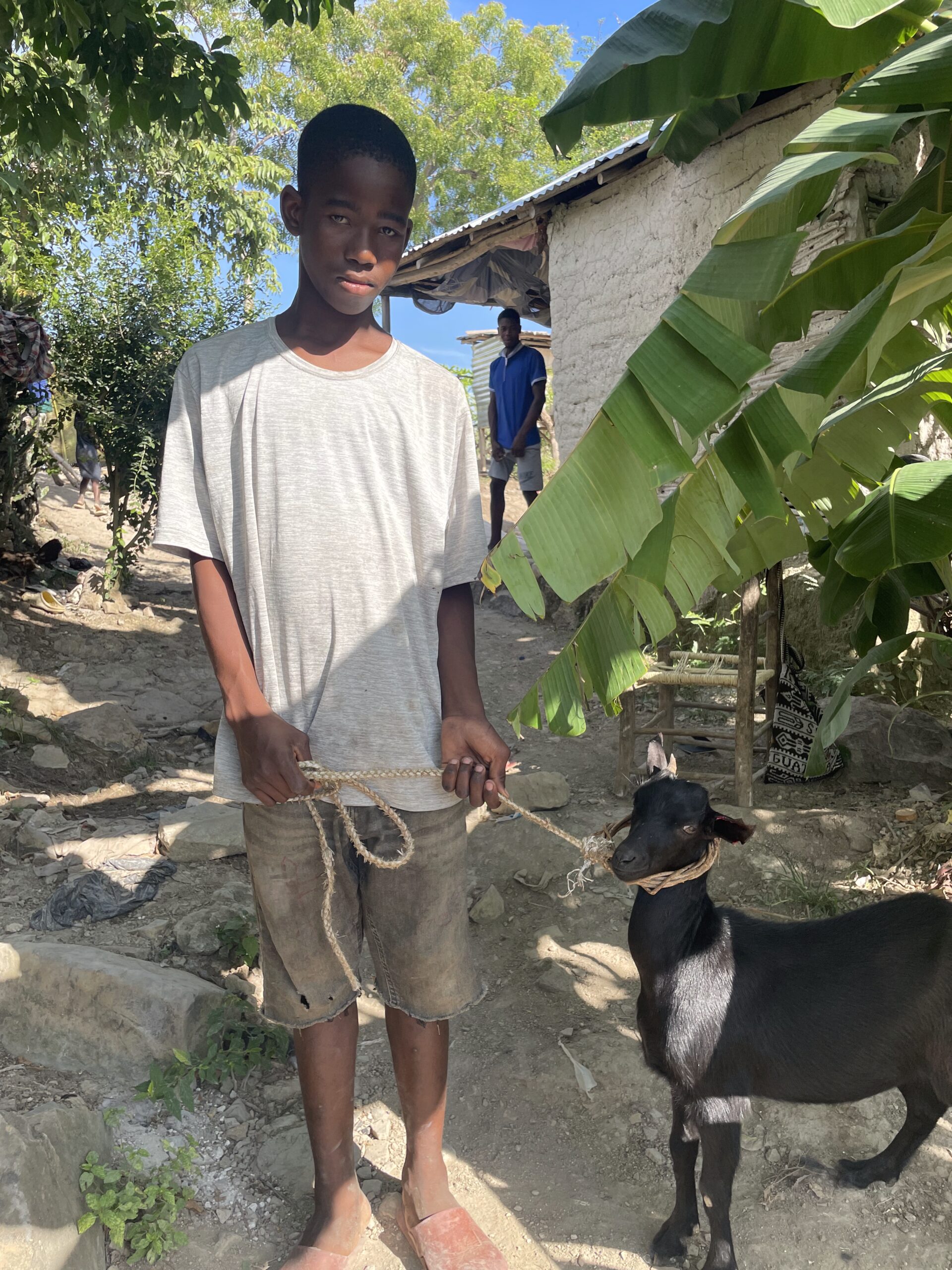
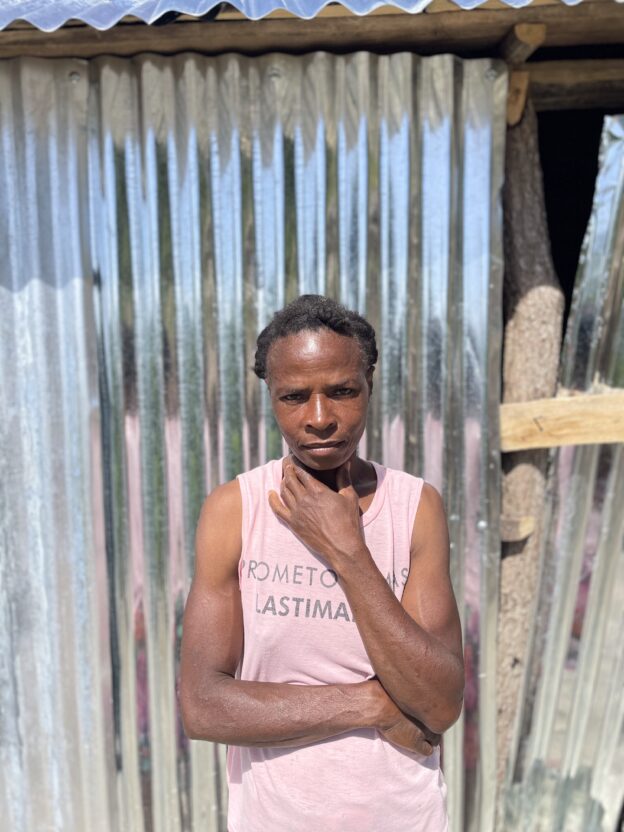
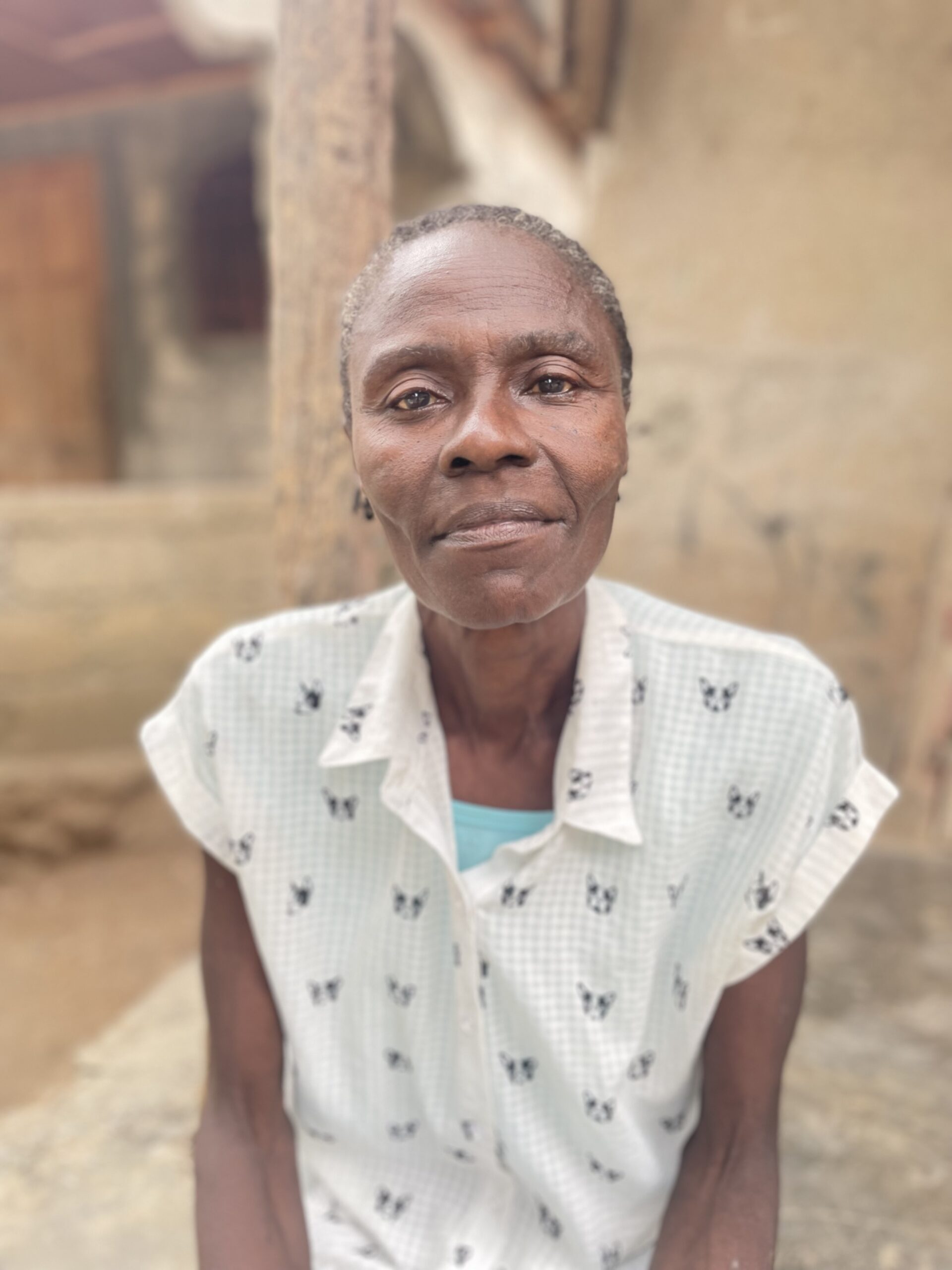
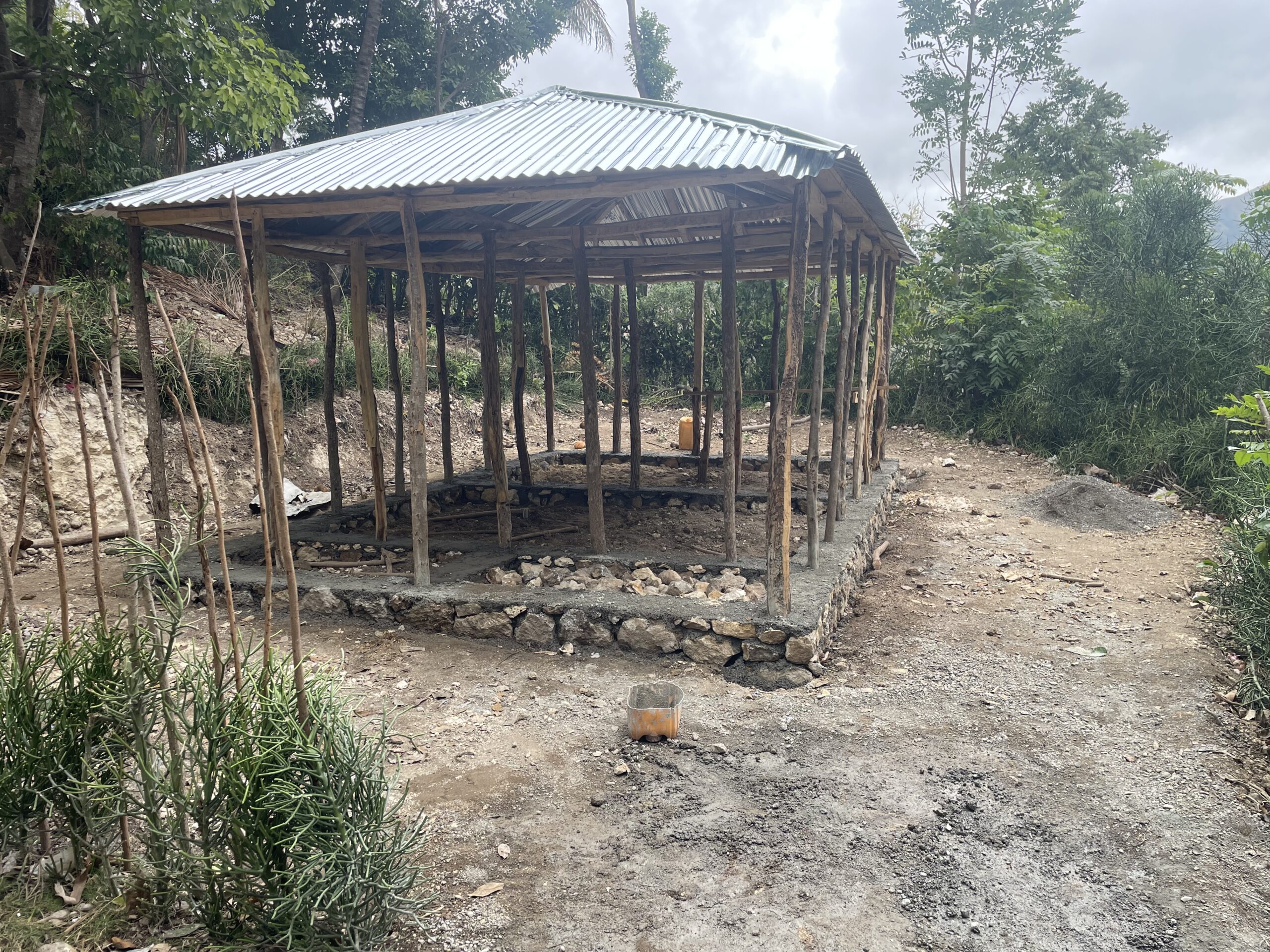
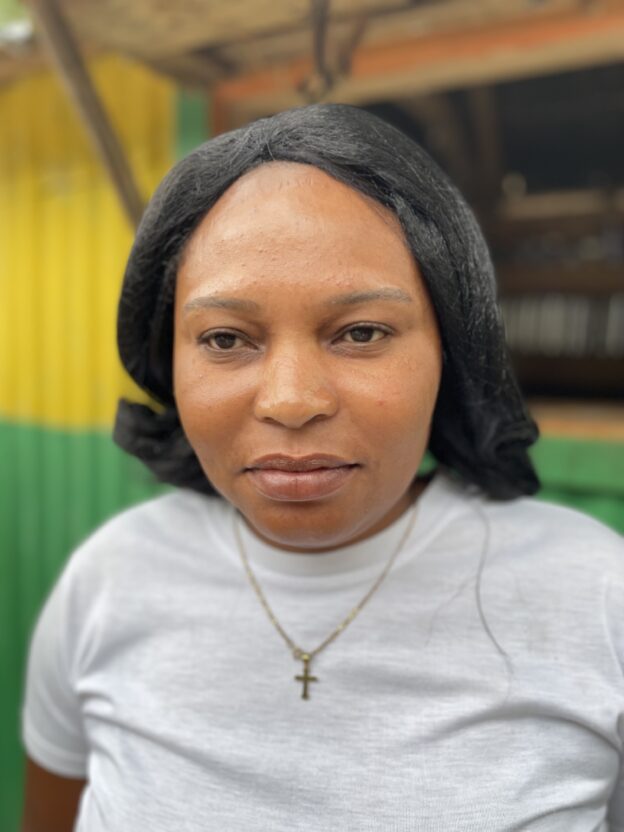
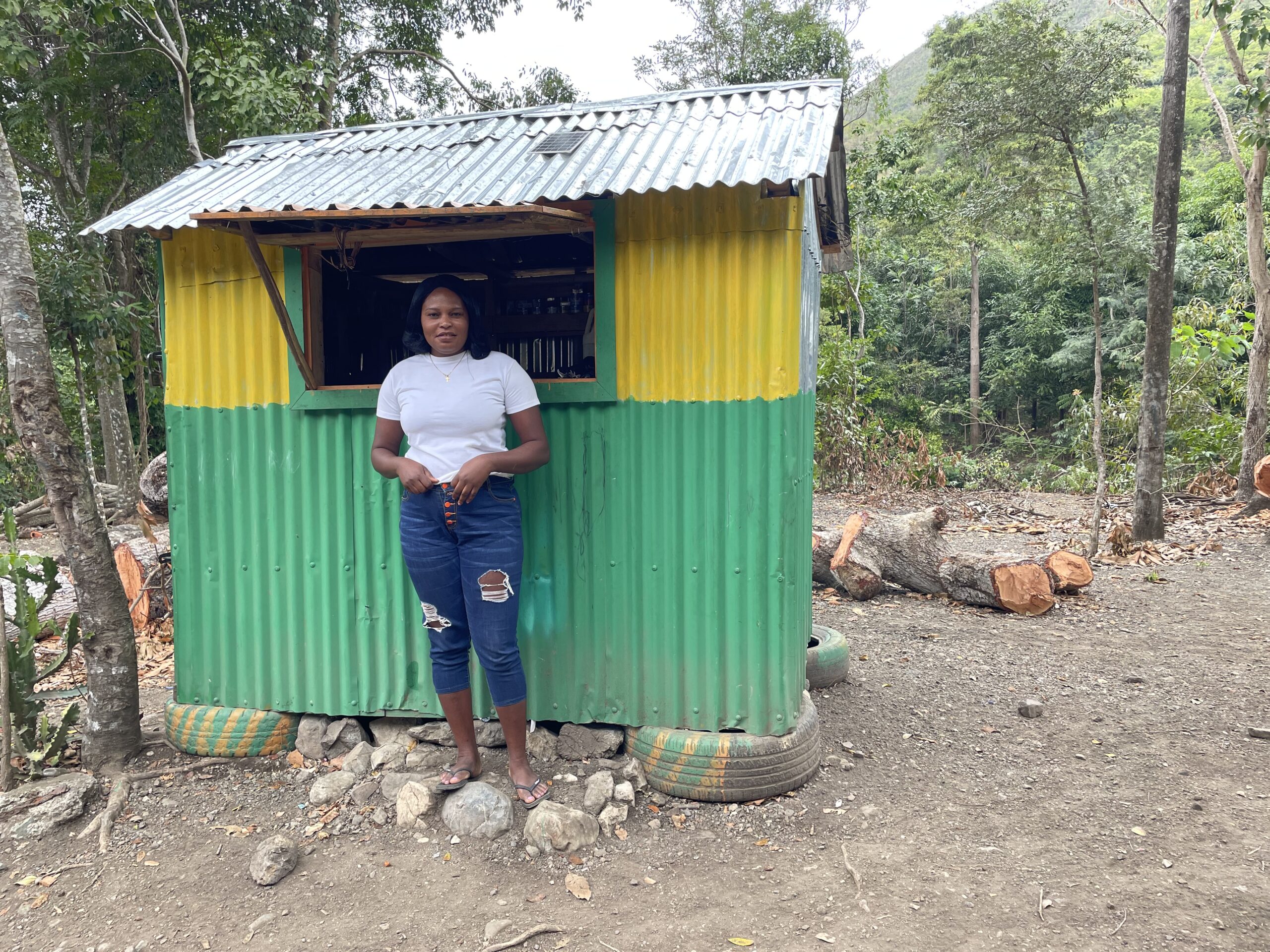
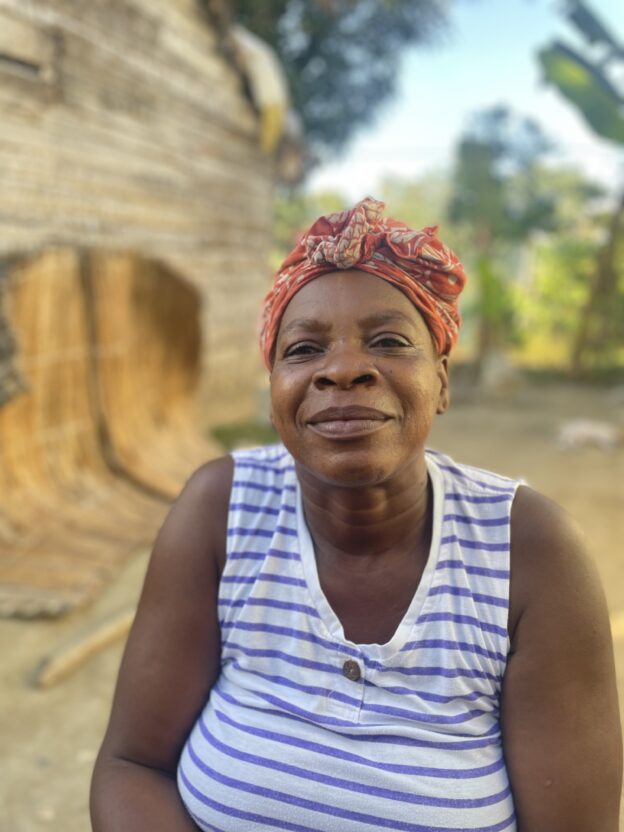
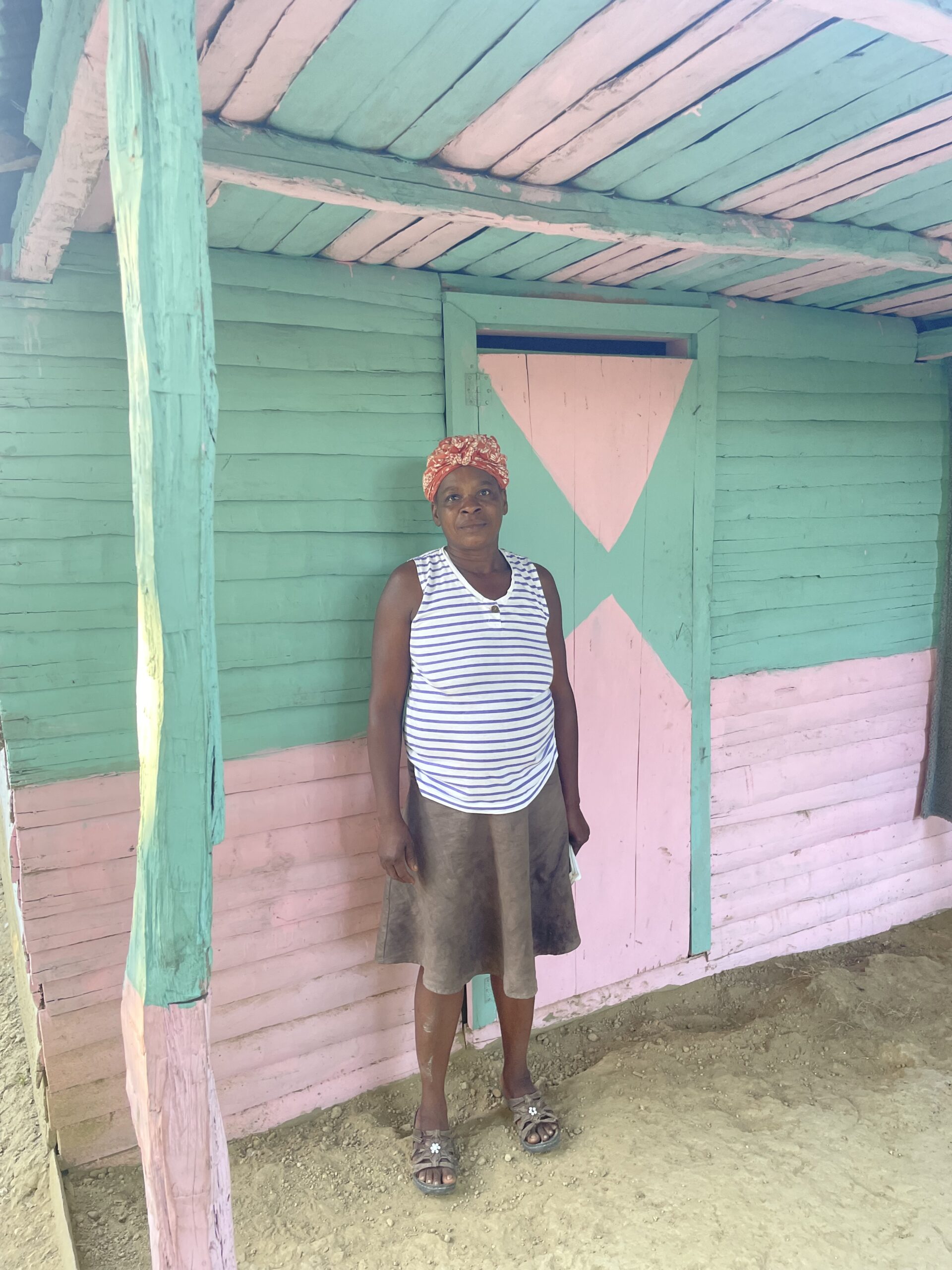
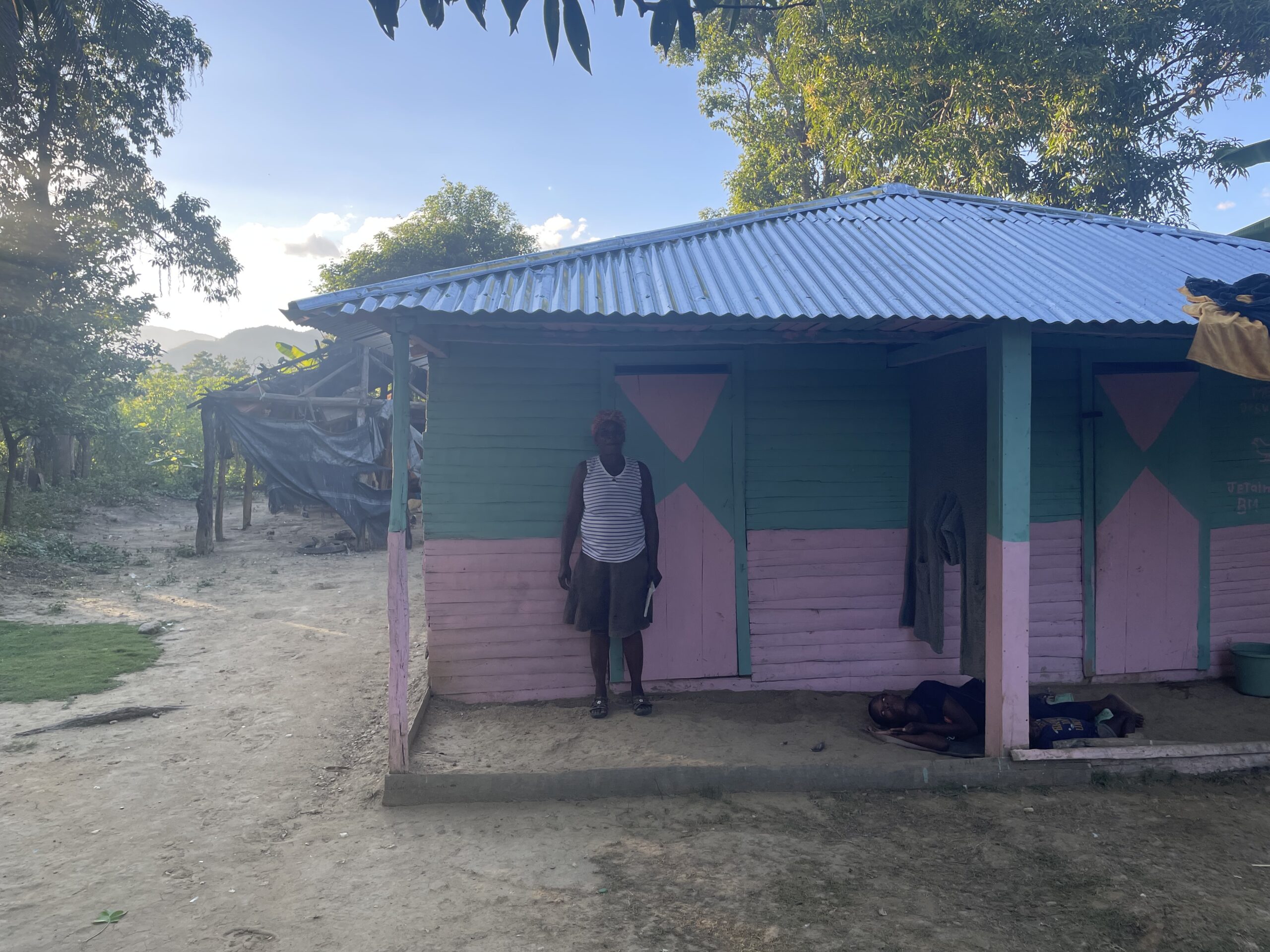
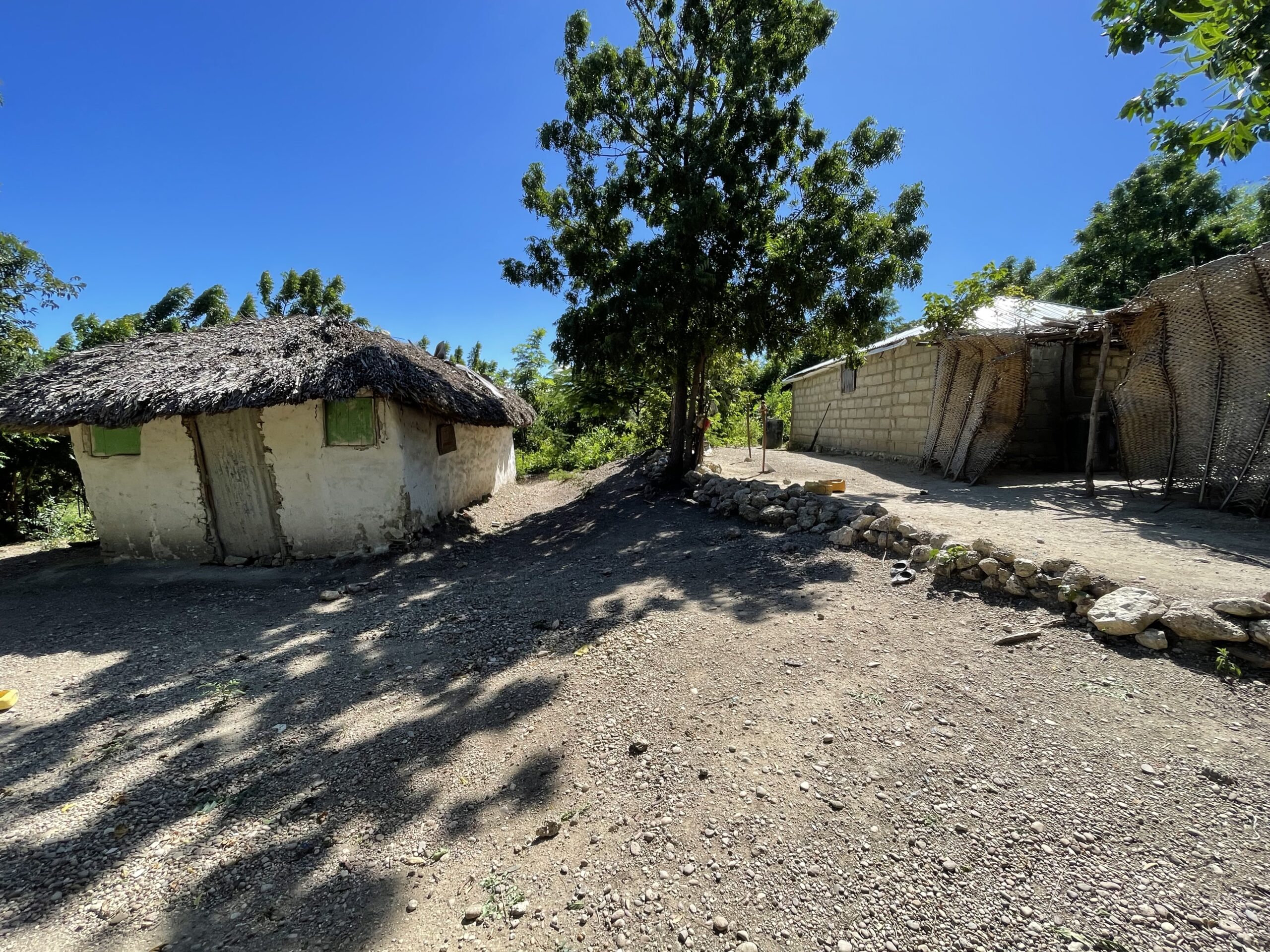
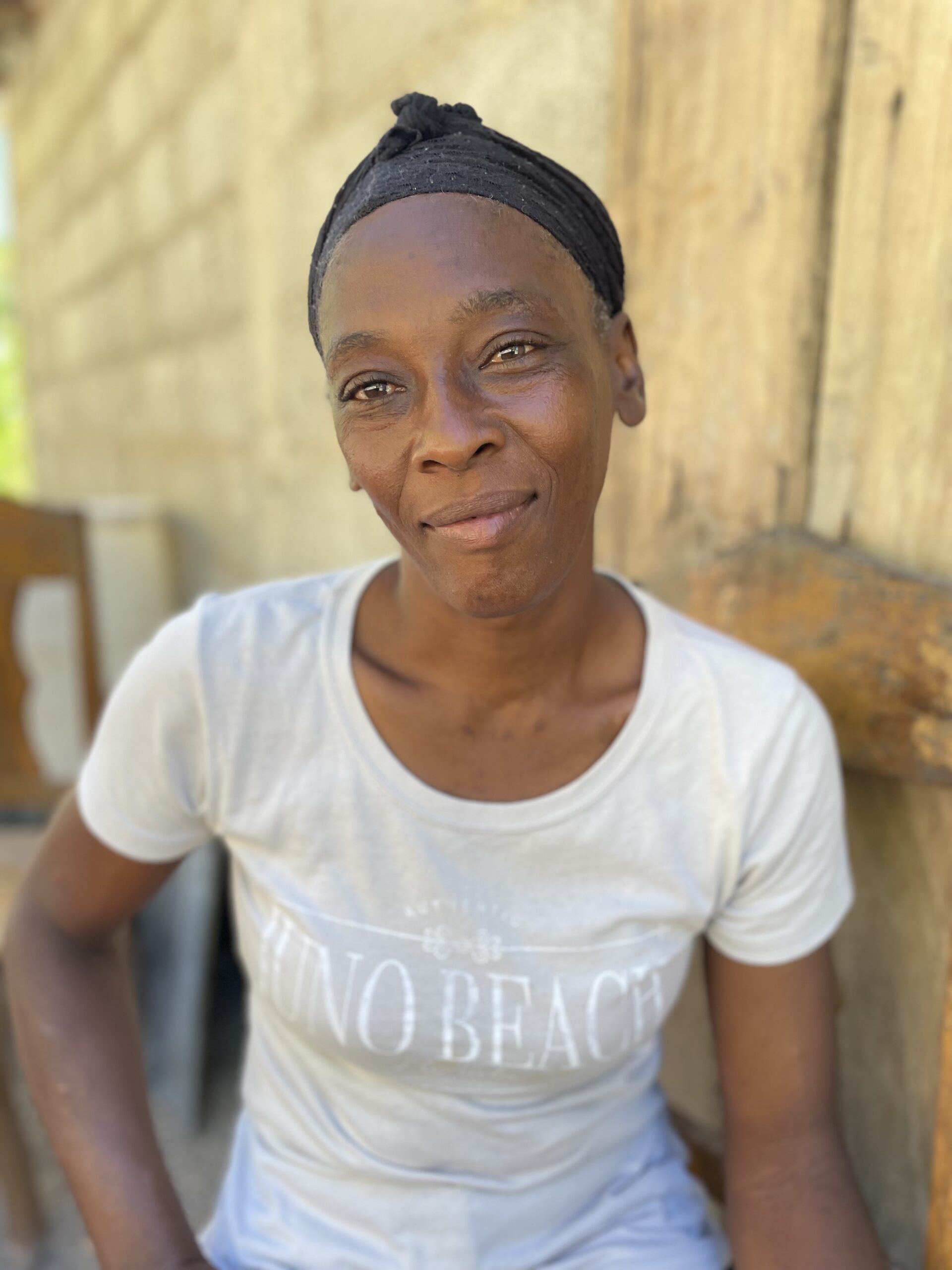
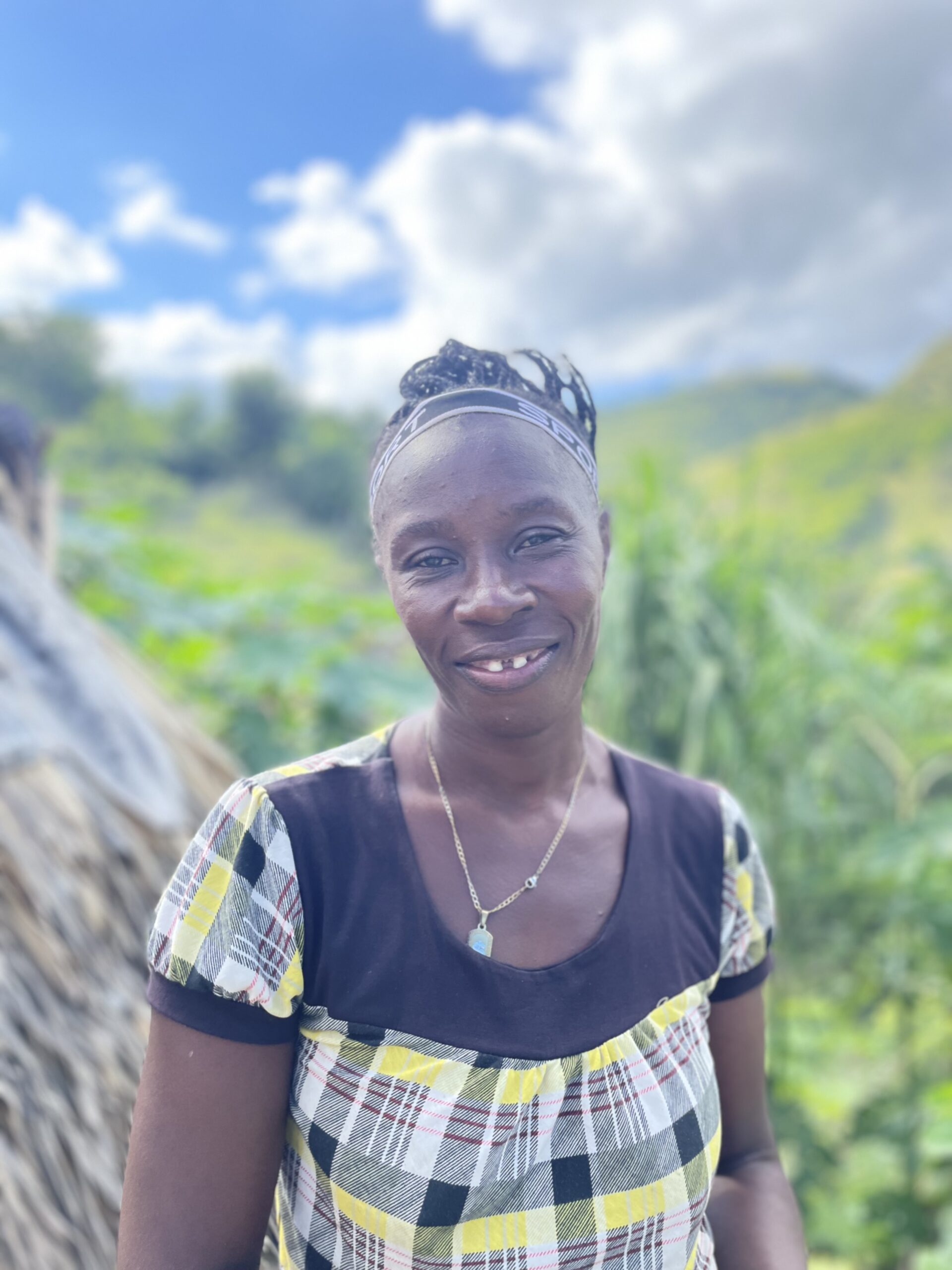
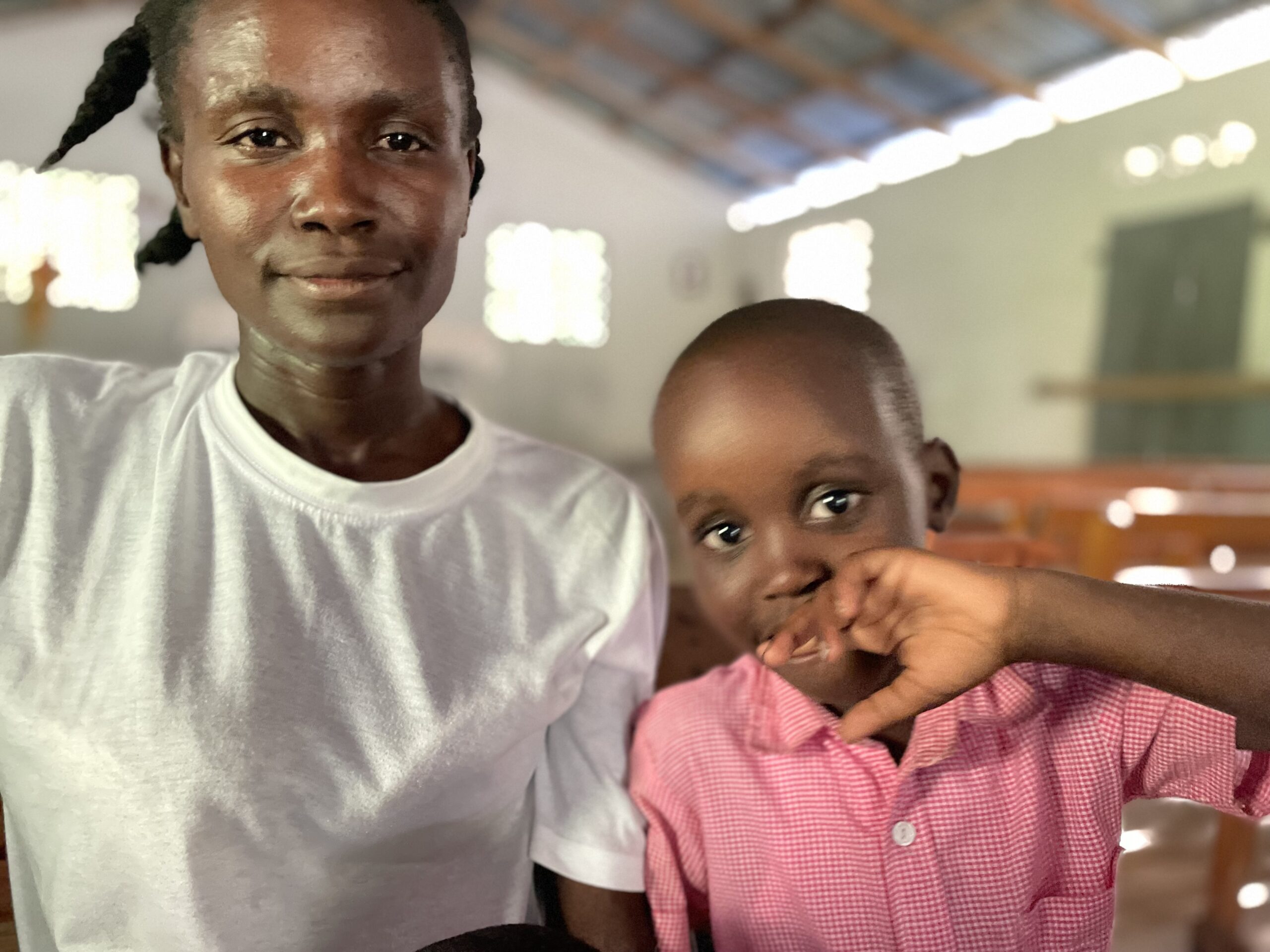
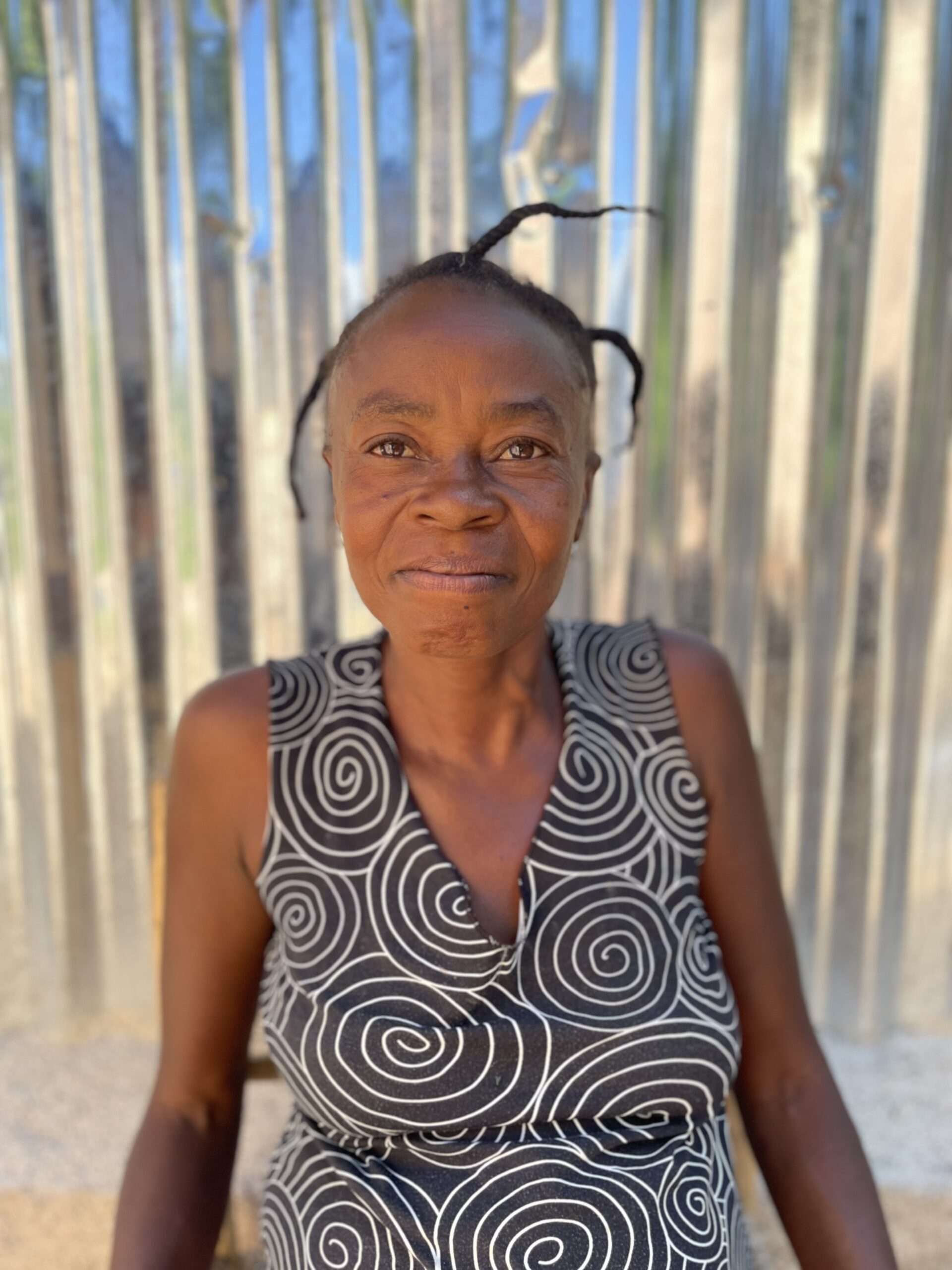
Enette and her partner, Kesner, live with their five children in Wo Vène, a neighborhood south of downtown Bonbadopolis in Haiti’s Northwest.
When she joined the CLM program in 2021, the family was really struggling. Kesner did odd jobs, sometimes selling a day of farm labor, sometimes cutting up wooden for charcoal makers. Enette had a small business. She would buy local rum by the gallon and sell it by the shot. A gallon cost 1,150 gourds, and she only had 650 gourds of working capital, so she always had a debt with her supplier. “We sometimes went two, three, four days without putting a pot on our stove.”
Even when they went hungry, the couple worked hard to send the children to school. The kids moved through classes, but it was challenging because they often had to miss time due to tuition bills their parents couldn’t pay. The couple lived their lives in a neighborhood where merchants would yell at them because they made purchases on credit and then took a long time to pay.
They joined the program, and Enette got to work. “Manno gave me 3,000 gourds. I bought food for my family with 1,000, and I put the other 2,000 gourds into business.”
Manno was her case manager’s supervisor. The 3,000 gourds were the first payment of her cash stipend. She received the stipend every month for six months. Normally Fonkoze pays the stipend to CLM families by week, and for her cohort, it would have been 750 gourds. But getting the necessary cash into the hands of the team in Bonbadopolis was challenging, so members received monthly payments instead.
With that money from her stipend, Enette added cold drinks to her rum business. She bought a very small thermos chest and filled it with half-cases of a couple of kinds of soft drinks. She would go to downtown Bonbadopolis every few days to buy ice. She managed the income carefully, adding additional kinds of beverages whenever she had enough capital to do so. Initially she just added other kinds of soft drinks, buying larger thermos chests as her business grew. But the business began to really take off the first time she bought a case of beer.
When the program was ready to provide business assets, Enette chose goats and small commerce. Her case manager bought her two goats, and gave her capital that she could use to add to her business.
Her goats never really multiplied, but they played and still play a useful role. “I can sell a goat when I need to pay the children’s school fees.” The program gave her two, and even now she only has three, but she has been selling them as she needs to. She reports that she’s sold three so far.
With her youngest son, Fenelson
Her real progress came through her commerce. Even before the program gave her investment capital, she was starting to make in grow by managing profit from her sales carefully, but getting additional capital was transformative. She went to Gonayiv, “lavil” or “the city” in the language of Bonbadopolis, and she bought various food and hygiene products. She put them in a kivèt, a plastic wash basin, which she carried around through her neighborhood on her head. She became something like a grocery store on two feet.
The commerce grew, and it continues to grow. She continues to make her purchases in Gonayiv, consistently adding to her capital, which is now more than 50,000 gourds. The business outgrew her kivèt, so she built a small display stand in front of her home. The home itself has become her shop. “Now everyone in the neighborhood buys from me.”
She also reinvested some of the grocery revenue back into her original business. Instead of buying rum by the gallon, she now buys it by the barrel. “They deliver the barrel in a truck that leaves it in front of my house.” She still sells it by the shot, but she also sells it by the gallon, to people organizing events but also to merchants who sell it shot-by-shot, as she once did. She’s proud to be the kind of supplier that she used to depend on.
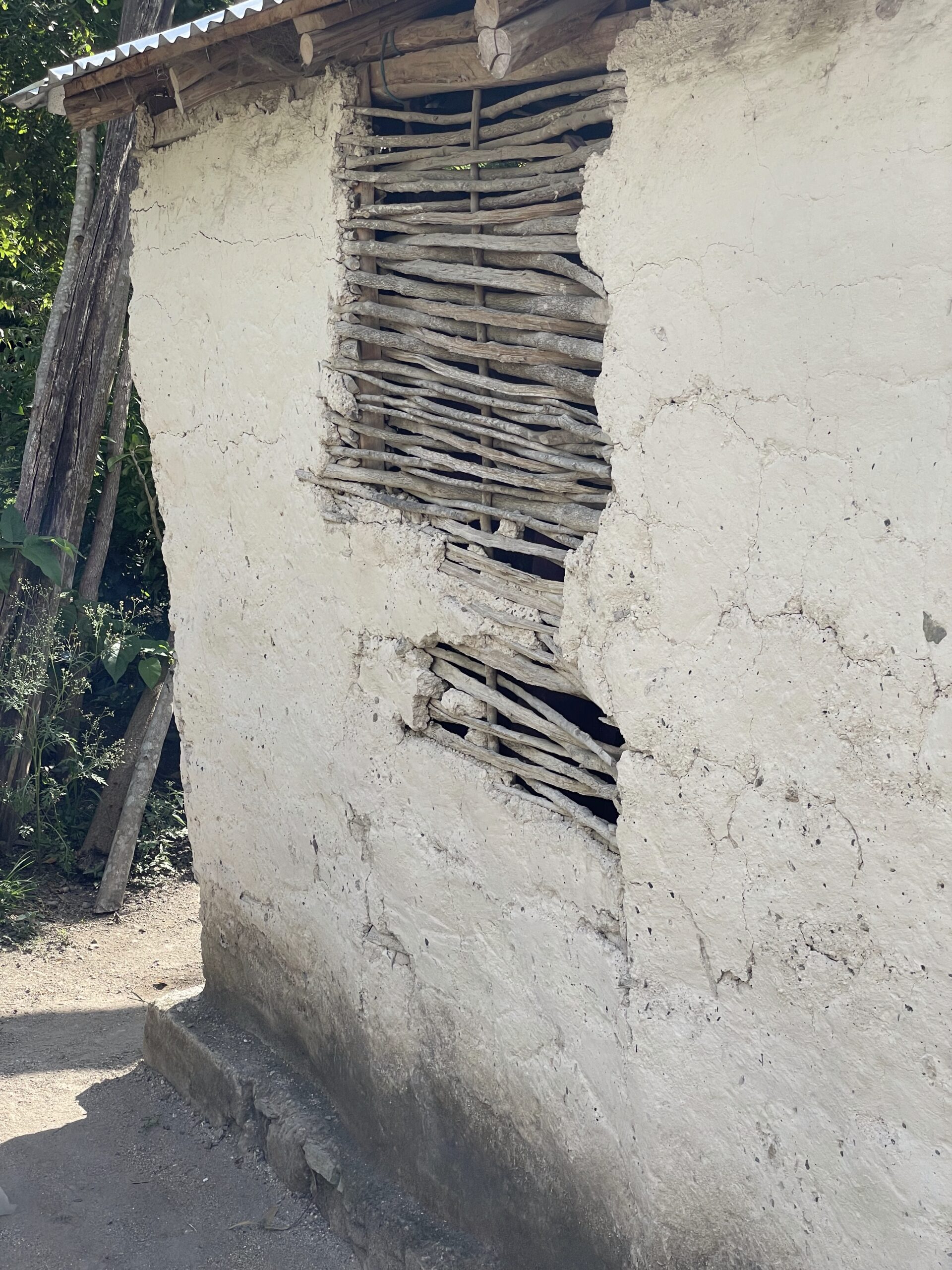
Her progress and her family’s progress is continuing. Her oldest child just spent his last year of high school studying in Gonayiv. The next two will go to Gonayiv for their last year in September. The home she built when she was part of the CLM program is a little bit worse for wear, but she and Kesner decided to hold off on minor repairs. She has been purchasing building materials because the couple decided to replace the woven-sticks-and-mud walls with new cinder-block ones, and they are ready to start the work.
She used profits from her business to buy a sow a few months ago. It’s pregnant, and should give birth soon. If the piglets survive, she plans to sell them to invest even more in her current businesses. “I really like commerce.”
And it is no wonder. With that business, she is managing her family comfortably. The kids are in school, and there is no longer any question of missing meals. She’s accumulating savings, too. When she was part of the CLM program, she was a member of one savings group. Since then, she’s joined two more, so she can now save 1,500 every week.
Fonkoze has always included persons with disabilities in the CLM program, but the program first began to seek them out after a pilot it undertook together with Haiti’s Office of the Secretary of State for the Integration of Persons with Disabilities starting in 2015. Over the years, the staff has worked with individuals with limitations of various sorts: blindness, mobility issues, and intellectual issues that we cannot even really identify.
Some of the most challenging cases, however, are members who are deaf. The coaching that we provide is built on communication, and our case managers have a difficult time communicating with members who cannot hear.
It is not just that our case managers don’t know sign language. The deaf individuals we come across in the Haitian countryside do not know a standard sign language, either. Each one communicates with the people around her or him more or less effectively using whatever system of sounds and gestures emerges through years of interactions.
Erode is a mother of three. One child lives in an orphanage. The other two younger ones live with her in Trasel, in her aging mother’s yard. She wasn’t chosen for the program because she is deaf. We only work with families in extreme poverty, and Erode easily qualified on that basis. When she joined the program, she had no income. She and her children were principally supported by her mother’s partner.
But Erode has been working hard as a program member. She invested funds that the program provided to start raising goats, and now she has five. She plans to use them to help ensure she can keep her kids in school. She invested in farming as well. Land around Provo is good for planting beans, a valuable cash crop. She also bought beans and peanuts at harvest, storing them in a small storage room until planting season, when demand for seed is high and she can sell what she has in storage at a profit. She communicates well enough with people that she knows what things are selling for and is able to do the necessary transactions.
She used other funds that the program provided to build a new home right next to her mother’s. It isn’t finished yet. She has not yet installed a door. But it is the first time that she and her kids have had their own dry and secure space to live.
She seems fully engaged in the program’s group activities as well. She participates in training workshops enthusiastically. She has friends, family, and other program members who help her follow through with their guidance. She attends her savings group’s weekly meetings, too, and she has no trouble following the procedures: she knows when to make her contribution and how much it should be. She takes out loans, and she keeps track of her repayment dates and amounts. As her case manager Payoute says, “Erode is deaf, but she knows what’s she’s about.”
Working with Erode is challenging for Payoute. As they sit together, they gesture back and forth. It is hard to be sure how much she understands of what he is trying to teach except insofar as he can see her doing things that he suggests. Her house is going up according to plan, just as her latrine did. Each sign of progress suggests some communication that has succeeded. Her goats are healthy and available for him to check when he comes by to visit. She has plenty of treated drinking water in her home. She has learned to sign her name.
One key to this success is that Erode and Payoute include a third person in their conversations. Most CLM home visits are supposed to be private conversations between a member and her case manager, but Erode’s visits include her mother as well. She has been communicating with Erode all her life, so it is much easier for her than for Payoute. And she is around all the time, so she can make sure that Erode really does make decisions and follow them up. Fonkoze has found that including supportive family members can be a key part of working with individuals who face particular challenges — whether related to hearing, to sight, or to something else.
Payoute has been learning. He did not know what it would be like to work with a deaf woman, but he has seen what she is capable of. “Someone who is deaf and cannot speak can still accomplish a lot because she does not lack clarity of thought.”
Nadege lives in two rented rooms on a house on a hill overlooking Kalabat. She and her partner have two children, and they were recently joined by her sister-in-law and the sister-in-law’s child. “I am not sure why they came to live with us. They just came. I never asked. They are family.” Nadege’s oldest child, from a previous relationship, lives with her mother.
Before she joined the CLM program, the family lived on what little her partner made. He finds occasional work as a mason. Or sometimes as a metalworker, responsible for arranging the rebar used to reinforce cinderblock construction. Nadege herself was earning no income.
Things changed almost as soon as she joined the program. She bought two goats. She had no livestock previously. And those two goats are now four. One of them had two kids. She sees the goats both as a way to manage larger expenses — she could sell one to pay school fees, for example — but also as a kind of insurance. “If my business falls apart, I can always sell a goat.”
She immediately invested in commerce as well. She started buying local rum in five-gallon jugs down in Gwomòn and selling it retail out of her home. Customers come to her with their own small bottles, which she fills. Many retail rum merchants carry a gallon and shot glasses around to community events, like wakes and cock fights. But not Nadege. She only sells out of her home. “I don’t like being around the shouting and the fights. Sometimes they throw rocks.”
The income she earns selling rum helps her manage her household expenses, but it also enables her to save. She buys shares in her savings and loan association at each week’s meeting. When the association completes its cycle, she plans to use her savings to buy more goats.
She also makes weekly contributions to a sòl, a savings club common in Haiti. Members make regular contributions, and each time they contribute, one member gets the whole pot. Nadege is in no rush. “They can give me the last turn if they want to.”
She has a plan. When her turn comes, she wants to add to her business. She won’t just buy more rum, though. Buying more stock wouldn’t mean more sales. Instead, she plans to add a second business. She says, “M pral nan laye.”
A “laye” is a flat, woven platter that rural Haitians use in various ways. She means that she will start selling “epis,” or spices. She’ll sell garlic, leeks, bouillon cubes, hot peppers, cloves, etc. A range of products that provide the basic flavorings that Haitian cooks depend on. It will give her two, separate dependable sources of income.
In the meantime, she has begun work on a home. She’s already installed a new latrine on the piece of land where she is building. She should be out of her rental before too long.
Juliane and her daughter live in a house that belongs to her sister. They themselves do not have their own home. Her daughter’s father has been dead for some time, but he was never an important source of support.
Juliane used to be a broom merchant. She would walk through her neighborhood’s hills, collecting the materials that brooms are made of in rural Haiti and bring them to a man she paid to make the brooms. Then she would lift a bundle onto her head and take them to the market for sale. She could not earn much that way, but she and her daughter ate, and she sent the girl to school.
But as Juliane has aged, her health has become a problem. It has been a long time since she felt up to hunting for what she needs to have brooms to sell, much less carry bundles of brooms to market. When she joined the CLM program, she was living on gifts from family members and the little bit her daughter earns as a teacher in a local preschool. She has no other children with her, and her daughter has no children herself.
When she joined the program, Juliane decided to to buy two goats with the funds the program provided, and one of them has since given birth to a kid. She had initially wanted to use the rest of the money to start a new business in the place of her broom business, but she eventually decided against it. She decided that she doesn’t feel up to all the back and forth that managing a commerce requires. So, she bought an additional goat instead. The money was enough that she got one that was already pregnant.
The daughter manages a small business selling laundry and hygiene products to supplement her earnings as a teacher, and Juliane took the 3,000 gourds that were left over after she purchased the pregnant goat, and she invested the money in her daughter’s business. She can now earn more because she sells a greater range of products.
Juliane is excited about the way her life has changed. “I never thought I would be standing in a market, buying a goat.” But that excitement doesn’t create any income, and she needs income both for herself and her daughter. They need cash to buy food every day and to make weekly deposits in her savings and loan association.
The savings are important both for the opportunities that accumulated savings can eventually provide and for the credit she can access. She borrowed 2,000 gourds a short while ago because she and her daughter were short of money to buy food. She paid her first reimbursement on time and is preparing her second one.
But she is most excited about the home that she and her daughter are building with the program’s help. The frame is up, and the roof is on. The cement foundation is in place. The carpenters are now preparing the lumber she’ll need for the walls and the doors.
Mariane graduated from the CLM program in December 2024. Her life had changed considerably during her time in the program.
She is a single mother. She and her daughter had been living with her family when she joined CLM. She had no way to earn income herself. They lived instead off support she got from her brother. “He would give me money, but it just passed through my hands. I didn’t know what to do with it. I never thought of starting a business.”
She listened carefully to what they told her about starting and managing a business at her first CLM training session. She bought goats with funds that the program provided, but she also invested in a business selling secondhand clothing. She did her buying and selling in downtown Gwomòn, so she was there, moving around the streets a lot. And the business took off. Her initial investment was just 10,000 gourds, and it really grew. She also took care of her goats, and eventually bought a pig as well.
But the commerce became the most interesting part of her story. Building it meant spending time walking around the town, and she eventually drew someone’s attention. That someone became her new life partner. She had been raising her daughter alone, but had found someone she wanted to invite into her life. She liked the way he recognized what she had become. “He told everyone, even his family, that he wasn’t the one who set me up in business, that I had built it by myself.”
But he wasn’t completely comfortable with the type of business she had chosen. “He didn’t like the way my clothing business forced me to spend all my time downtown.”
So they found a solution. He would build her a small boutique that she could set up as a kind of convenience store near her home instead of selling clothing downtown. She’d sell basic groceries and products for laundry and hygiene. She managed her investment well. Eventually her merchandise was worth more than 30,000 gourds.
It wasn’t easy. She needed to get permission from a landowner to set up the shed that housed her business. Her own home was too far off the main dirt road that runs through the area. So she and her daughter moved into a room she rented right on that road. Her landlord was happy to let a tenant set up a business.
Now her rental agreement is almost over, but she’s been able to convince the owner to let the business stay, even if she moves back to her own home. She won’t even pay rent. She just agreed to keep the small yard around it and in front of the landlord’s porch clean and swept.
The business briefly collapsed. She ran through the capital in it when her partner became sick. She spent almost everything nursing him back to health. But when he returned to health, she withdrew money that she had in a savings account and got herself started once again. Her partner is now healthy, and she’s hoping to build up savings once more.
In the meantime, she has been taking care of her livestock, too. She now has six goats, and her sow has eight piglets that are nearly ready for sale. It will be a windfall, and she has plans for the money. She is hoping to by a plot of land closer to downtown, where her boutique will see more traffic and her girl will have easy access to good schools.
Christmène was one of the speakers at the ceremony when she and 173 CLM members graduated from the program in Gwo Moulen. Like most of the women who spoke, her story was striking, but what she said about repairing her home was especially important. “It never entered my head that I could do it without a man.”
Her children’s father left her in an old, dilapidated house with their two young kids to go off and work in the Dominican Republic. She was pregnant with their third child at the time. She lost that child, and she never heard from her husband again. She took care of her two remaining children as a day laborer in her neighbors’ fields.
She says that her case manager, Rony, really encouraged her. She used savings from her weekly stipend to start a small business selling bread and sugar, two staples that rural Haitians need to drink their traditional morning coffee. The income from that business, together with her stipend, helped her manage the household and make weekly contributions to her savings group. But it also helped her move forward with her home.
She had to have someone cut a flat spot into the hill she lives on first. “They asked me for 7,500 gourds, but I talked with them, and they accepted 5,000.”
Some of the support posts from her old house could be used for the new one, but she needed to buy twelve new ones, too. She had a tree in her yard that could be harvested for the lumber that her new roof would require, but her biggest challenge would be acquiring the palmwood she’d need.
She’d have to buy multiple trees and have them cut into planks for the walls. “I just talked to some people. I started asking people just to hold onto 500 gourds at a time for me.” By making regular payments she got the planks. “I still owe a couple of people money, but I am continuing to pay them.”
The last big challenge was the roof. CLM gave her enough money to help purchase sheets of metal roofing. The house she wanted would need 34. She could add her own money to buy what Fonkoze would not pay for, but they could not be purchased in Gwo Moulen. She’d have to get them down the mountain, in Laskawobas. “I carried them up seven at a time.” With a smile she adds, ” The skin of the shoulder I carried them on still hasn’t healed.”
The last thing she needed was a few additional planks of hardwood to finish the window frames and a door. She would be able to take one of her doors from the old house.
“Now my children and I live in a new, three-room house, and I know that there is nothing man can do that a woman can’t do too.”
Esterlanda lives in Lagon, a neighborhood on the eastern end of Gwo Moulen, along the path that leads to the market in Do Bwa Wouj. She lived in a house that her husband, Makenson, had purchased from his brother. That brother had inherited the house when the brothers’ parents died.
Makenson was the couple’s main earner. “He always worked hard,” Esterlanda says. He would leave the area for four to five months at a time to work odd jobs in the Dominican Republic and return with his earnings. When he was in Gwo Moulen with Esterlanda and their girls, he would work their neighbors’ fields as a day laborer.
They joined the CLM program, and one important change in their lives is that Makenson no longer thinks of going away. Esterlanda bought two goats and a small pig with the money Fonkoze set aside for her to invest, but Makenson has taken over care of the livestock. The two goats are now nine, and the sow has three healthy young. Because their home did not need repair, they were able to use the funds available for home repair to buy a horse. “I can’t leave. I have to take care of our animals,” Makenson says, and though he says he “can’t” leave and that he “has to accept” not going away, he is happy about the new situation, able now to live year-round with his wife and his young daughters.
And now Esterlanda is adding to their income. It started with a question from her case manager, Rony. “Wouldn’t you like to start earning money, too?
She started small, selling prepared seasoning. Haitian cooking is labor-intensive, and one big part of the work involves grinding seasonings like leeks and garlic into a smooth paste with salt, oil and other herbs. The job is generally done with a mortar and pestle, standard equipment in a Haitian kitchen, and it takes a lot of time to get the mixture as smooth as Haitian chefs want it. Esterlanda invested four weeks of her stipend, or 2,400 gourds, which is less than $20. She prepared and sold the seasoning ready-to-use, and her business started to grow.
But it grew more slowly than she hoped. “Other people were selling it too, and some of it wasn’t good, so people stopped buying it at all.”
By then, however, her business capital had grown from 2,400 gourds to about 5,000. She started buying small loads of used clothing in the market in Laskawobas. She would walk around Gwo Moulen, selling the clothing item-by-item. Before long, she had grown her capital again, from 5,000 gourds to 10,000. She paused her business in the build-up to graduation. She’s been busy. But she is excited to get back to it. December is the best season in Haiti for those who sell clothes because many Haitians want to celebrate the New Year with new outfits.
She did not stop doing business entirely, however. While part of the CLM program, she participated in a special training called “transformation.” It involves producing higher mark-up items out of basic ingredients. She learned to make bonbon chodye, a cake that can be baked in a regular Haitian pot over a cooking fire, karapinya, which are peanuts roasted in sugar with ginger and cinnamon, and other goods as well. She sells to a lot of children who want snacks at school.
She does not have a clear sense of how much money she has in this business right now. Her purchases are somewhat scattered, so it is harder to keep track of the total. But when asked how she can be sure it is profitable, she explains what she is able to do with the revenue it generates. It is her main source of income. She uses it to save 1,000 gourds every week in her savings club. She now holds two accounts so she can save 1,000 instead of just 500. And she also uses it for household expenses.
The savings group has already been useful. The couple had always done some farming, but not much, working mainly for other local farmers. Their case manager, however, encouraged them to invest in their own crops, so Esterlanda borrowed enough money from the savings group to plant a crop of beans, one of the area’s important cash crops. With the 85,000 that they assembled from the sale of that harvest and the payout she received from the group when its cycle ended, the couple bought a cow with a young calf already trailing behind it.
Though she has doubled the amount she saves each week, Esterlanda isn’t sure what she and Makenson will do with all the savings when the new savings cycle ends. She thinks of buying another cow, but she isn’t sure. “We will make a plan when the time comes.”
Ivronie’s life has changed in two important ways in recent years.
The first came before she joined the CLM program. She was a widow, living with her three young children. She met her second husband, Djo. “He took me with my three children and accepted them as his own.”
She had been struggling to keep her children fed by farming. When she could put her hands on some money, she would manage what she calls “komès sou tèt,” or business on her head. She would buy a small load of produce at the market in Do Bwa Wouj, hike two-three hours down the mountain to downtown Laskawobas with the produce on her head, and sell it there.
Djo changed much of that as soon as they met. “When he saw the way that I was struggling, he bought me a horse.” That meant she had a pack animal to carry the load for her. She could buy more and suffer less. He also told her to stop farming. He would do her farming for her so she could focus on other things.
She joined the program, and she began to have the resources to make her business grow. She bought two goats and a pig with funds she received as a member of the program. She now has five goats, and her sow has four piglets. The couple was eventually able to put money from their harvest together with what Ivronie saved during her saving group’s first twelve-month cycle to buy a cow, which is now pregnant.
Thanks to her horse and to the cash she had available because of CLM, her business, buying in Do Bwa Wouj and selling in Laskawobas was growing, but she ran into a problem. When she became pregnant, the trip up and down the mountain was too much. So she changed her business, starting to sell basic groceries out of her home. It is a difficult business, because friends and neighbors are always asking to buy on credit. If too much of the capital stays in clients’ hands, it can be hard to restock.
But Ivronie is making it work. “It just takes patience. They pay eventually.” And her patience is paying off. Thanks to her business, she’s is able to keep her children fed and send the older ones to school. The small business has grown steadily, and she was able to take advantage of an important new development in her community to take it to another level.
The CLM program helps local leaders organize community development committees, or CDCs, where it works. It coaches these committees through the process of developing and executing a development project. The seven neighborhood committees in Gwo Moulen decided to organize themselves into a single group to execute one project: improving the path between Gwo Moulen and Central Laskawobas so that motorcycles can use it.
The project was successful, and motorcycle taxis now work the hill. Ivronie began hiring one to bring large loads of merchandise up to her home. She’s become a wholesaler, selling groceries to the other merchants at the top of the mountain, for whom the chance to stock their businesses without having to hike downhill is a considerable blessing.
Ivronie continues to save in her group. She says that, at the end of the cycle, she and Djo want to buy another cow. She hopes eventually to use her cows for an even larger kind of purchase. “I have young children. I want to buy more land so that I’ll have something to leave them someday.”
Rose-Mirtha is a young mother of a small girl. She was a student at school in Laskawobas, when she was raped by another student. When she was pregnant, she moved back in with her mother and her stepfather. People told her that she should get rid of the baby, but she couldn’t bring herself to do it.
When she joined the program, she was living with her daughter, her mother, her mother’s two younger children, and her stepfather on the stepfather’s family’s land. But she and her mother worked quickly to build a small new house on their own land. She likes her stepfather, but she explains, “He has other, older children, and we didn’t like the way they treated my mother.” The stepfather now lives with them in their home.
Even before she joined CLM, Rose-Mirtha had a dream. “I always hoped my life would change. I dreamed of having the means myself to be able to handle things if my girl or I should have a problem. I just didn’t know how to get started.”
She took a first step forward by finding a way to manage her money. “I would come upon a hundred gourds now and then, and I’d always make a plan to buy a chicken. But the money would end up going towards some other expense. The CLM training encouraged me to save, and the savings group they organized gave me a way to do it.”
She started a business. She buys green coffee beans at the market in Do Bwa Wouj, and she sells them down the mountain in Laskawobas. She used funds she received from Fonkoze for investment to buy livestock. And because her mother spent most of the money that they needed for the house they share, she had money for her own home repair available. When her savings group completed its cycle, she added the payout to her home repair money and bought a cow.
She plans on living in Gwo Moulen through the end of the school year. While she is there, she works as a schoolteacher there. “I like the way I can learn from the children and they can learn from me.” But she’d like to go back to school herself. The situation in Laskawobas has been uncertain, and she thinks it is smarter to wait, but if things look safer next year, she wants to go back. “There are lots of jobs you can do, and education makes it easier to succeed.”
Gidette lives in Hat, a community along the Artibonite River, just east of downtown Laskawobas. It is where she was born and raised, and she lives there with four of her five children. Her older lives off on her own now, but the younger woman’s daughter lives with Gidette so she can attend the school nearby.
Gidette and her husband have always worked together to earn the income they need. He fishes, and she takes the fish to market for sale as long as the catch is good enough to make the trip to downtown Laskawobas worthwhile. If it is not enough, he just sells it to the buyers who go to the river to meet fishermen there. “It’s best when I can go to the market. I can buy what we need while I’m there. It’s cheaper than buying from neighbors.”
The family was getting by. Gidette made weekly contributions to her sòl, a savings club common in Haiti. She used the sòl to save the money for the children’s school fees.
But her husband’s catches were getting small while prices were getting higher. So, the family was struggling.
After eighteen months in the CLM program, some things are the same for the family, but much has changed as well. Their main source of income for daily expenses is still his fishing. Gidette has not chosen to invest in other commerce.
She decided, however, to invest in livestock. She bought two goats with funds that the program provided, and now she has four. She also bought two turkeys, which have begun laying eggs, and a pair of ducks. “Animals are hope. You can sell them when you need the money, and when people see you have livestock, they will lend you money, too.”
She hopes that the goats will continue producing and that someday she will be able to buy a cow. It will be her second because since she joined the program, a cow she was keeping for a neighbor had a calf, which she received as payment.
But for Gidette, the most important change has been her home. She was living in her mother-in-law’s old house, and it was falling apart. She watched her fellow CLM members finish home repair one after another, but hers was going slowly. “Some built two-room houses. Some built three rooms. I wanted a home with four rooms.”
She says that as graduation began to approach and she wasn’t finished, her case manager started to really push. “I told her not to worry. I had the posts and the palm trees for the walls. I told her that one day she come by and ‘pop’ it would be finished. I had given my word.”
And now, in fact, she has the four-room home she hoped for. And she already has plans for further improvements. She is saving in the second cycle of the savings and loan association the CLM set up for her and her fellow members, and when the 12-month saving cycle ends, she will buy cement and put down a floor.
Granisia lives in Granfòn, a neighborhood that is a short, winding path off the main road that cuts through Bedeyenn. She lives with her husband and their three daughters.
Her husband Louisius used to contribute to the household income by making cooking charcoal. When he had a load ready for sale, he would contact a merchant, who would collect it and bring it to market.
But his strength has deteriorated over the last years, and he could not longer do the heavy work that charcoal production requires. He began collecting and selling the long, straight branches that the poorer Haitians in the region split and weave together to make walls for their homes, but this work is less profitable.
Granisia herself had a grocery business, selling food staples to neighbors out of her home: sugar, rice, flour, etc. She had about 10,000 gourds in the business, at a time when that was enough to buy a reasonable amount of stuff. But her husband’s reduced income put strain on the business. The expenses of feeding their children and sending them to school ate away from her capital until, by the time she joined CLM, almost all of the money in her business was gone. She was left with little more than some rum, which she sold by the shot, and a pack of cigarettes, which she sold one-by-one.
She joined the program and started to receive her cash stipend. Normally, these stipends have been distributed to CLM members in weekly payments, but getting hold of cash has been a struggle for Fonkoze the past couple of years, and the team in the Northwest decided to simplify things by paying once-a-month instead.
Granisia received 2,000 gourds, or about $15, per month for six months. It was very little money by most measures, but she did a lot with it. “I bought food for my family for 500 gourds, saved 500 gourds in my association, and put 1,000 into my business.” She added Toro, a popular energy drink, to her merchandise. She’d maximize her sales by putting her business on her head and hiking to the local cockfights, where rum and Toro is a popular combination and men like to smoke.
When the program gave her the first 15,000 gourds of her investment fund, she bought oil and sugar and a few other staples, which she sells out of her home. “I don’t like selling in the market. Too many people ask for credit.”
This is directly opposed to most of what we have heard over the years. Many members have told us that they sell in the market rather than at home because their neighbors are more likely to ask them for credit than strangers in a market are and it is easier to say “no” to the latter.
But Granisia has an explanation. “You have to sell some on credit either way, but when you give credit at a business in your home, you’re giving it to friends and neighbors who will pay.” She immediately cites the example of a neighbor who is dealing with a death in her family, which means receiving and feeding lots of people at a wake. “She didn’t know she’d have all that expense right now. I had to give her credit. It solves her problem and means a big sale for me.”
With the other 15,000 gourds that she receive, Granisia bought a goat and a sheep. Each has had a first litter, and both are pregnant again. She thinks the animals are important, because having a small collection of fertile females can enable you to send children to school every year.
Shortly after graduation, Granisia’s small commerce had shrunk back once more to a minimum, and it’s worth understanding why. When planting season came, she sold out most of her merchandise and invested her capital in her farming, holding on only to the business she carries to cockfights as a way to keep a steady trickle of income coming in.
Her main cash crops are beans and peanuts, and she has a plan for each. She plans to store her peanuts after harvest. The moment of harvest is normally when the prices are lowest. Thanks to her own hard work and the CLM program, she now has a dry, secure home where she can store peanuts safely until the prices rise again. She hopes that she’ll make enough to buy an additional goat. And she will reinvest in commerce, too.
She will sell some of the beans, as well, but some will be part of an interesting system of regional cooperation. She has friends farther up the mountain towards Ma Wouj. The difference in altitude is enough that the neighborhoods have different planting seasons. Part of Granisia’s harvest will be lent to friends uphill so that they have beans they can plant. When they have harvested, they will lend beans back to Granisia.
Granisia’s leaky old home one the left. Her new home on the right with a cool, covered area in front.
Sadilia lives in Dipre, right along a road that connects the main road from Answouj, through Bedeyenn, and up to Ma Wouj to Bonbadopolis to the southwest.
She and her two children had been living with the kids’ father with his family, but he wasn’t really able to contribute to helping her take care of them, and she was increasingly uncomfortable in her in-laws’ space. So she left with her children. Initially, she and the children moved in with her mother. She band their father were still together, though they did not live in the same home. Even when she had lived with her in-law’s, her partner had always had his own small, separate house.
For years, she did everything she could for her children through farming. She and her partner would plant their fields and then bring the harvest to market for sale. His contribution decreased and eventually stopped entirely shortly after she joined the program.
Sadilia talked to a sister who was willing to sell her a small plot on highly favorable terms. The total cost would be 100,000 gourds, or about $770, but she’d only need to pay 30,000 up front. “My sister will be patient.” Her sister actually wanted to give her the land as a gift, but Sadilia did not like the idea. “When she and I are gone, I don’t want any cause for confusion between her kids and mine.”
She’s poured half the investment capital that Fonkoze provided into a grocery business. She sells staples out of her home, but she also brings her business to a spot down the street, where there is a small daily market at an intersection. Locals shop there just for their immediate needs. Sales are small but steady.
With the other half of the fund, she bought two goats. Her care of them has yielded good results. She now has eight. She wants to use them to grow her commerce. Her local sales are strictly retail, but she hopes eventually to have enough capital to go buying wholesale in Gonayiv, the nearest city, and to become a supplier for the other merchants in her neighborhood.
Shortly after she graduated, her husband asked to move back in with her, now in her new home. She had to give it some thought. “He was away for a year, and when I ask him for his harvest during that year, he couldn’t give me anything.”
He’s now building her a new kitchen next to their home. She is not certain that the relationship will work out, but is clear about her reasoning. “I did it for the children. We have two together, and so I would already have to help out with any problem he might have anyway.”
Merlande lives in Laryòl, a community in Bonbadopolis, west of the downtown area. She lives there with four of her five children. The fifth lives in Pòtoprens with the father of the two older children and his wife. He provides no support to Merlande and his other child. The other three children are much younger. They have a different father, who lives nearby, but he does not support Merlande either.
She make a living for herself and the children by borrowing money to have bread made at a local bakery. She’d put the bread in a basket that she’d carried around her neighborhood on her head, selling as much as she could. But when she became pregnant with her youngest child, she stopped selling bread. The business was too much work while she had a baby in her arms. That was three and a half years ago, almost 18 months before she joined the CLM program. When she could finally move around a little, she put her hands on about 1,500 gourds, just over $10, and she bought small things — bouillon cubes, garlic, spices like cinnamon and clove — and sold them while hiking around downtown Bonbadopolis.
Then she joined the program, and she got right to work. She used her cash stipend right at the start to get back into the bread business. Now, however, she pays with cash, rather than with credit.
When Fonkoze transferred the first half of the money it would provide for investment, she purchased another kind of small commerce. She bought basic groceries, like rice, flour, sugar, oil, and started to sell them out of her home. That business keeps a steady flow of money — though not very much money — coming in. It enables her to deposit 500 gourds every week into her savings and loan association and another 500 gourds into a savings club she joined with other local merchants.
But she does not like to depend on that business too much, because she’s found that the more expensive merchandise — that is the rice and the sugar that she buys by the sack — moves too slowly. She’s continued with the business, but she’s focusing on the items that move more quickly.
It isn’t the only business she’s tried since she joined the program that has not worked the way she hoped it would. She started selling gasoline, but merchants able to buy at gas stations were getting theirs for less than she was paying, so they sold at a price too low for her.
But she continued to look for another business that would complement her bread business, and she found one that works well. She can buy a sack of cooking charcoal for just 1,000 gourds. She divides it into small bag-fulls. Maybe enough for just a meal or two. After she makes her morning rounds with her bread, she sets herself up by the side of the important dirt road that runs a few yards away from her home. She spends most of her afternoons sitting there, selling her charcoal.
She used some of her investment fund to buy goats, too. Now they are pregnant. She also added earnings from her various businesses to savings from her savings and loan association and her savings club, and she bought a small cow. She hopes that her cow will reproduce and that she’ll be able to sell some of its young to further diversify what she owns. She would like to buy land, but also other livestock.
Merlande’s bread.
Celise lives, in way, close to Merlande. Her community, Matiren, is just along the next hill. But their corner of Bonbadopilis is so thoroughly riven with ravines, that the series of roads it takes to get from one home to the other seems longer than it is.
She’s only been living in Matiren for about four years. Before that, she lived with her children at her mother’s house in Daniela, on another ridge in the area. She has eight children, with three different men, but she and her mother weren’t getting help from the fathers. The four oldest children moved away, two to Pòtoprens and two to Gonayiv. All four now support themselves. Celise struggles to support the youngest four.
When her mother started to get sick, things just turned worse until an older half-brother offered her a small piece of his land and pushed her to move there. Their father had always wanted to raise Celise, but Celise’s mother had never agreed to it. When the brother saw that Celise’s mother could no longer help her, that things were going badly for Celise, he more-or-less insisted that she join him, and Celise has been in Matiren ever since.”He cares about me.”
When she joined the CLM program, she had nothing, but she knew what she wanted to do. She wanted a grocery business, selling basic food items especially, and she used 15,000 gourds from the program to get started. She bought goats with CLM funds as well, and the number increased, but she tended to sell goats now and then to add to her merchandise, just making she that she could maintain a couple of productive females. She has just two now, though both are pregnant.
Her business grew quickly. From 15,000 gourds it became 68,000. She invested profits back into it in addition to earnings from sales of goats. When her saving and loan association’s 52-week cycle ended, she invested her savings in the business, too. By the time Celise graduated, her livestock and business together were worth 115,000 gourds, or about $900.
Then she ran into problems. A man had moved in with her, and things initially went well. He worked hard to prepare a space for her new CLM-supported home. The plot her brother had given her was steep, so someone had to cut into the slope to create a flat space. The man was willing to do so.
But she soon noticed his reluctance to help with other things. They needed to dig a pit so that Celise could install a latrine, but the man was not willing. What’s worse, she started to notice there’d be merchandise missing out of her business.
Here is where the story gets complicated. One night, she reports, he went out early in the evening and returned after 11, knocking violently at the door without even saying at first that it was him. Celise refused to open it. She still had a lot of merchandise and business capital in the house, not to mention her children, and she felt that she needed to be safe. The argument grew heated once he identified himself, but she refused to open the door, and he eventually went away.
Celise now says that she believes the man has been stealing from her. She reports that she has left the house on errands several times lately, and returned to find some of her merchandise gone. She’s now determined to make their break permanent. They have no children together. But he’s been threatening her, face-to-face and in talking with neighbors, whom he also tells that she will have to take him back. She’ll need to report the threats to the local authorities — it is one way of discouraging him from carrying out the threats — but she hasn’t been able to get herself to do it yet.
In the meantime, she has begun work on rebuilding her business. It is still smaller than it was when she graduated, but it is growing again. She has already earned enough to start buying livestock out of its profits. She now has two turkeys that were not there at graduation. And she continues to take care of her goats, though she now plans to keep them as a source of money to pay for the children’s school rather than as capital for additional investment.
Jean Belson, with his friend and case manager, Docius.
Jean Belson’s experience with the CLM staff stretches back to long before he was part of the program. He was raised, initially, by his grandmother. His mother gave him up shortly after he was born. His father never took any interest in him. Both parents have since passed away.
When his grandmother passed away, he got help from a surprising place. His mother’s previous partner, the father of his older half-siblings, had taken a strong liking to him, and he took him in. “He is my real father,” Jean Belson proclaims.
Even before his grandmother passed away, however, he had been befriended by Docius, or “Cius” as he’s usually known for short. Cius has long been president of a local association with a mission to support people with disabilities. “We have never had money, so no one wanted to be president,” he explains. “We just try to do what we can to integrate them into society.”
Cius met Jean Belson when he was just a boy. Jean Belson reports that he was afraid to be seen at the time. Cius began visiting him often and then taking him to community events. Jean Belson started earning change as an entertainer. He does not have functioning legs, and his hands, though they function perfectly well, are not the shape of most people’s hands. He is athletic, however, and can excite an audience with his dance moves. He didn’t make much, but Jean Belson says, “At least I could buy my own soap.”
He started his life as a merchant shortly after he joined the program. His first investment was small. He used 3,000 gourds that he saved out of his cash stipend to buy a gallon of rum and a couple of packets of cigarettes. He is popular, so friends and neighbors are happy to buy from him.
When he learned that the program would help him buy a home, he spoke with his adoptive father and the man’s two adult daughters. Together they came up with a plan that would be good for everyone. With the roofing metal the program would provide, Jean Belson could cover his father’s house, which until hen had a roof made of straw, then the family would give him one of the home’s rooms as his own. It would keep him with the family and guarantee him his own dry, secure space.
When he received 15,000 gourds as the first transfer of funds for investment, he took his business to another level. He bought groceries that he now sells out of a small shed along a dirt road that passes close to his home. He counts on his popularity to keep his sales up. Often, he’ll have a handful of young people playing dominoes or even just chatting at the door of his business shed. He manages his money carefully, continually reinvesting part of his profit into making the business larger.
With the second transfer he received, he bought goats. Because it is so hard for him to get around, he lets someone else take care of them, and they share any profits. He has a simple goal for his livestock. He hopes they will continue to increase and that he’ll eventually be able to buy a donkey. It will enable him to travel to downtown Bonbadopolis any time he wants without the expense of paying for a motorcycle.
Not everything he has tried has worked out. He thought he had convinced a cousin to buy some merchandise for him wholesale in Gonayiv. Prices there are lower. That’s where the folks he buys from purchase most of what they sell him. But the cousin eventually started hesitating, finally telling Jean Belson that he could not do him the favor because it was creating jealousy.
He belongs to two different savings structures, a savings and loan association like the one that Fonkoze set up for him and his fellow members. He is also in something his calls a “mityèl,” or mutual. It is similar, but has a two-year cycle rather than a one-year one. He has calculated how much he will have at the end if two years if he saves with disciple, and he already has a plan for the money. He wants to buy a solar power set-up and a refrigerator. He thinks that he will be able to make a lot of money by charging people’s phones and selling cold drinks to the many young people who come by to hang out at his shop.
Last week, however, disaster struck. The man he thinks of as his father passed away after a long illness. But even in this difficult moment, Jean Belson is happy about the way his life has changed. He is proud that he’s been able to help with the funeral expenses. “It used to be that no matter what happened, there was nothing I could do. Now I am able to do my part.”
Ifonia lives in Provo, a mountainous area of eastern Gwomòn. The region is split into multiple small neighborhoods, most of which are along the steep, rocky slopes that rise up from of the area’s many streams.
She’s from another rural part of Gwomòn, but as a young woman she was living in downtown Gwomòn, going to school there. “I would come home on Fridays and then go back downtown on Sundays with provisions. I wouldn’t carry a week’s worth, so one of my parents would visit during the week to check things out and bring more stuff.”
She was in the eleventh grade when she met Kenson. He liked her enough that he went to her parents to ask for her hand. “He gave me a ring and a set of earrings.”
Her parents agreed, but that was the end of her education. She moved in with Kenson, in his mother’s house, where they still live with their three boys. Kenson would support the household with farming, though he could occasionally get construction work with a brother-in-law, who is a construction foreman in Sen Mak. She reports that she has a good relationship with Kenson, though she cheerfully volunteers a series of platitudes about “how men are” as a note about her confidence in his fidelity.
Ifonia’s job was mainly to manage whatever money that Kenson brought it. “I couldn’t do commerce in the market because of the children, but if my husband gave me 50 gourds, I would spend 25 and then take the other 25 and turn it back into 50.” That means she’d make a small amount of money through trading despite the kids. She would occasionally leave them with her mother-in-law to go buy basic groceries at the market, which she’d then sell out of her home. It was nothing big, but it helped.
Joining the CLM program has opened Ifonia’s eyes to new possibilities. She started using the stipend that Fonkoze provides each week much as she uses the money her partner has always provided. She spends some of it on household expenses, and she adds some to her business. She might buy a small bag of cookies or crackers or candy that she then sells by the piece.
She also uses it to help manage a new weekly expense. The program offered her a chance to participate as a member of a savings and loan association, and she puts 250 gourds out of her 600-gourd stipend into savings.
The program provides funds for a business investment, and she chose to invest hers into livestock. She’s now raising goats. She bought two, and one is pregnant. She is hoping that they will reproduce and increase in value until she can sell some to buy a cow. She thinks it’s important to have animals of different sizes and, in particular, of different values. “There are problems you can solve by selling a chicken. You wouldn’t sell a goat to solve a chicken-size problem. You wouldn’t sell a cow to sell a goat-size problem. And there are cow-size problems, too.”
She is now getting ready to work on building a new house. She thinks she’s been living in her mother-in-law’s house too long already. She thought about building the new one on her father-in-law’s land, but people told her that the plot of land she was looking at is cursed, and she was reluctant to move onto cursed land with three small boys. So, she’ll stay on her mother-in-law’s land, but she’ll have her own separate house.
With her oldest boy, Kensley
Chalesia lives high on another one of the area’s steep slopes. Her mother, she says, chose her husband for her when she was a 16-year-old 5th-grader. She and Nerveus have had eight children together, though they lost one.
Chalesia was angry with her mother when the older woman forced into the relationship with her husband. She thought she was too young to move in with a man. But she reports that it has worked out well for her. They now have a dependent grandchild, so Chalesia says that they have eight children once again. Five of the children still live with them in their home, including their grandchild.
The couple has always struggled, taking care of their children by working as day laborers in their neighbors’ fields. “If your husband goes out to work, you have to go as well.” Despite their small income, they always managed to send their children to at least a minimum of school. “They might not be advanced, but the can all read and write their names.”
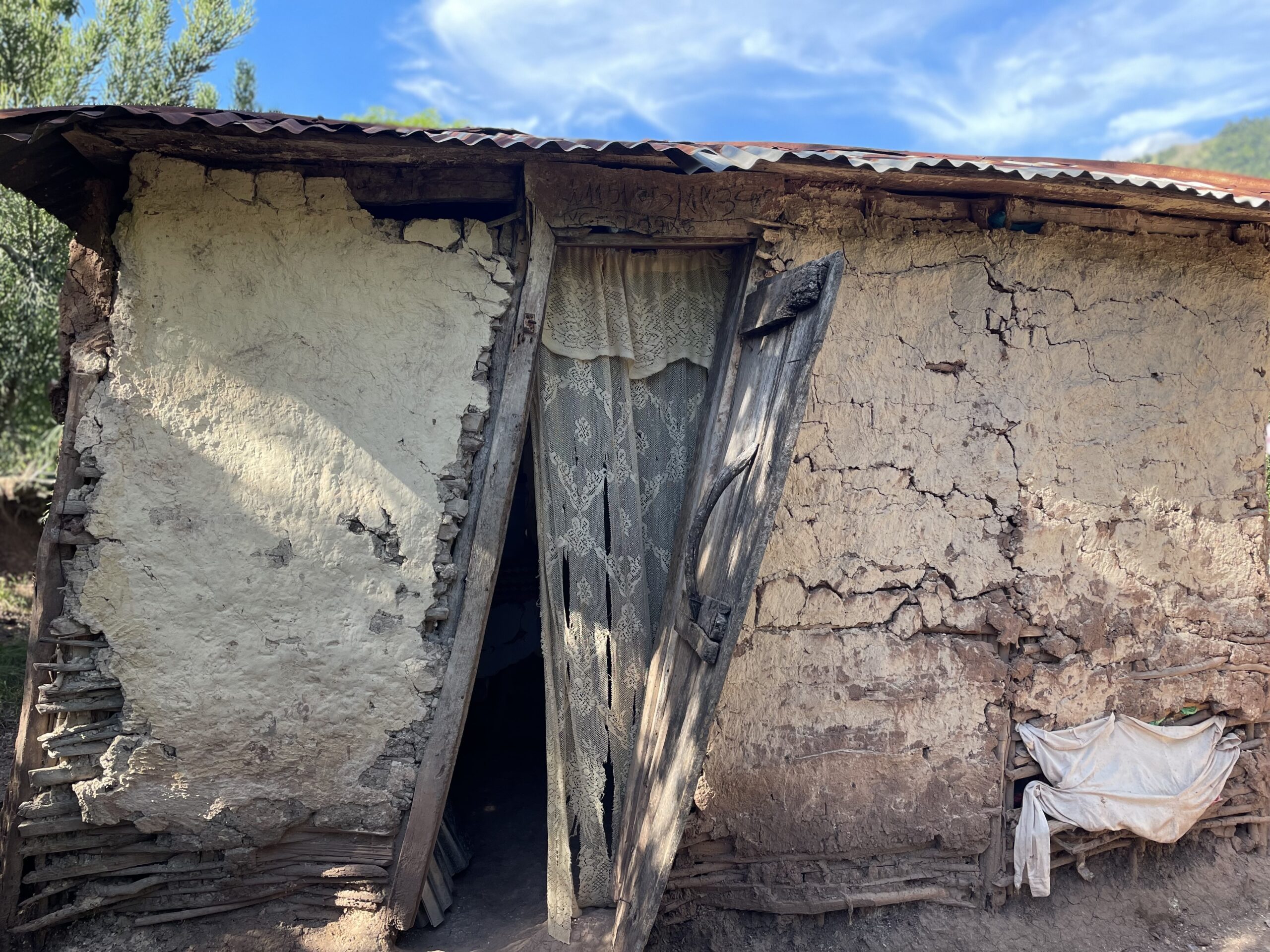
When their first two children were born, they still lived with Chalesia’s mother. They moved into their own home just before Chalesia had their third child. By her reckoning, that was about 28 years ago. They have not be able to keep the home in goodrepair. “We never had the means.” By the time they joined CLM this year, the house was leaking so badly that it barely seemed livable. Chalesia used plastic bags underneath the tarp lining the ceiling of the hut, but they would fill with water in the rain, and everything inside the home would get soaked.
Normally, CLM families would have to do a lot before the team would be ready to help them with home repair. Installation of a latrine in every family’s yard usually comes first. That involves distributing Fonkoze’s contribution of the materials the families will need to install their latrines, and then hiring and paying the skill workers that perform the installation.
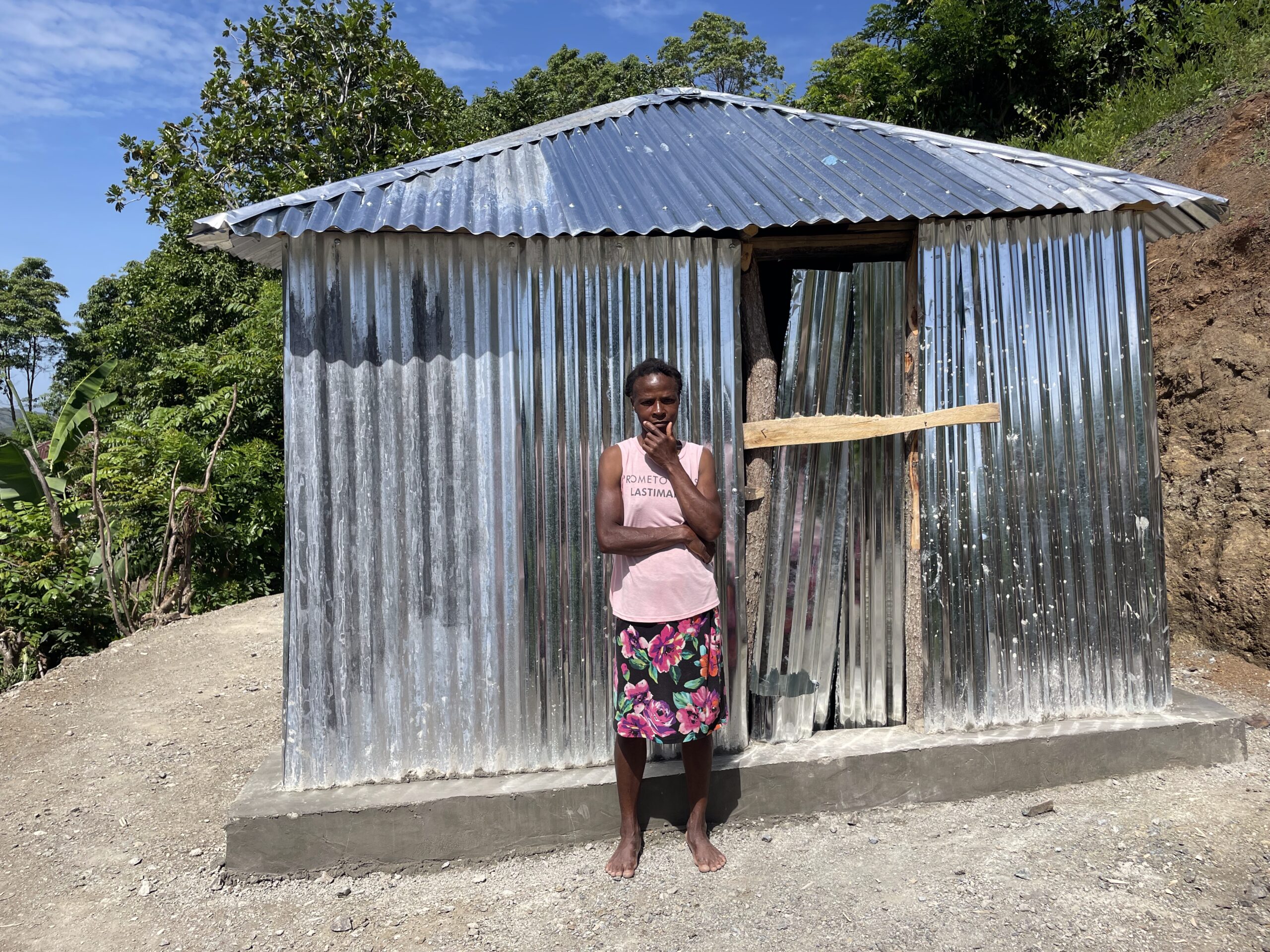
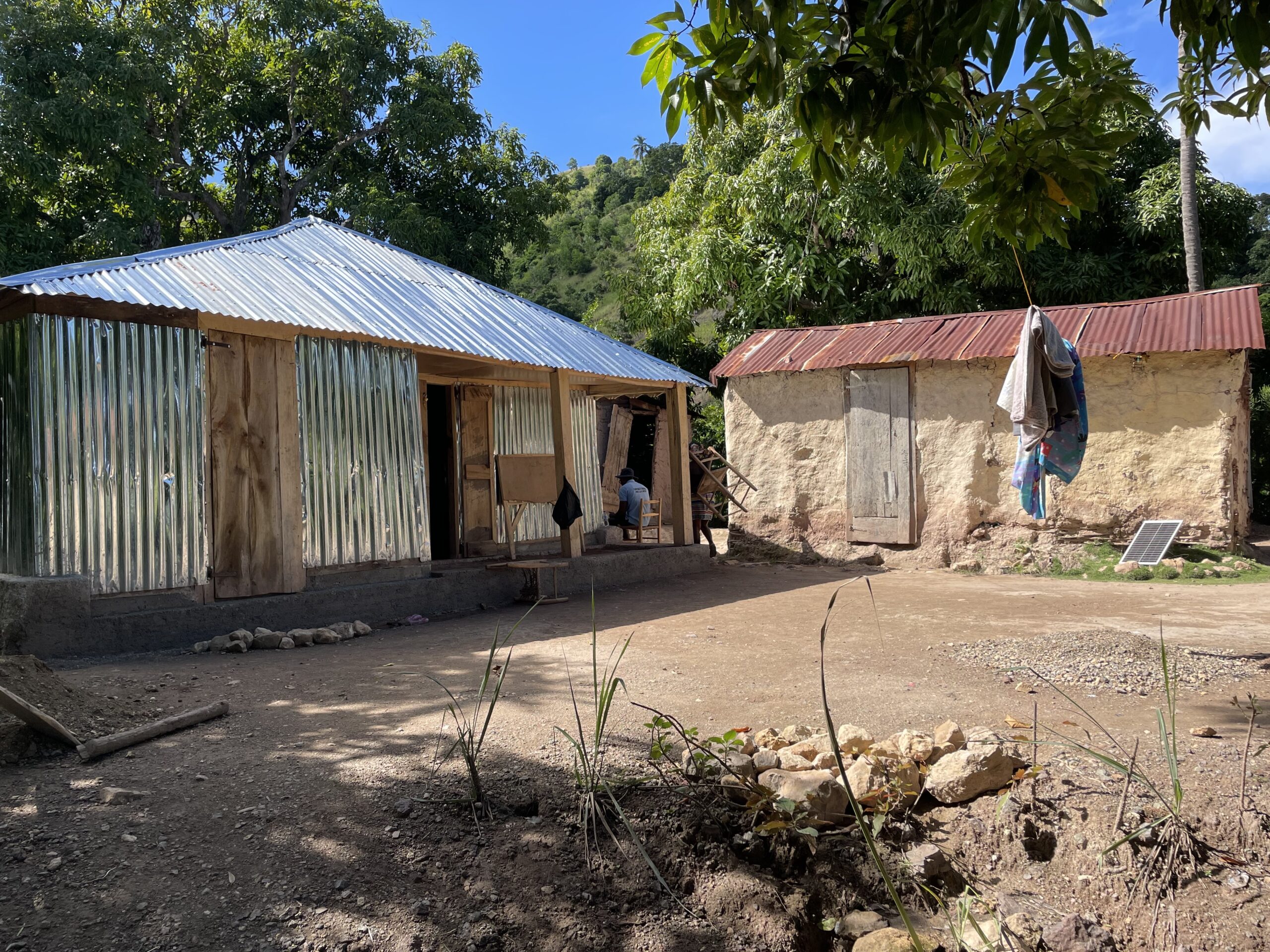
But in cases where a families is in bad straights and appears ready to make use of support early, the team can provide home repair materials together with the materials for latrine construction in a single transfer, and that’s what we did for Chalesia. She lost no time in marshaling the resources and the labor she’d need for her family to have a new home. She couldn’t afford all the lumber she needed, but because of her connection to the program, she was able to get the rest of the lumber on credit. Her home has been finished for a while now. The photo shows her new home next to her old one.
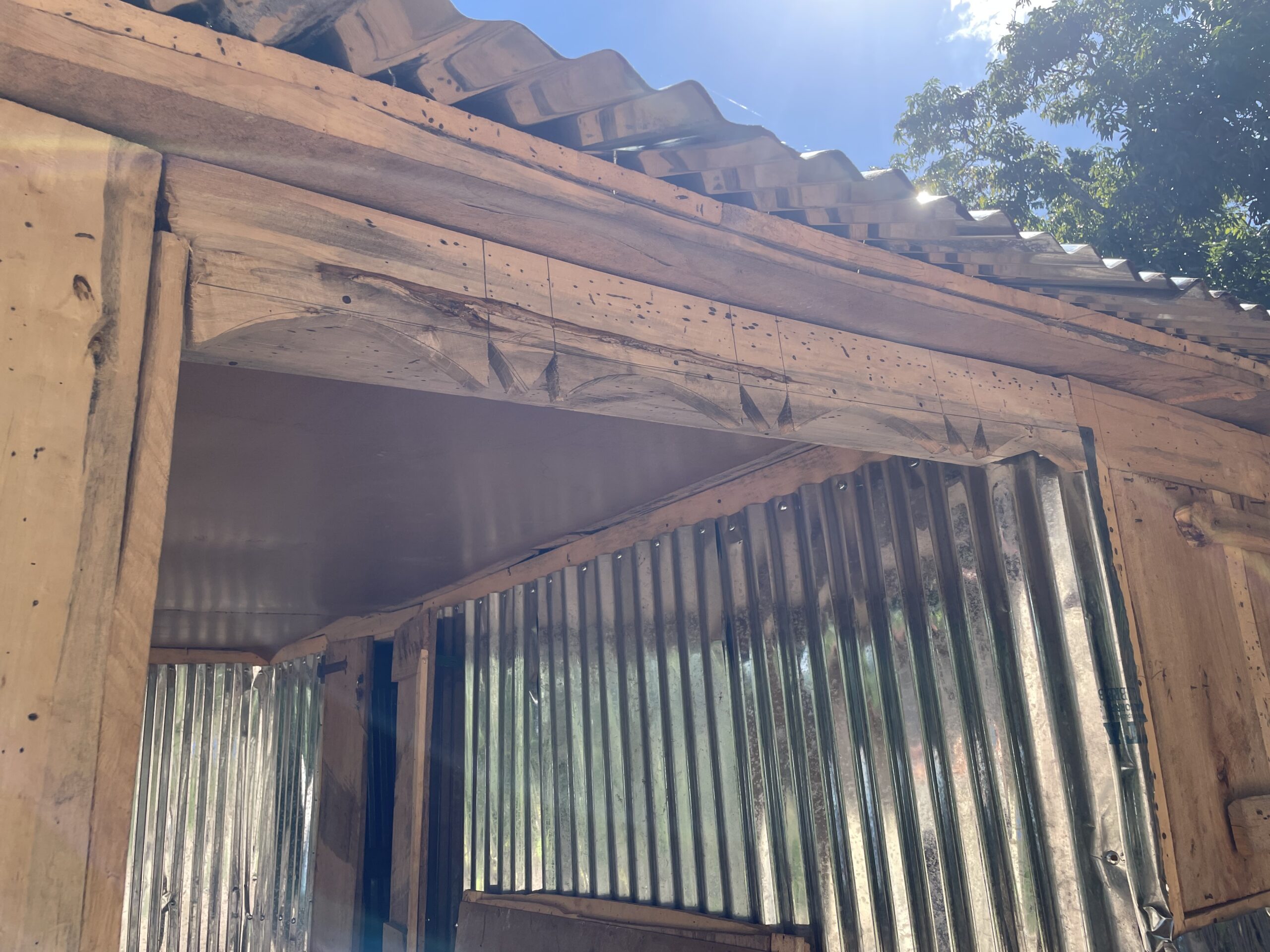
She chose to have the walls made with the corrugated metal that would ordinarily be used just for roofing. It was the easiest way to get things done quickly. But, as the photo below shows, all that rushing did not lead her to forego detail work cut into the lumber that is designed just to make her home pretty.
Whereas Ifonia used her weekly stipend much as she had always used the cash that Kenson brought into the home, Chalesia had to do some different things. She did buy a couple of chickens, but she also bought the sand she needed for her home’s construction.
Without other important things to do with the stipend, she had to think about how to ensure that she’d be able to make the weekly contribution to her savings group, and instead of simply taking 250 hours out each week’s stipend, she used a lump sum to by laundry products — mainly soap and detergent — which she sells out of her home.
She has a plan for her savings. When she receives her pay-out from the group at the end of 12 months, she wants to invest more in her business. But she doesn’t want to buy more laundry products. There’s only so much detergent she can sell. Instead, she will add a separate business, buying loads of local produce and bringing it to market for sale.
In the meantime, she’s used the money that Fonkoze provided as a business investment to buy livestock. She initially bought a goat and a pig, but she is ready to sell her pig already. She’s seen several of her neighbors’ pigs die in the last week. Pig rearing can enable someone to earn a lot of money fast, but it is risking because pigs’ health is fragile. Rather than continuing to take the risk, she plans now to sell her pig and use the proceeds to buy another goat or two. Raising goats is important, she says, because they provide a way to pay for school each year.
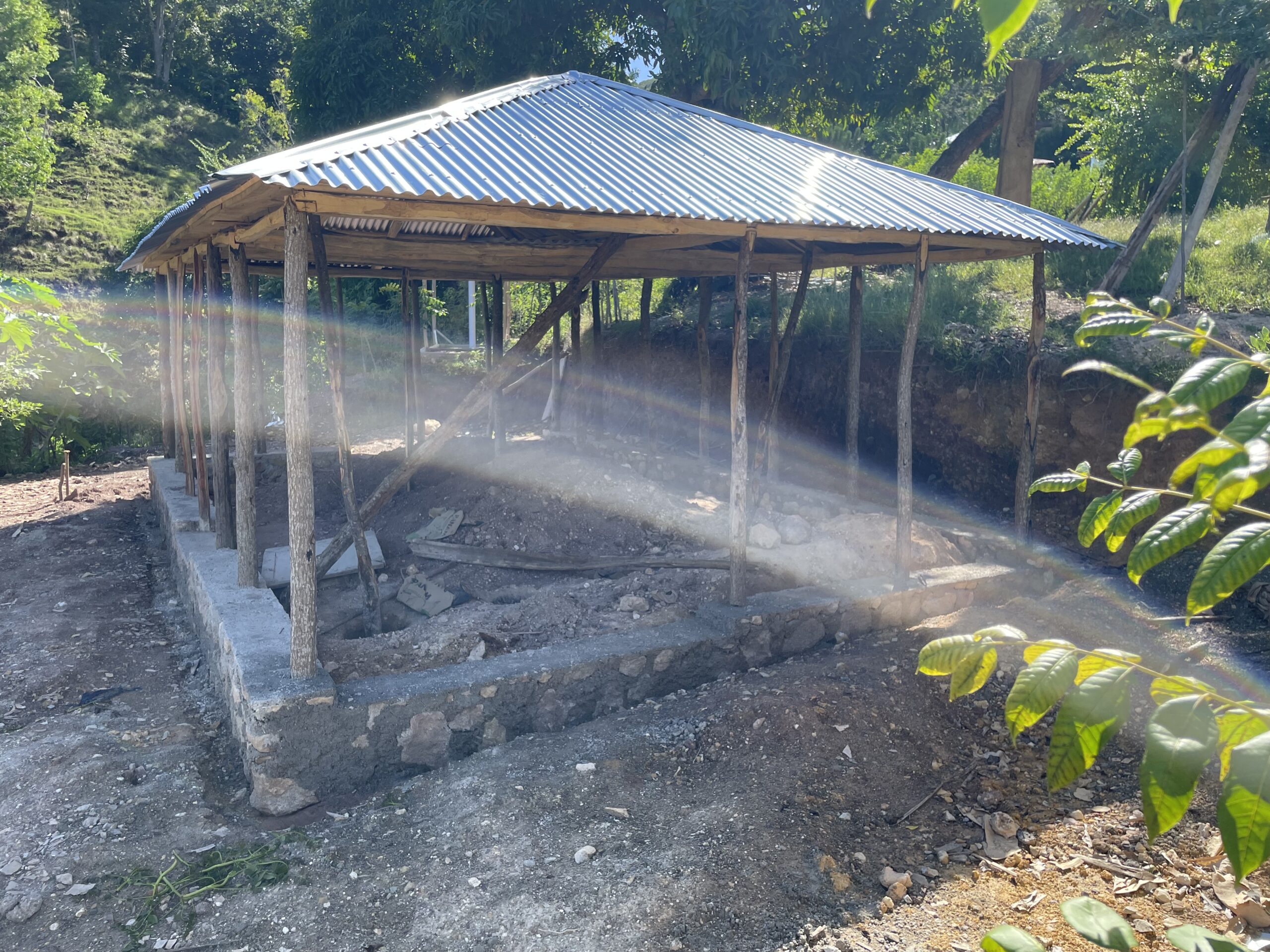
Chalina is another member who needed help with home repair right away. In her case, it was not only about a leaky roof. Her home appears ready to collapse. The leaning doorframe is a clear sign.
Her current boyfriend is helping her build her new home, but he’s not the father of any of her children. She thinks of him as a seriously improvement over the men she’s had children with, who haven’t treated her well.
She has six children and three grandchildren living with her. Those six children have three different fathers, but the three men have always left the responsibility for the children with her. And it’s been a struggle. Several of the kids have spent time living with other families over the years. Chalina just couldn’t take care of them. But even though the children’s host families would send them to school, the kids would always choose to return to their mother. “People treated them badly.” So, Chalina fought to send them to school, counting on her fields, mostly planted with pigeon peas, for the money she’d need to do it.
She used her investment fund to buy livestock, but the investment has not borne much fruit so far. She bought a goat and a pig. Her goat died, and her pig became sick, so she is getting ready to sell it so she can invest in goats instead.
She has been saving in her savings group, and that is where she’s really placed her hopes. After a year, she will receive a pay out of all her savings along with her share of whatever interest the group has earned through loans, and Chalina wants to invest her payout into commerce.
She foresees a problem with commerce, but she thinks she has figured out what might be a solution. Commerce is hard to sustain, she says, where she lives, because some of her neighbors are jealous of CLM members and don’t want to buy from them. And even if they do buy from them, they can want to buy on credit and then use the fact that the seller has received grants from Fonkoze as an excuse for not paying. So, rather than attempting one of the standard forms of day-to-day commerce, she plans to buy up beans and peanuts at harvest and then store them in her new, dry home until the next planting season season, when the prices will be higher because people need the seeds.
It won’t give her a constant flow of income, but she could make several lump sums a year, and since she has always depended on her own harvest, this form of income is not new to her. “If you don’t know how to manage your money, it will just disappear.”
Yolette lives in Motèl, a neighborhood of Gwo Moulen. She was widowed, raising her first child, and she took up with another man, Polyte. She felt she needed help to take care of her girl. She and Polyte have since had five more children.
But as they lived together, she had to face his mistreatment of her and of her oldest daughter. At first, he would give Yolette money to buy the clothes the girl needed. But that eventually stopped, and as her girl became a young woman, she took up with a man when she was still too young, and soon she had a child of her own. When the man abandoned her and her child, Yolette was left with the burden. She struggles to provide what her grandchild needs.
She did it all with her own farming. When Polyte gave her something out of his harvest to sell at market, he insisted that she bring him all the proceeds. And that was at the heart of her problems. If she tried to argue, he would yell, he would swear, he would even hit her.
Despite it all, she managed to acquire two goats and some chickens. She bought them with the little money she could secretly save out of the food money Polyte provided. To keep him from getting mad or from taking the animals away, she lied. She told him that they did not belong to her, that she was taking care of them for someone else.
When she joined the CLM program, she began saving her weekly stipend and investing it. She bought ducks and a turkey. She received 23,000 gourds as funds for business capital, and together with her case manager, Makenson, she planned her purchases. She bought two goats and a pig, and she used the balance to invest in a business selling cooking charcoal. She used her income from the charcoal to feed her family. By this time, Polyte had stopped providing any help at all. He wouldn’t even help her look after her livestock.
One day, Yolette was sitting with Makenson, talking about her troubles with Polyte. Makenson started looking for chances to talk with him. Polyte seemed to want to avoid him, staying away from home whenever Makenson was scheduled for a visit. So, Makenson made efforts to cross paths with the man when he was out and about in the neighborhood. Their short conversations began to help. Polyte started to change.
She was scheduled to receive 20,000 gourds to repair her home, like all the CLM members in her cohort, but she and her family were living in a small house on Polyte’s family’s land, and it did not really need serious repair. So, she discussed it with Makenson, and she made another plan.
She had money in a sòl, a sort of savings club common in Haiti. Members make a fixed regular contribution and take turns receiving the whole pot. When it was her turn to receive the money, Yolette added the home repair money, and she bought a horse. Buying a pack animal really set her business in motion. With the money she earned, she soon bought another pig and another goat. She also paid school fees for three of her children and bought shares in her VSLA every week.
When she was scheduled for refresher training, Makenson made sure personally to invite Polyte to an accompanying session for men on positive masculinities. Polyte decided to attend, and since then the improvements in his behavior have just continued. He now helps Yolette consistently with management of her livestock. He has stopped his yelling and his violence, both towards Yolette and towards her oldest daughter.
In July, her VSLA’s one-year cycle closed, and she collected 26,000 gourds in savings plus the interest she earned on it. It wasn’t enough to buy a cow, which was her next objective, but by then she had twelve goats, so she sold three. That gave her the full amount, 45,000 gourds, that she needed to buy a heifer. And she still has nine goats, two pigs, her horse, 15 chickens, and a turkey.
Now she says she lives well, even if Polyte still isn’t everything she hopes he will be. Her current plan is to buy land. Someone in a neighboring area has offered her a plot for 60,000 gourds, and she is saving in her VSLA and through a sòlso she’ll be able to do it. She’s come to see that she never lacked the will to work for progress, she just needed for someone to give her a hand.