Category Archives: Chemen Lavi Miyo

Oranie’s Progress

Working with CLM members means more than just giving them assets. We visit them weekly to coach them as they struggle to turn those assets into livelihoods. And that coaching must include much more than business advice. Each visit addresses specific matters, like good nutrition, hygiene, and other key aspects of a healthy life. And the visits must address broader and more fundamental questions as well. Everything about the way a member lives can affect her ability to lift her family out of poverty.

Jean Manie, whom I recently wrote about, is only a particularly striking example. Because she was living in servitude, she had no way to care for her pig. So it died. Her goats managed to survive, but they’ve suffered from neglect as well. Now that she and her boy are living in their own new home, we hope and even expect that she’ll start moving forward towards graduation. It won’t be easy, but we believe she will succeed. (See: Jean Manie.)

But you don’t have to be living in servitude to find yourself in a social situation that will block your progress. Jean Manie’s fundamental social barrier to progress seems to have turned out to be removable. We have, however, come across much less dramatic barriers that we could not get past.

We regularly find women, for example, who qualify for CLM but who do not agree to join the program because the people who live around them — their neighbors, the members of their family — convince them that it would be a bad or dangerous thing. The women are understandably suspicious of a program that claims it will do as much for them as we will do. No one has ever done anything for them before. And the people around them, for any number of reasons, turn these suspicions into fears that we cannot always overcome. We work hard to face these issues, but we can’t always resolve them.

In addition, we come across some women who cannot join CLM because the men in their lives are unwilling to let them try. For convenience, I’ll call these men “husbands,” though the word may apply only loosely. These husbands might resist the program for a variety of of reasons. Some are moved by the same suspicions-turned-fears that motivate reluctant women. We had a young father in Nan Joumou, named Soiye, who initially discouraged his also-young wife, Perrona, because he was pressured by his older brothers to do so. Are far as I can tell, the brothers were simply jealous that they had not qualified for the program. Soiye and Perrona are teenagers, and they lacked the moral resources they would have needed to resist their elders’ views.

Soiye’s pressure and Perrona’s own nervousness combined to keep her out of the program for six months. Happily, hers was one of the rare cases where she could reject the program when we passed through her area and still join it later as we signed up new members in a neighboring zone. And because Perrona’s mother and Soiye’s older sister joined the program and are prospering, the couple received encouragement that countered the pressure they had first received. They are now making good progress, thanks to a case manager who cheerfully hikes a difficult hour each way, every week, to get to their home from the nearest other homes on his route.

Other husbands may worry that a program that helps their family by building up their wives could threaten their position in the home. The social reality here is that it’s hard for a woman to join if her husband won’t agree. We have one member in Mannwa, Sorène, who left her husband, in part because he was blocking her, and is now moving forward without him, but that’s not the usual way of things. And it isn’t always clear whether Sorène’s solution is worth even hoping for. She has three girls under six and is pregnant, she and her husband have nothing to do with each other, and in Haiti there is no way to insist that he help support his kids.

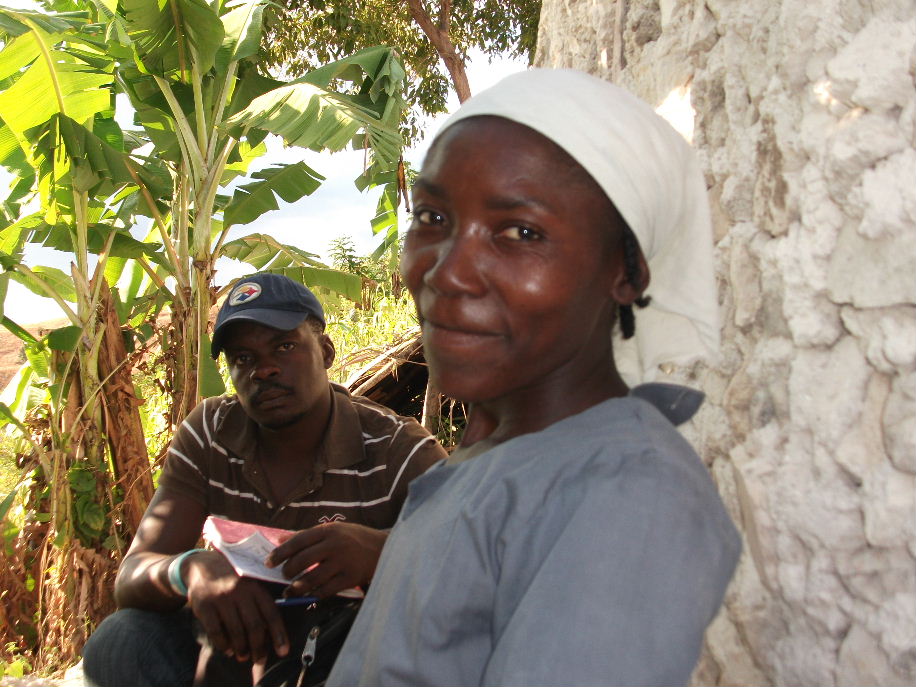
Even after women have joined the program, relations between them and their husbands sometimes get in their way. Husbands who collaborate closely with their wives can do a lot to help the family move forward, but husbands who do not can make things very hard. That’s why Martinière, a CLM case manager, and I spent Saturday morning with Oranie and her husband, Sentobè, trying to help them work through their differences.

They live in Gapi, a neighborhood along one side of a steep hill overlooking Viyèt, in northeast Boukankare. In some ways they’ve prospered since Oranie joined CLM. The three goats we gave her are now eight, and she and Sentobè now live in a nice new house. They got fourteen sheets of roofing material from us, and that would normally be the factor that determines their new home’s size. But through their own hard work, they bought ten additional sheets, so they were able to make their house much bigger than our members normally would.

But not everything is going well. Oranie has really struggled to establish her small commerce, and Sentobè is a big part of the problem.

Commerce was the enterprise she chose to go together with her goats. All CLM members choose two. This helps them manage the risk involved in any financial activity. Commerce is especially useful because it can provide a source of daily income. Though goats are the most popular and reliable enterprise among our members, they just can’t bring in money every day.

Oranie’s commerce started off well. She invested in beans. She would buy a sack in Opyèg, a rural market in the mountains north of Gapi, and carry it on her head to sell it at a significant profit in Difayi or Domon, more accessible markets down the hill. It meant hard work, but the business was starting to prosper.

Oranie’s problems started when she and Sentobè got into a fight. He beat her up, enough so that she couldn’t lift her beans to carry them to market for sale. By the time her case manager, Martinière, got to her, Sentobè had fled, abandoning her and their children. Oranie told Martinière that she did not think he would be back, and the two of them began to plan a new business.

They chose charcoal. She could buy trees and pay someone to turn them into charcoal for her. For better or worse, it’s Haiti’s principal cooking fuel, and so it sells very reliably. It also has a very long shelf life, so it would not be a problem if Oranie had to wait to fully recover before she could start moving it to market.

So she started filling sacks with charcoal and storing them for sale. She started slowly, but Sentobè returned and her production then grew. With him there, Oranie no longer had to hire someone to make the charcoal. Sentobè could do that part of the work. Before long, they had produced 21 sacks of the stuff.

He also started selling the sacks. This might have been helpful, as she was just getting strong enough to start moving them around. But he wasn’t accountable to her about the income they were making. He would invest some in his farming, but she wouldn’t know how much. He’d give her some household money for expenses, but she had no idea where the rest of the money was going. Asking questions only led to further arguments, and since he had shown his willingness to speak with his fists, she was reluctant to make much noise. Martinière continued to visit them regularly and hear her complaints, but somehow, whenever he showed up, Sentobè would be elsewhere. Though he had spoken with Sentobè when Sentobè first returned to the house, enough so that he had been able to communicate quite forcefully that Sentobè’s abusiveness could not go on, they hadn’t seen each other since.

But Oranie kept telling Martinière how unhappy she was with Sentobè, so he sent Sentobè a message asking him to stay home on a Saturday morning to meet with me. Martinière and I wanted to go up together to see whether we could help them figure a way to work things out. Sentobè was willing to ignore a meeting with Martinière, but he wasn’t as comfortable avoiding me.

You would have a hard time finding two less likely, less qualified marriage counselors than Martinière and me, but others were not available, so we spent much of the morning talking with them. In our presence, Oranie was willing to tell her husband forcefully that he needed to stop treating her so badly. She said that he had been hitting her and threatening her for all of their eleven years together, but she spoke without any leverage except what Martinière and I could manufacture. Her family is dreadfully poor. If she were to leave him, it is hard to see where she would go. Her mother lived with them briefly, but Sentobè apparently accused her of sponging, and she left.

For his part, Sentobè professed a willingness to change. But the issues between them were hard to address clearly and in depth, especially since we felt obligated to begin and end the discussion with what amounted to a threat: If he hit Oranie again, there would be hell to pay. We told him that violence is not a CLM matter but a police matter, that our team has very good relations with local law enforcement, and that if we had to come again, we would not come alone. It’s hard to have a frank and serious conversation when threats are in the air.

But on a more constructive note, Martinière went minutely through Oranie’s finances with both of them. We wanted Sentobè to see the financial interest he has in peaceful collaboration with his wife. Not to be unsentimental, but a big part of their relationship is a simple economic partnership. We also wanted to establish where that partnership stood. Oranie said that Sentobè owed her — or at least owed the partnership — 3000 gourds (about $75) in income from the sale of the last seven sacks of charcoal.

Sentobè at first admitted having borrowed only 500 gourds from her. We asked him not to look at things quite that way. We wanted to avoid suggesting that he owed her money, because we wanted them to look at household finances as a common problem. We wanted him to see that the work that CLM is doing with her is good for them both.

What really seemed to get Sentobè to be serious was when Oranie complained that she had saved up enough to buy school uniforms for their three kids but that, because Sentobè had squandered their money, none of the kids was yet in school. He had to agree that, for a couple that had sold 21 sacks of charcoal in the last couple of months, the fact that their kids had uniforms but were not in school was both sad and strange. After much discussion, he agreed to put 2000 gourds back into the common pot. We told him that he, Oranie, and Martinière would sit together once he produced the money to figure out how they could use it to get their kids into school and her business back off the ground.

Martinière and I returned to Gapi on Wednesday near the end of a very long day and were surprised to hear from Oranie that Sentobè had left again. He had told us on Saturday that he would be going to Port au Prince for a couple of weeks to earn the 2000 gourds, but Oranie wasn’t sure he was coming back. She had offered him the hundred or so gourds he’d need to get there, but he refused — angrily, she said — to take “her” money, and instead sold a chicken.

What’s worse: One of his neighbors claims that Sentobè stole produce from his garden on his way down the hill. We don’t yet know what the evidence is. It could be merely that he left his home unusually early in the morning, around the time at which the malanga roots are thought to have been stolen, but it’s rumored that he was seen carrying them down the hill. The neighbor told others that he will have Sentobè arrested immediately if he returns to Gapi. He added that the only thing keeping him from burning down the new house is that he knows that Oranie is responsible for most of the work. For now, at least Oranie seems safe.

In some ways, this accusation, by threatening to keep Sentobè from returning home, might be a good solution for Oranie. But it’s hard to know for sure. She’s living in a home she built on her husband’s land. I worry that, without him there, her hold on the house might be fragile. Her own family is too poor to have anything that they can offer her.

In any case, Oranie is determined to move forward. As the end of December draws near, the price of goats should increase. She has arranged with Martinière that she will sell three of hers at the end of the month. She’ll use the proceeds from that sale, together with some of her savings, to buy a horse.

Having a pack animal could make all the difference for Oranie. It means that she won’t have to depend on her own strength to carry merchandise from the remote markets she buys in to the places where she sells. It instantly means she can make her business at least three times as large as it can be as long as she carries all her merchandise on her head. She’d like to be able to send the kids to school right away, but she knows that they’ll be better off if she can get her business on sound footing. Sentobè’s 2000 gourds would have helped her, but she’s ready to succeed on her own.
oraniemart

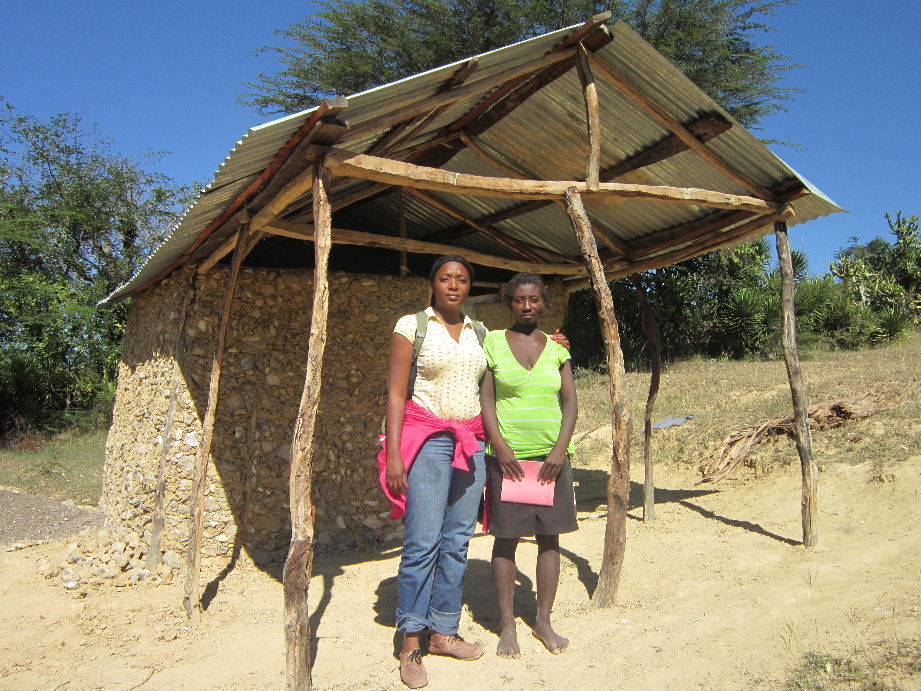
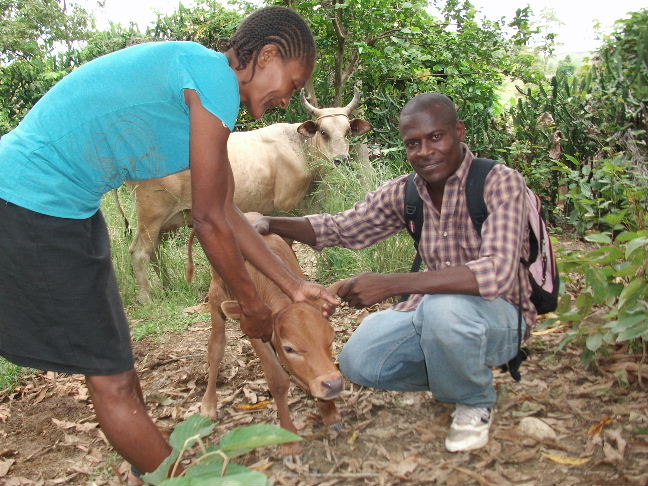
Oranie with her case manager, Martinière
Clothilde

Poverty is not a uniform condition. That’s why Fonkoze has different approaches for families that face different degrees of poverty. CLM is for the poorest of the poor, the families that credit could not help. Put a loan in their hands, and the money will go to feed their kids. They won’t be able to repay.

But extreme poverty, the kind CLM is designed for, is varied as well. Families find themselves in extreme poverty for many different reasons. For some it is an inheritance. We have many CLM members whose daughters are also CLM members and whose mothers and grandmothers would probably have qualified for CLM before them. Others slip into the misery they face because of a crisis: a prolonged and expensive sickness, a funeral or two, or the destruction wrought by an act of nature — a fire, a hurricane, or the earthquake of 2010. Some members come from what are poor, though not extremely poor, families but seem to have developmental issues that prevent them from effectively managing the little they have. Or they simply have more children than they can support. Finally, there are some of whom we’d typically say, “It’s a long story.”

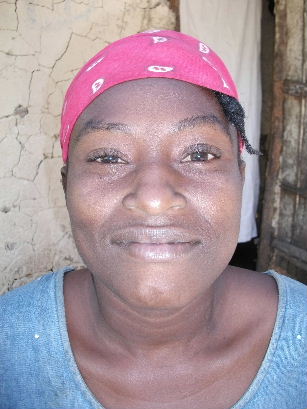
Clothilde did not grow up in extreme poverty. Nor did she grow up in Bay Tourib. She now lives there with three children in an area called Anba So, or “Below the Falls.” It’s a deep and narrow valley just off the road that leads from Bay Tourib to the town of Tomonn. The paths that lead down the side of the valley are so steep that pack animals can’t use them. Horses, mules, and donkeys have to take the long way around, entering the valley from one of its ends.

She could hardly live in greater isolation. The valley pinches shut within a few hundred yards of either side of her house. There are no other houses in her part of the valley. Her nearest neighbor — also a CLM member — is a half-hour’s hike downstream from where she lives, in a separate, larger opening between the valley’s two walls. One of her hopes for her time in CLM is to rent a piece of land up closer to the road. “I like it here.” she explains, “I’d like to keep farming this land. But I have no neighbors at all. If I have a problem, no one will hear me call for help.”

She grew up in Mibalè, the small but busy city at the southern end of the Central Plateau. It’s a city unusual in Haiti for its infrastructure. A nearby dam means that there is electricity almost all the time. There’s easy access to water through most of the town. There are lots of schools.

Clothilde herself is one of the best educated of our members. She made it through the ninth grade. Then she got together with a man, and they had two boys.

But somehow the man came into conflict with neighbors. He was accused as a “malfektè.” Literally, that just means “evil-doer,” but its usual meaning in Haiti is narrower. A malfektè is someone who uses Haiti’s folk poisons to do someone harm.

He and Clothilde had to flee Mibalè, and so they settled on his family’s land in Anba So. Then the man died, leaving her alone with their two boys on his parents’ land.

She got together with another man. She needed someone’s help just to keep her boys fed. The man already had two other wives. They now have to rent the land from her former in-laws. They pay almost $100 a year. But her new husband helps her farm it, and the soil is rich. Nine months ago, she had a little girl. (Her husband’s other wives are, by the way, also members of CLM. Polygamy is a reliable source of poverty.)

But it is just as Clothilde said: Where she lives, if she has a problem, there’s no one to help. Their girl developed a high fever. Clothilde couldn’t run to the hospital right away, because her husband wasn’t there and she has no neighbors who could look after her other kids. Before she could get her baby to the hospital, the infant was dead.

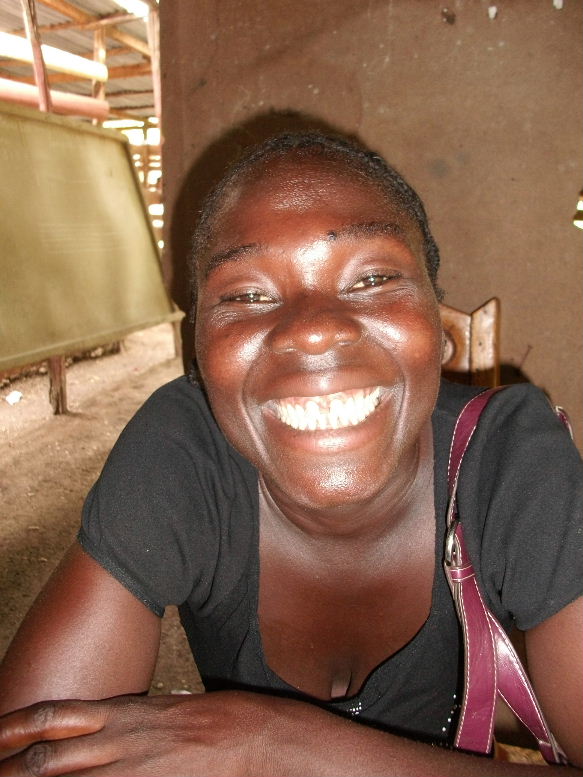
It’s possible to get Clothilde to smile right now, but it takes some work. It’s hard for her to think about anything but the baby she just lost. She keeps talking about what a very good little girl she was. She knows, however, that she must see to other things as well: manage her goats, prepare for her pig, and handle the farm as well. She has three other children who depend on her, so she has little time to look back.

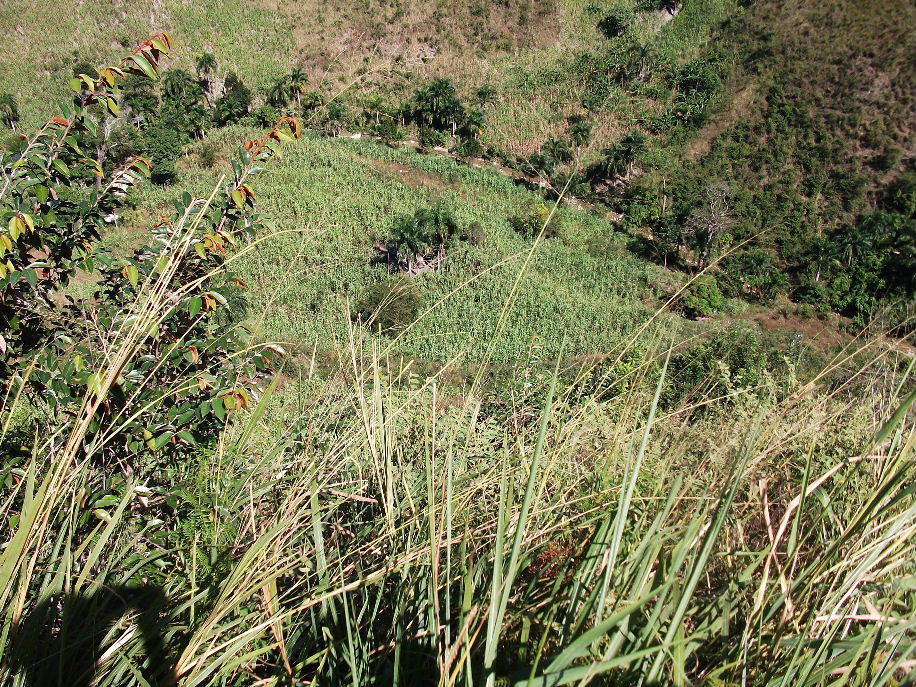
In the photo, her home is hard to make out. It’s beneath the palm trees in the center of the picture.No one else lives in this small valley.

Jean Manie’s Progress

With her CLM Case Manager, Alancia
Jean Manie was born on Mòn Dega, the mountain road that leads up to the ridge that divides Boukankare from Tomonn. She thinks she’s in her early or mid twenties, but she can’t be sure. Her parents died before she can remember, and she spent her earliest years living with an aunt.

But even as a little girl, she saw that her aunt’s house was not the place for her. “There was nothing for me there,” she explains now. So she moved to Chimowo, a very rural area just west of the center of Boukankare, along the river that flows through the middle of the county, to live with a married cousin, her aunt’s daughter. The cousin, and her husband Mousa, gave her a place to stay and food to eat, and in turn they expected her to work. As a girl, she babysat for their three younger children. As she grew, they gave her more and harder chores: “I did farm work, cooked the meals, and did the laundry. I was the first one up in the morning. On days when teams went out to work the fields, I’d be up by three to make sure that everything was ready.”

Jean Manie lived with Mousa and Madanm Mousa for years. She was living with them when she reached puberty, and was in their home when she had her boy, Patrick. Before Patrick had turned two, Mousa decided that he couldn’t support both mother and son. So Patrick was shipped off to live with the aging aunt. Jean Manie missed her son, and would hike across to see him whenever she could.

That was how we found Jean Manie when the CLM selection team went through central Boukankare: Living as an unpaid servant in her cousin’s home, with nothing she could call her own, separated from her only child. It’s fortunate that our selection team failed to catch the fact that her son wasn’t living with her. Women without dependents are ineligible for our program. Her original case manager, Sandra, solved that problem and immediately sweetened Jean Manie’s life by convincing Mousa and his wife to bring Patrick back into their home.

CLM was able to offer Jean Manie an opportunity, but we hardly seemed to be doing her much good. We gave her two fertile goats and a fertile young pig, but Mousa continued to give her so much work to do that she wasn’t able to care for them. The pig eventually died, along with its litter of five, and the goats became sick. She got her regular weekly stipend, but after making a small deposit into the account that CLM opened for her, she would give the rest to Madanm Mousa, to “hold it for her.” Haitians frequently save money by leaving it in wealthier neighbors’ hands. Then Jean Manie would never see the money again. When the pig died, Madanm Mousa helped her sell the meat, but Jean Manie hasn’t seen the money yet. The worst thing was that Mousa and his wife showed no concern for Patrick. “They didn’t want to know that the boy needed to eat and drink.”

Things came to a head because Jean Manie’s second case manager, Alancia, became worried that her goats were close to dying of neglect. She convinced Jean Manie that, at least for the time being, she should turn them over to a member of the Village Assistance Committee in Chimowo. These VACs are groups of community leaders whom CLM organizes to provide the program and its members with various kinds of support. Jean Claude, the Chimowo committee’s secretary, said he would look after the goats until Alancia and Jean Manie could find a more permanent solution.

Mousa was furious. He hadn’t been consulted. What’s more, he had thought the goats should be in the hands of his own boys. They could look after them, and then be rewarded for their work. Typically, someone who keeps a female goat for its owner will receive one of the kids as their price. Mousa wasn’t at home at the time, but he called Jean Manie on the phone with a threat. “//M ap gonfle kò w ak baton an//,” he’s reported to have said. That’s like saying, “I’ll beat you black and blue.”

Fortunately, it all happened on the day of a committee meeting, so Jean Manie was able to tell the committee and Alancia about the threat right away. Alancia sent her own threat back to Mousa. “//Si w mete men sou Jean Manie, w ap konnen sa m peze//.” That’s a little hard to translate. Literally, it means, “If you lay a hand on Jean Manie, you’ll know what I weigh.” It’s like saying, “Touch Jean Manie, and you’ll see what I can do.”

So Mousa didn’t dare hit Jean Manie, but he and his wife threw her and Patrick out of their home. She didn’t initially think she had anyplace to go, but one of her fellow CLM members took her in right away. Eventually two different members, Tona and Idana, gave Jean Manie and Patrick a place to sleep for a couple of weeks each, and they did so despite the fact that neither of them had much a home to speak of themselves. But they understood her need, and didn’t hesitate to do what they could.

Alancia was already in the process of helping the members in the area build their new homes, but Jean Manie had no land. Alancia went to the pastor of the church Jean Manie attends, and convinced him to give her a small plot to build her home. But when Mousa, who attends the same church, found out, he threatened to leave the church, and the pastor went back on his word.

So Alancia brought the question to the Village Assistance Committee, and after much discussion, and Jean Claude agreed to sign over a piece of his land. The construction materials were already available, and Jean Claude himself is an experienced builder, so it didn’t take long to make one small room habitable, and Jean Manie and Patrick moved right in.

They are thrilled to have a place of their own. Jean Manie expresses her feelings simply: “When you’re in your own home, if you’re not feeling well in the morning, you just stay in bed. When you live in someone else’s home, you have to get up every morning, no matter how sick you are.” Patrick puts things more starkly, “Even if they just sent me on an errand to Mousa’s house, I’d rather die than go.”

Jean Manie’s problems aren’t over. Her goats are getting healthy again, but the fact that they haven’t reproduced yet means that she’s behind. Her pig is dead. So her asset base is very weak.

At the same time, now that she’s in her own place she is saying for the first time that she thinks she could manage a little business, and she’s even suggested a plan to Alancia that looks pretty good to us. She has almost 2000 gourds, or about $50, worth of savings. If she and her committee can make Madanm Mousa pay her the money she’s owed for the pig, she’ll have about another 1000 gourds. She wants to sell household basics — kerosene, rice, oil, salt — by the side of a main road that passes within a couple of hundred yards of her shack. So she has more than enough money to get a very small commerce started.

withpatrick-624x831

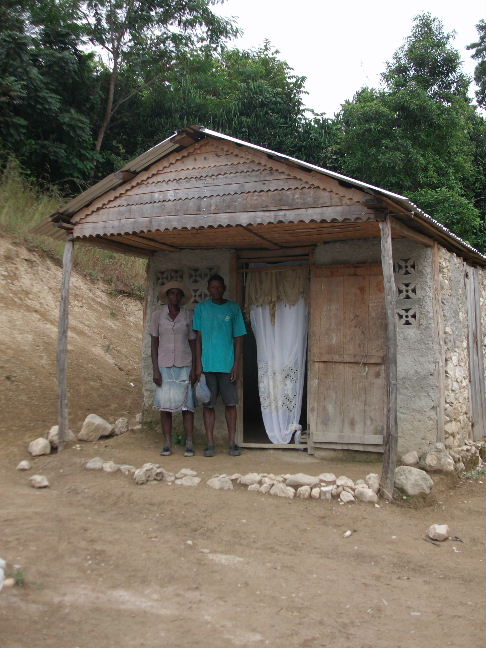
Jean Manie and Patrick, wearing his school uniform, in front of their home.


Drinking Water and the Poorest of the Poor

The following piece was written by Hébert Artus, one of my fellow regional directors for Fonkoze’s Chemen Lavi Miyò CLM program. I am grateful for his permission to share it.


In October 2010, piles and piles of people started to die near Haiti’s Artibonite River because of contamination by cholera bacteria. Within a month, the cholera had spread through all of parts of the country. The epidemic showed how vulnerable the population was, especially the poor and those living in isolated corners. On top of the typhoid, malaria, stomach problems, and diarrhea that plague poor and remote communities, cholera arrived as a heavy new burden to weigh down the lives of those living in Haiti’s mountains. The story of Fonbriyòl is an example.

Fonbriyòl is a community northwest of Chanbo, the main town in Boukancare. It’s split by the Boukankare border with Tirivyè, a neighboring county in the neighboring province. Fonbriyòl is on a mountain about 400 meters high. The part in Boukankare, where CLM works, has about 50 families. Eight qualified for the program. The two main sources of income there are animal husbandry and farming, with beans, corn, and millet as the main crops. The area has a lot of polygamy. Men tend to have at least two wives, so there are more women then men there.

In August 2011, the CLM team that visits Fonbriyòl was seeing people dying of cholera because they lived too far from health centers to get to them in time. It takes at least five hours for a team of four men to carry a victim to the nearest clinic on a stretcher. The rainy season was bringing more cholera with the rain, but it also making the road from Fonbriyòl to the nearest health center more difficult because the rivers that cut it in several places had risen and the rain was turning the dirt road into a sea of deep mud. Because the community has relatively few men, people were dying for lack of neighbors to carry them to the hospital. A CLM member’s husband, St. Valet Blanc, died while his wife was at the cholera center with their child because his neighbors had just taken another cholera victim to the hospital and hadn’t had time to return. There was no one available to help him.

Under the circumstances, it didn’t take a psychologist to understand the discouragement that set in on top of the mountain. People in the community thought they were all going to die, and they didn’t know what to do. Distribution of chlorine to treat water was not reaching Fonbriyòl. Neither was the anti-cholera education campaign. The area was simply too remote.

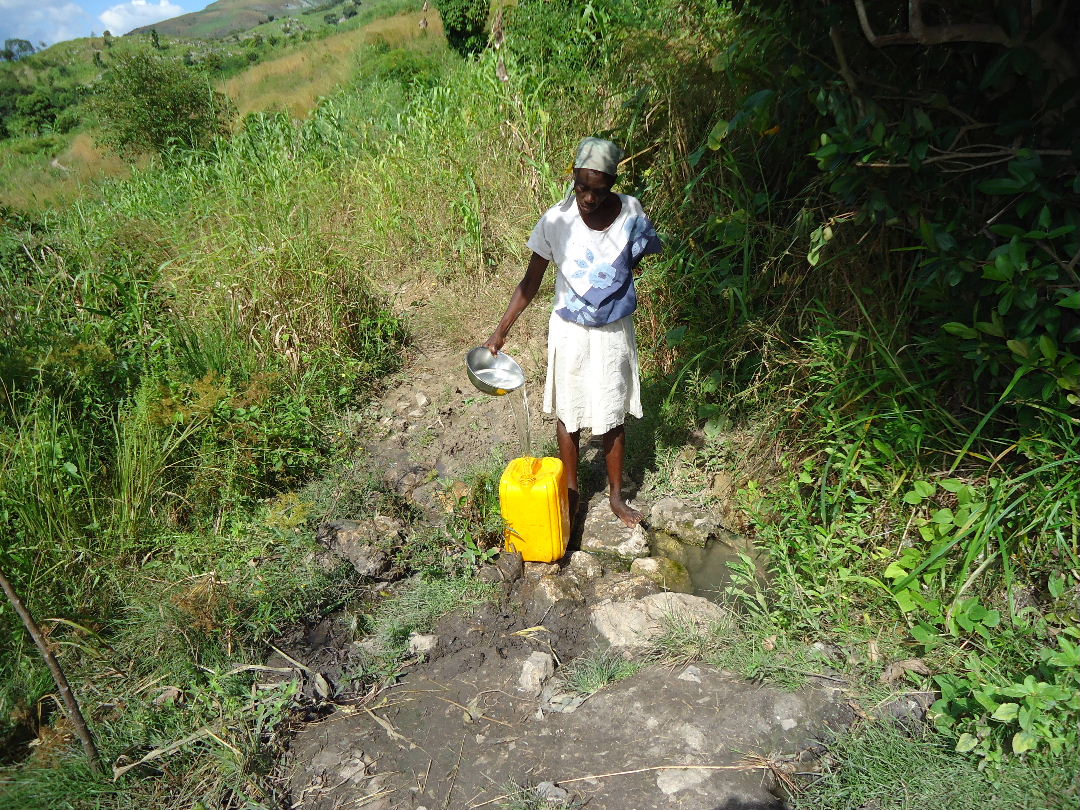
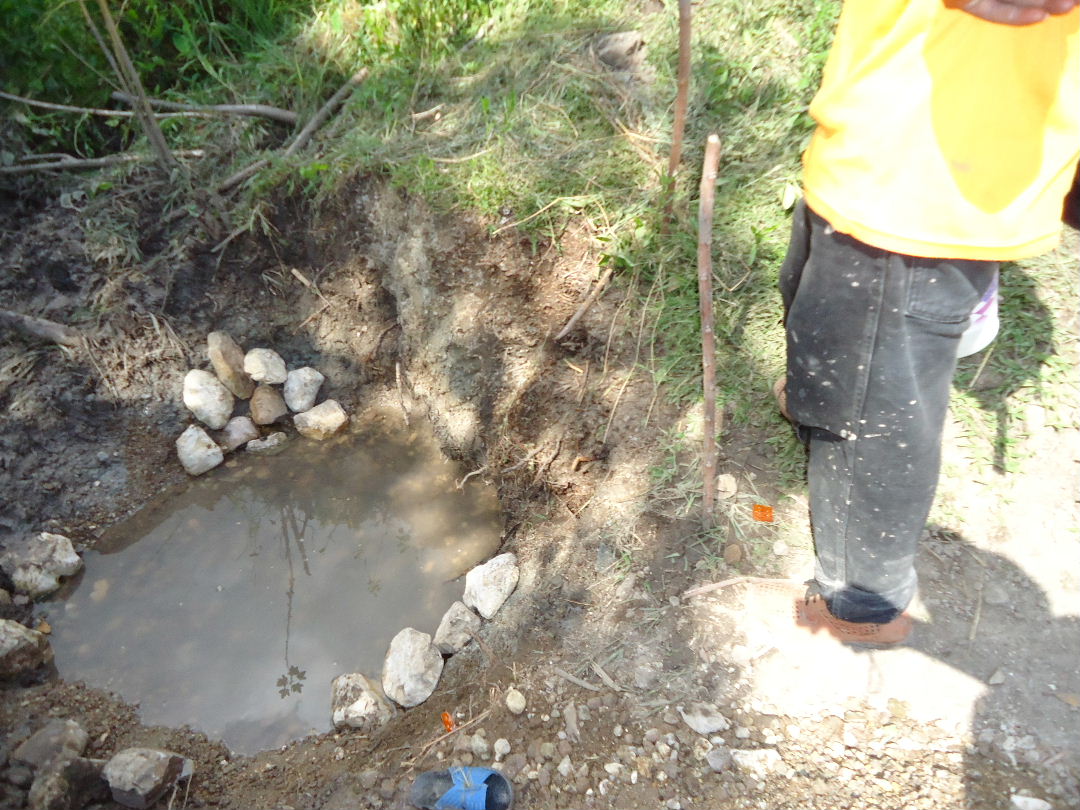
The CLM team decided that its first step towards solving the problem was to visit the spring that serves as the source of drinking water for people in the area. The photo below requires no commentary.

In conversations with residents of Fonbriyòl, the CLM team agreed to lend the community a hand towards addressing their water problem. At the same time, the team used these community meetings to share information about how sickness spreads because of untreated water. These discussions led us to decide to help them cap the spring and build a small cistern to collect the water. We agreed to buy the materials that would be necessary and to pay a skilled mason to direct the work. They agreed to carry the cement on their backs from Chambo to Fonbriyòl, to collect rocks and sand for the construction, and to provide meals for the workers. CLM staff members made contributions to support the initiative, and October 22 was chosen as the day to begin the work. A team of 26 case managers, sector specialists, and regional directors made the climb.

When we arrived, we ran into a cultural problem that we hadn’t anticipated. Community members were afraid to cap the water source. They believe it to be home to a divine spirit, and so were afraid to transform it. Instead, they led us to a larger spring on the Tirivyè side of Fonbriyòl that they were willing to have capped. That’s where the locals agreed to start the work with us.

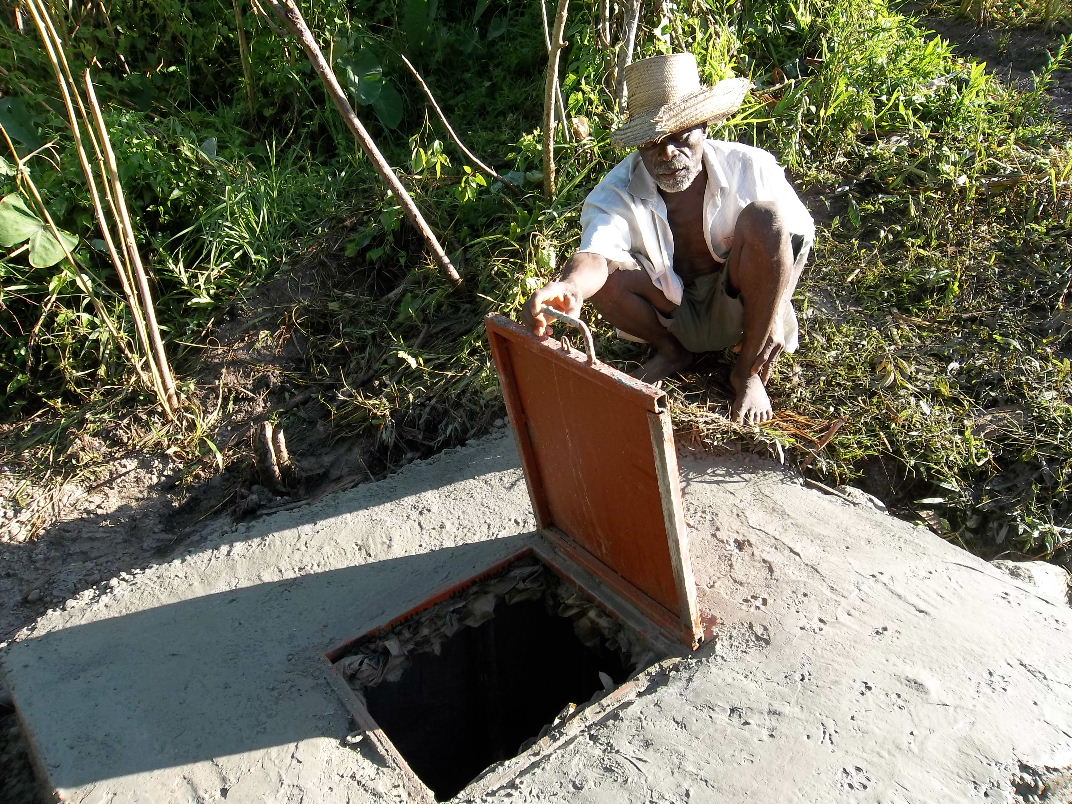
Now the spring has been capped and there’s a small cube-shaped reservoir, about 1.5 meters long in each direction. It’s a first step towards improving the water that the people of Fonbriyòl use every day. It also allows water to collect overnight, which people can come get during the day.

The case managers who work in the community, Christian and Lénort, are beginning to organize a committee that will be responsible for managing and maintaining the water source. That’s what the CLM team can do to help members of the community in Fonbriyòl ensure a supply of reasonably clean water. But who is going to help them get what they need to treat the water they collect for drinking?

Around the world, clean water is increasingly turning into a commodity. Little bags and bottles of drinking water are both expensive and unavailable in Haiti’s remote rural communities. Those who have no money to buy water are condemned to drink from rivers, because that’s the water that’s free of charge.

Now, cholera has made things even harder. Some families have lost their most important members, the parents who lead them. Harvests have been reduced because peasants are too busy carrying the sick to health centers for them to do their farming. Many farms have been taken over by weeds because agricultural laborers are carrying cholera victims to treatment centers instead of weeding.

Who’s giving a thought to such communities? When will water become a fundamental right so that both rich and poor have access to clean water that doesn’t make them sick? When will the money that’s being spent on war be used instead to save people who are dying because the water they drink everyday is poisonous?

When will Haitians stop dying because they don’t have the money to buy chlorine or other water treatment materials or treated water? When will I find answers to these questions? Who will provide the answers and when?

Cholera Goes On

The CLM residence in Bay Tourib is right next door to a cholera clinic.

That’s not a coincidence. Our presence in Bay Tourib depends on a close collaboration with Partners in Health, the NGO through which the Haitian health ministry operates in central Haiti. The joint Fonkoze-Partners in Health project, financed by a Canadian foundation called “Kanpe”, includes CLM, the cholera center, and a small hospital, and it stands an excellent chance of dramatically improving life in Bay Tourib.

Before we started, the nearest cholera treatment center was in Tomonn, a hike of five hours or more down the hill from Bay Tourib. Neighbors and family members would put victims in beds that they would carry down the hill, but many died before they could get treatment. When the Bay Tourib center first opened, it was receiving ten, twenty or even thirty cases per day. It was packed. Victims were being carried there from more than two hours away because it was so much closer than anything else. Hundreds of lives were saved.

As the rainy season draws to a close, and as our CLM team spreads water filters, latrines, and information throughout the region, the cholera count has been diminishing. Three cases are now enough to make for a very busy day, and it is now rare for the center to have more than three patients at a time.

But the cholera threat has not disappeared. Wednesday morning, when I arrived in Bay Tourib, I learned that Mona, one of our CLM members, was there with her child, who had been stricken a couple of days earlier. Mona is from Anba So, a secluded ravine about halfway down towards Tomonn, but well off the road. We spoke to Mona several times during the day to share our concern and to talk to her about preventing further occurrences, and were glad to see the child’s condition improve quickly. Usually, that’s what happens to cholera patients. They recover quickly as they take in intravenous fluid. Cholera, after all, kills through dehydration. Meanwhile, the cholera medication generally kills the microbe without too much trouble. As long as patients get the care before they are too far-gone.

We were, then, both saddened and alarmed when one of Mona’s neighbors arrived in Bay Tourib late Wednesday afternoon and told us that another one of Mona’s kids had died of cholera that same day. Even as Mona was worrying about one child, she lost another one. Mona herself hadn’t yet heard the terrible news.

And as we spoke with Mona’s neighbor, we learned that things were worse they we had initially imagined. Mona lives with her children in a cluster of four houses, three of which are part of our program. It is a terribly poor little neighborhood. The houses are made of thin, crooked wooden posts, their walls woven out of sticks, and their roofs of palm-seed pods. It’s hard to see how such structures can provide any protection at all. And those houses had somehow attracted a small cholera epidemic. Three of them produced four cases and one death in just a few days.

Rony, one of the Bay Tourib case managers, and I knew we had to do more than just talk to Mona. The other case managers were already on their way back to our base in Mibalè , but he and I weren’t scheduled to return until he was finished seeing the families he serves on Thursdays. Rony’s not strong on a motorcycle yet, so our truck would be coming up the mountain to get us. When the pick-up truck arrived, we threw in our pump sprayer and a half-gallon of bleach. We would stop the truck halfway down the road, and hike into Anba So. While our driver waited with the truck, we’d do what we could to disinfect the neighborhood.

Mona’s neighbor rode with us back down the road, and led us to their houses. When we got there, we covered the three infected houses as well as we could, and left the families instructions for additional cleaning they’d need to do. When we got back down the hill we arranged for the neighborhood’s own case manager, Aunondieu, to disinfect the houses again when he returned on Wednesday.

We didn’t get to Anba So any too soon. Before our eyes, Mona’s neighbors were loading another little girl onto a horse for a ride up to Bay Tourib. She had contracted cholera, and was already weak. There had been a slight delay while they prepared some oral rehydration fluid to help her survive the trip, but the neighbors were anxious to make it to the cholera center as quickly as they could.

When we were finished, Rony and I rushed back to the truck. We were in a hurry because the path we had taken was so steep that it would be dangerous once darkness descended. As it was, we spent a good deal of time picking our way back up the hill to the main road climbing on all fours.

We’ll do what we can to help Mona and her neighbors put an end to the cholera threat. They need further training to ensure they’re using the water filters we’ve given them correctly. They should have their latrines within a few weeks.

The visit to Anba So made for grim work, but it was not without its moment of hope. While Rony was spraying, one of Mona’s nephews called me aside. He showed me a goat and its newborn kid. His mother is a CLM member, and the goat was her goat, which she lets him take care of. As far as I know, it’s the first of the roughly 800 goats we have distributed in Bay Tourib to give birth. It thus can stand as an emblem of the first steps out of poverty for the region’s extreme poor, even as the family it belongs to mourns.

Merséla Exil

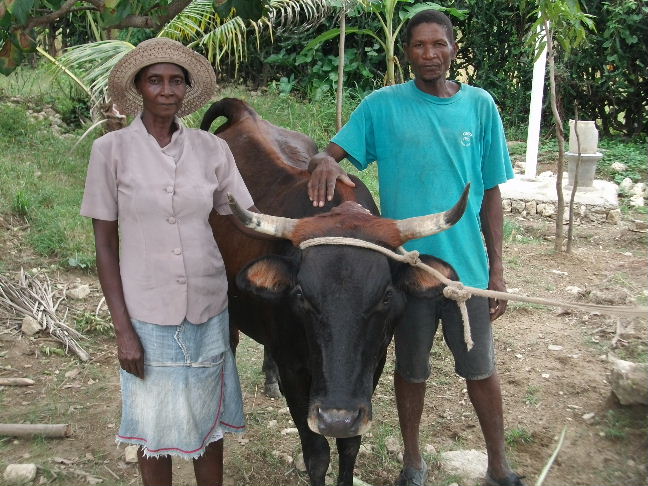
Merséla and her husband with their cow. Their new latrine is in the background.

Merséla is a CLM member from Viyèt. She is one of the especially fortunate members who received a cow as one of their productive assets thanks to a gift from Bothar. The cow is doing very well. It’s pregnant, and should have its calf in a few more weeks.

Her husband helps her take care of the cow. It’s really big, and would be hard for her to manage on her own. “He’s as happy about the cow as I am. We had never even hoped that we’d be able to buy one.” Her husband is quick to add, “Our neighbors were shocked, especially when they learned that the cow was really ours. I’m doing everything I can to take care of it. Even if I have to go to bed without supper, I’ll never leave it somewhere that it has no food.”

It hasn’t been easy. She used some of the savings that she accumulated from her six months of stipends to buy the right to work a small plot of land, but the harvest was ruined when heavy rains inundated the young plants. They have no grazing land of their own. But she recognizes that taking care of her cow must be a priority if she and her family are to move forward, so she sold one of the pots she prepares meals in to buy grazing rights for her cow on a neighbor’s land.

That means that their CLM assets are not yet generating a regular income stream for them yet. Merséla’s husband is the one who makes sure they eat every day. “I get farming contracts for 1000 or 1500 gourds. We eat through that money, and then go 500 or 600 gourds into debt. The next time I get a job, I pay that off and we have cash for awhile.”

But their lives are changing. A few weeks ago, they moved out of the straw shack they had been living in into a new house with solid stone-and-mud walls and a good tin roof. Now they and their children have a dry place to go to when heavy rains fall. CLM provides members with roofing material, nails, and the money to pay the skilled labor necessary to build a small house, but members have to provide their own rocks, mud, and lumber. They can scavenge the rocks and mud, but many have to buy the lumber. Merséla used more savings from the stipend to purchase hers. They also have a water filter to ensure good drinking water and a latrine, which will combine to help them protect themselves from cholera.

Their asset base is growing. She used the rest of her savings from the stipend to buy two very small pigs. And thanks to those assets, the family has hope for a future. Merséla and her case manager, Alancia, are planning her next move. She hopes to use money she will earn from selling young goats and pigs to buy a horse. The horse, she feels is the key. “I need small commerce, but we live too far from the road for me to build one right now, because I can’t carry heavy loads on my head. If I have a horse, I can start going to the local markets to buy and sell.”

And Merséla knows where she wants to go from there: “The land we live on isn’t really ours. It’s family land. I’m hoping that when our first calf grows up, we’ll be able to sell it and buy a small piece of land of our own.”

In front of the new house CLM helped them build.


Mersila Geffrard

Mersila has only seven of her children with her now. Her oldest daughter is married and living in Port au Prince, and she took one of her younger sisters to live with her this year to help her with her own child. Mersila lives in Viyèt, a small rural community north of central Boukankare.

Thanks to a gift from an Irish organization called Bothar, she was one of twenty CLM members who received a cow as one of her productive assets. Normally, a cow would be more expensive than anything our program could offer. The cows went to women in Boukankare with large families.

“I was very excited when I heard I’d get the cow, even though my neighbors tried to talk me out of taking it. They said all kinds of things to discourage me —
that it was sent by the devil, all sorts of things. I guess they’re jealous. Even just the other day, someone from up on the mountain said that they heard a rumor that my cow had said that I should stop milking her, that I should leave the milk for her calf. Imagine a cow talking like that. It doesn’t make any sense.”

Bothar members received a cow and two goats as their enterprises, but that left them with a problem: Neither of the two were likely to generate much income by the time their weekly stipends end after six months in the program. That means that, without some good planning, they risk stepping backward at the six months while they wait for their animals to produce. Even if that reverse is temporary, we can’t accept it because it means, in practical terms, that the families will go hungry.

Like many of the Bothar members, Mersila hoped to use savings from her CLM cash stipend to start a small business, but it didn’t work out that way. She needed most of those savings to build her new house. We provide roofing material, nails, some cement, and money to pay skilled labor, but our members have to come up with rock, sand, and lumber. Ironically, it is the poorest among them that have to buy the lumber because they have no land to take it from. Buying the lumber consumed what she had set aside to start her commerce.

We had expected that Bothar members would sell milk to generate income early, but most haven’t. They are so anxious to care for their calf that they don’t want to take milk they think it might need, even though our livestock expert tells them regularly that the mothers need to be milked while nursing to stay healthy. If they take a little bit of milk, they just give it to their own kids.

So Mersila’s main ways of keeping food on the table are her husband’s farming and the charcoal that they make.

They were especially excited when her cow finally had a calf. It happened about three weeks ago. The calf is a small male, and she’s determined to take good care of it. She hopes that she’ll be able to sell it, once it’s weaned, for another female. With two females, she’ll be able to earn more money.

“I have so many children to send to school, and it would be much better for them if we could live closer to the main road. I hope I’ll eventually be able to sell a calf or two to buy a nice piece of land down the hill.”

Rose Marthe Odélus

Rose

My name is Rose Marthe. I live with my husband, our five children, and my younger sister in Wòch Djèp, a neighborhood on a mountain ridge north of Boukankare. I’ve been a member of CLM since last December, and my family has been making progress. We have five goats and a pig, and a house with a tin roof. We don’t worry about rain any more. We even have a latrine. I’ve been buying turkeys and chicken with all the money I can save, too.

Things were going really well until I came down with cholera. I never thought it would happen to me. My case manager, Martinière, taught me and my family how to protect ourselves. We talked about cholera every Wednesday, when he visited us. We treat all our water, and we always wash our hands. But I guess I was careless about drinking water at others’ homes.

I started to feel sick, and started vomiting early in the day. I had diarrhea, too. Our neighbor, Edres, is a Partners in Health extension agent, so he had some medication on hand. I drank what I could, but things got worse and worse. By the time my husband knew I was sick, I was too far gone to make any decisions. Partners in Health has a free cholera center in Boukankare, a two-three hour walk from our home, but my husband and our neighbors carried me to a private center in Zaboka, instead. It’s no closer, and it’s expensive, but my husband is from Zaboka, and he wanted me to be near family. He would need to stay with our kids, but didn’t want me to be at the clinic by myself.

I’m fine now. It cost us about 1250 gourds, and that’s a lot of money for us. Martinière helped us with a little money, and I had some money, too, because I kept setting a little bit aside from my CLM allowance without telling Martinière about it. Between that and the sale of our latest crop of beans, we’ll be all right. We’re still managing to send our kids to school this year. None have ever gone before.

I’ll be more careful now. I was lucky.

Jonise and Gladys

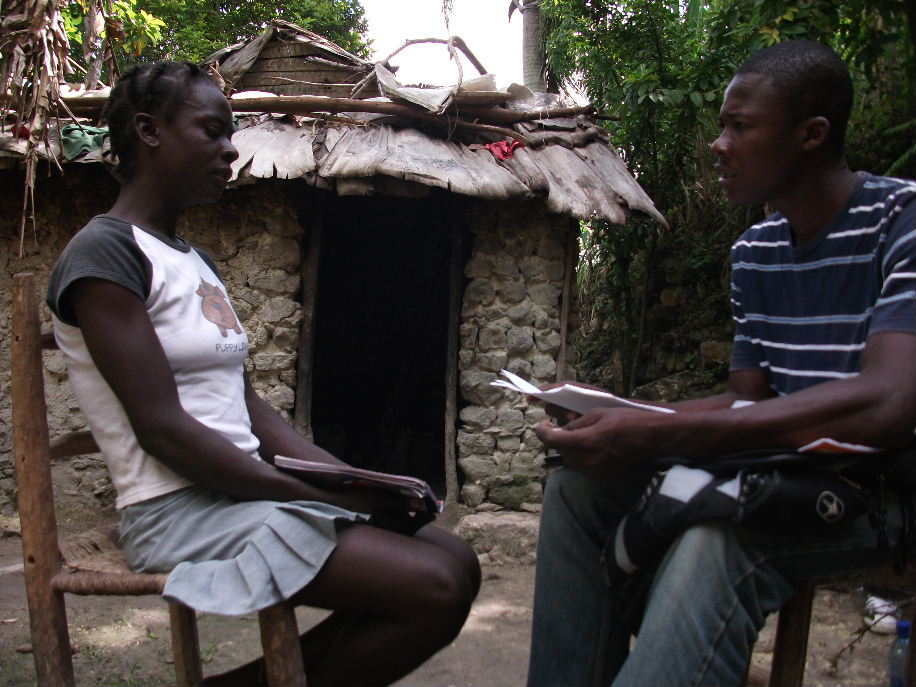
Jonise doesn’t know how old she is. When I asked her, she said she was 24, but the neighbor she now lives with, a woman who must be in her mid-30s, said that it just could not be true. She named another young woman whom they both know and whom Jonise was born after, and said that she knew that woman to be 21. She told me that Jonise must be something like 18 or 20 years old. Here she is with her case manager, Benson.

She doesn’t know how old her children are either, but her neighbor said that her son is about five, and her daughter about three.

Jonise is by no means a typical CLM member, if there is such a person. When I refer to her “neighbor,” I’m stretching the word. The woman is actually a fellow CLM-member who decided to take Jonise in, to give her a temporary home. Jonise’s own situation was difficult. She had been living with her children’s father, in a house on his mother’s land, when he decided he’d had enough of her. He threw her out. Her neighbor became fond of her while they were in enterprise training together, and when she saw her out in the street, she invited her into her home. That helped Jonise a lot. Jonise has a cousin who has since made a small piece of land available, and now her children’s father is building her a little shack to live in. The day I saw her, she was excited because he had finally agreed to give her their two kids.

Jonise and Benson will have a lot of work to do, because Jonise is going to have a hard time developing ways to support herself. In Creole, they say “li pa konn lajan,” or “she doesn’t know money.” Typically, that can refer to two different cases, either to someone who can’t do the simple math required to make change or to someone who cannot distinguish between bills of different denominations.

We know that Jonise has the first problem. We’ll know next week whether she has the second as well. Benson is using little stones to try to teach her subtraction. We don’t yet know wheter she’ll make progress or how long it will take. Next week, he will give her the 300-gourd food stipend in a combination of 50- and 100-gourd notes. I’ve asked him to spend some extra time with her studying the differences between the two bills if she has trouble.

Not every new member seems likely to have such a hard, hard time. Some take to CLM like fish take to water, showing energy and discipline that were always apparently inside them, just waiting for a chance to get to work. Gladys is a little like that.

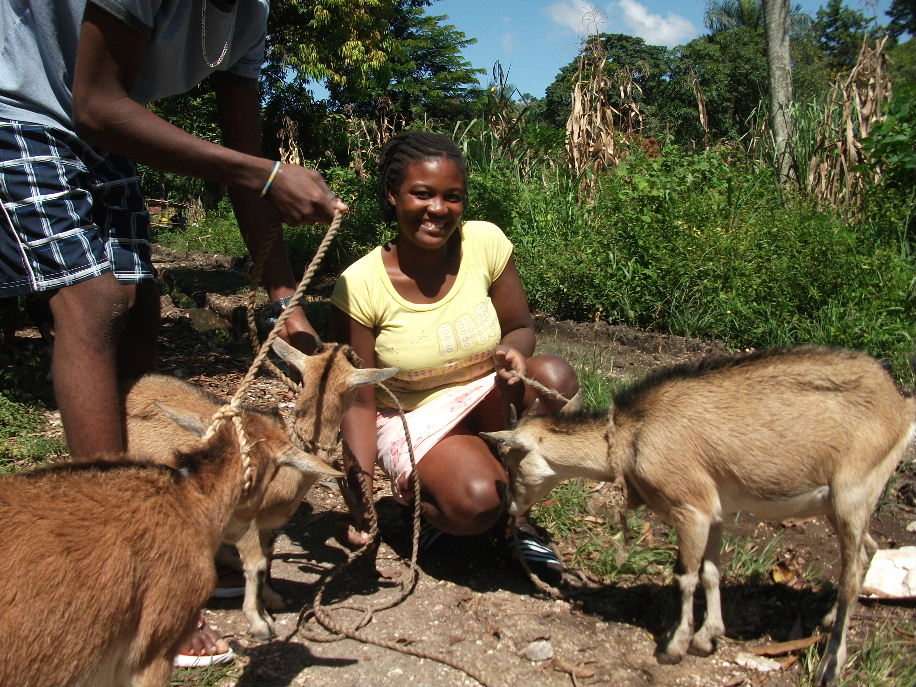
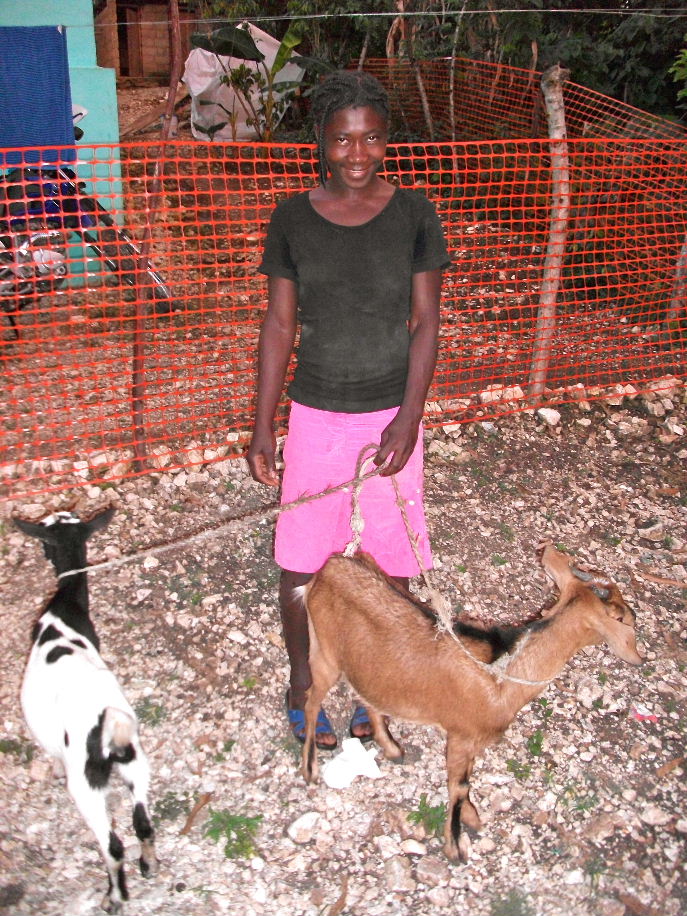
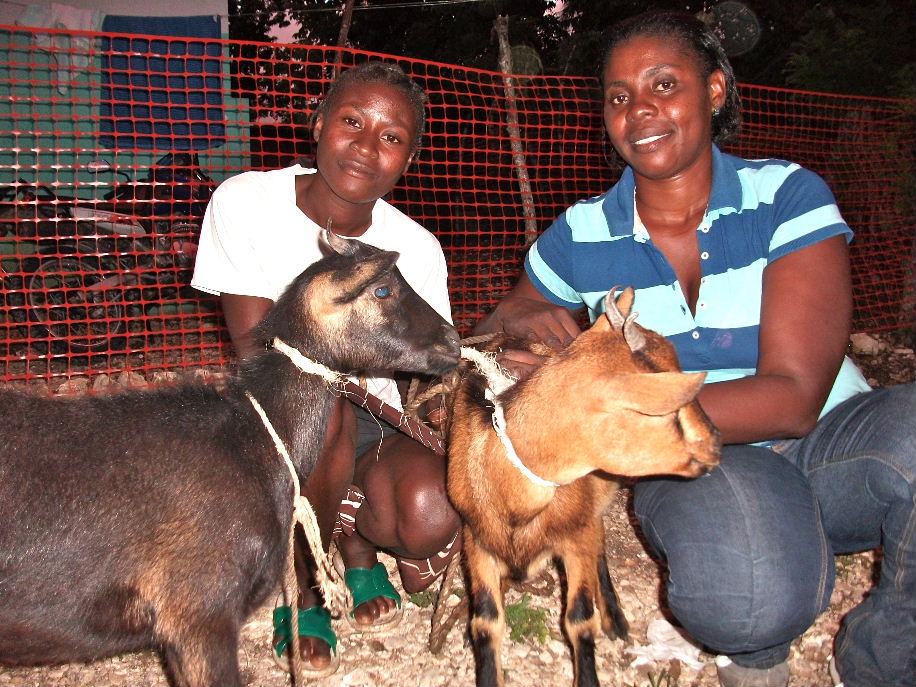
She’s a 19-year-old mother of two girls, ages five and two. She can read and write some. She was in the third grade when she got pregnant, and her parents never sent her back to school, but she seems to have remembered a lot of what she learned. That’s her in the picture above, with her three new goats.

Her case manager is Titon, and she promises to make his work relatively easy. When she finished her training in goat rearing, she built a little shed for her goats right away. It’s not a typical part of Haitian husbandry, but it protects them from rain, which can seriously affect a goat’s health and productivity, so we try to insist that each of our members build one. Some resist us. It seems so unnecessary to them. But not to Gladys.

As a reward, we made sure she was one of the first to get goats when we started distributing them in Bay Tourib. We hope it will help her and her fellow CLM members stay focused on getting things done right.


Jonise and Gladys do not have much in common except for the town they live in and the unhappy, life-changing fact that they had children when they were very, very young. Our CLM team is now doing what we can to give each of them a chance to move on with their lives. They present us with very different and, at least apparently, very unequal challenges. But to sustain the remarkable level of success we’ve enjoyed so far, we’ll have to find effective ways to work with each.

Buying Goats

The strategy at the heart of our program is to enable extremely poor families to develop reliable incomes by training them to manage assets, and then giving them the assets they need to get started. In practice, this means we give them two or three female goats, a young female pig, a combination of barnyard fowl, or 1500 gourds’ worth of merchandise — between $35 and $40 — small commerce. Whatever they choose. Ideally, the eighteen months we spend with them should begin the moment they receive their assets, because before that moment, there’s little progress they can make.

But the reality is more difficult than the theory. For the group of 350 new members in Bay Tourib and the corner of Boukankare north of Mannwa, the reality means buying over 750 young, fertile female goats, just to take one example. Though I dream of ordering them for two-day home delivery on Amazon.com, that’s not how it works. It takes time and a lot of effort to get these assets into members’ hands, which means that the time they have to develop their assets is actually less than eighteen months. It is, perhaps, the single factor that most seriously threatens our continuing to achieve the 96% success rate we had before scale-up.

We can buy some of the assets locally. There are three markets where livestock is available within a two-hour hike of our base in Bay Tourib proper. The largest is Regalis, just over the border in Ench. The closest is in Koray, only a short walk down the main road from Bay Tourib. And the third is on the Boukankare side of the border in Nan Mango, which is especially close to the fifty or sixty southernmost families in this new group. Each market is a weekly event, and we can probably count on buying fifteen to twenty goats at each of them any time we go.

But that’s only about fifty or sixty goats per week, and the math is easy enough. 750 goats, divided by fifty or sixty per week, is too much time.

So we have to go to the larger markets, farther from the area we are serving. Our most successful buys have been in Opoto, a large rural market just north of Gonaïves, and Gwomòn, a major town on the road that leads from Gonaïves to Port de Paix, a city on the northern coast. We have been able to buy over 150 goats in a single trip by hitting those two markets on the same day. Big purchases like that can speed things up considerably. If we make those trips alongside, rather than instead of, the visits to local markets, and hit a couple of medium-sized regional markets as well, we should be able to get the goats we need within a few weeks, or a month at the most.

But it’s not quite that simple, either. The big purchases at larger, more distant markets present problems of their own. Getting the goats we buy to our members and ensuring that they are in good health when we do is hard. We have only two trucks, a pick-up and a small flatbed. The flatbed is two-wheel drive, so it can’t get anywhere near Bay Tourib. The pick-up can’t hold more that fifteen goats. So the important problem with these big buys is the challenge of coordinating delivery: getting the goats somewhere where our members can meet us and letting our members know that their goats are on the way. Our members don’t have phones, and there are few who have a cellphone signal where they live.

But that’s only a nuisance. What’s more important is that the roads we use to get where we need to go are in terrible shape, so whatever vehicle we use is certain to give the goats a less-than-comfortable ride. Some of the goats we buy at the more distant markets will die on route. That’s money wasted. The ones who do make it will be weaker, slower to mature sexually, and more prone to miscarriages than the locally purchased goats. And this directly impacts our members’ progress out of extreme poverty.

Monday we purchased the first goats for members in Bay Tourib. A professional buyer went to Regalis for us, and came back with seventeen very good-looking young females. Two or three were pregnant already. We distributed them late that evening to members who live especially close to the base. By the time I left bay Tourib Thursday morning, he had purchased fourteen more for distribution this weekend. We will be at two regional markets this week, and at the Gonaïves markets next week. So things are underway.